A staple gun is one of those tools that sits in the van doing nothing for three weeks and then saves you half a day. Fixing membrane, tacking insulation, running cable clips through a loft, pinning ply to a stud wall, holding fabric on a bench – all of it is faster with a tacker than with a hammer and clips, and a lot faster than with a manual gun that leaves your palm aching by lunchtime.
The problem is that “staple gun” covers about four different tools that share a name and almost nothing else. A cable tacker for an electrician and a wide-crown tacker for a roofer are not interchangeable, and buying the wrong one is the single most common mistake here. This guide splits them properly, gives real UK prices, and tells you which trades actually need which.
Quick Verdict
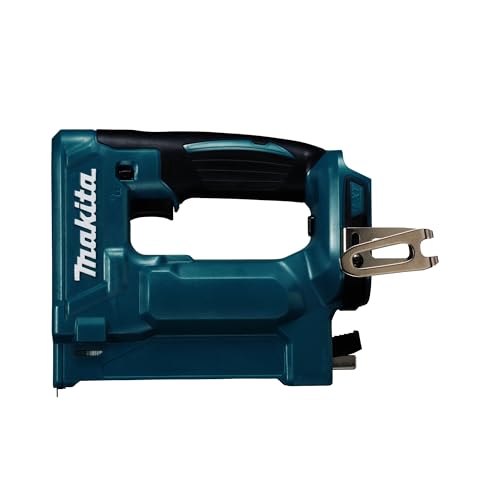
For general trade work where you want one cordless tacker that handles most of what turns up, the Makita DST112 is still the benchmark. It fires 10mm narrow crown staples from 6mm to 22mm, it is well balanced, and if you are already on 18V LXT it costs you nothing extra in batteries.
If you are an electrician, ignore all of that and buy the DeWalt DCN701. It fires insulated cable staples over twin and earth and data cable without crushing the sheath, which is the entire point, and no general-purpose tacker does that job safely.
If you want cordless convenience without spending three hundred quid, the Milwaukee M12 BST is the value pick – genuinely compact, genuinely trade-grade, and around half the money of the Makita.
The Three Types of Staple Gun, and Why It Matters
Get this bit right and the rest of the decision is easy.
Narrow Crown Staplers
These fire a 10mm-wide staple, usually 18 gauge, in lengths from about 6mm to 22mm. The crown is narrow enough to sink almost flush and small enough to be barely visible on finished work. This is the joiner’s tacker: fixing thin ply and MDF, panel backs, beading, edging, sheet material to timber frames, and anything where you would otherwise reach for a brad nailer but need more holding power against pull-through.
Narrow crown is the type most trades should buy if they are only buying one. The Makita DST112 and Milwaukee M12 BST both sit here.
Wide Crown Tackers
These fire T50-style staples with a crown around 10-11mm and a much heavier wire. The staple has a broad bridge that holds soft, floppy material against a surface without tearing through it. That is what you want for breather membrane, DPM, roofing felt, insulation facing, plasterboard scrim, carpet underlay and fencing wire.
A narrow crown stapler will not do this job properly. The staple cuts through the membrane rather than holding it, and on a windy roof you find that out very quickly. The Makita DST221 and Ryobi R18ST50 sit here, as do most manual guns like the Arrow T50 and Rapid R353.
Cable Tackers
A cable tacker fires a staple with a curved or insulated saddle designed to bridge over a cable without pinching it. The DeWalt DCN701 uses proprietary insulated staples sized for twin and earth, coax, and Cat5e/Cat6. The tool is set up so the staple bottoms out at a fixed depth rather than driving until it stops, which is what stops you nicking the sheath.
If you are an electrician running surface cable in lofts, outbuildings, timber-frame builds or on second fix, this is the tool that pays for itself in a single day. If you are not, you will never use it.
At a Glance – Cordless Staple Guns Compared
Prices below are typical UK street prices for bare tools including VAT. Kits with batteries and a charger typically add £120-£200 depending on the platform.
The Best Staple Guns for UK Trade
Best All-Round Trade Tacker: Makita DST112
The DST112 has been the default 18V narrow crown stapler on UK sites for years and nothing has really displaced it. It takes 10mm crown staples from 6mm up to 22mm, has a proper depth adjuster, a no-mar tip, and a contact trip that you can switch between sequential and bump mode.
What makes it worth the money is consistency. It sinks a 22mm staple into softwood at full depth on the last cell of the battery the same as it does on the first, which cheaper tools do not. Balance is good in one hand up a ladder, and the magazine loads without a fight.
Weak points: it is expensive for what it is, roughly £280-£320 bare, and the staples are not the cheapest consumable in the world. If you are not already on LXT, the kit price is hard to justify for occasional use.
Best for Electricians: DeWalt DCN701
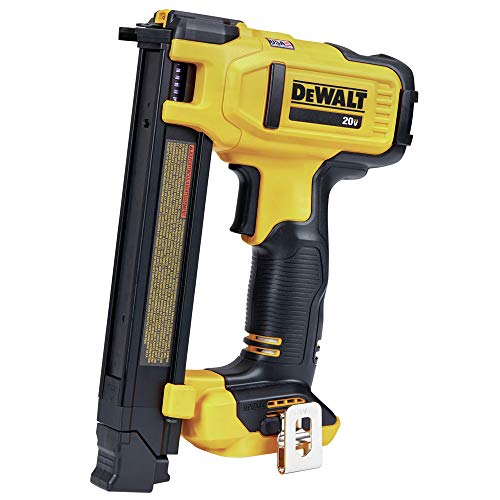
The DCN701 is a specialist and it makes no apology for it. It fires DeWalt’s insulated cable staples in sizes for 1.0mm-2.5mm twin and earth, coax and data cable, and it does it at a rate that makes hand-clipping look ridiculous. A loft that would take you two hours with a hammer and clips takes about twenty minutes.
Around £200-£240 bare. The consumables are proprietary, which is the usual DeWalt tax, but the staples are cheap enough per fixing that it does not matter much. Depth is fixed by design, and that is deliberate – it is what stops an apprentice crushing a cable.
Two honest caveats. First, it only does this one job, so it is a second tool and not a replacement for a general tacker. Second, check your specification: some inspectors and some clients want cables clipped with a specific fixing type, so confirm before you staple a whole first fix.
Best for Membrane and Insulation: Makita DST221
Wide crown, 18V LXT, and built for the jobs that ruin narrow crown staplers. Breather membrane on a timber frame, DPM in a floor build-up, insulation facing, felt on a shed roof, scrim on a stud wall. The wide bridge holds the material instead of cutting it.
Roughly £250-£300 bare. If you are a roofer, a timber-frame erector or a carpenter doing a lot of external work, this is the one to buy first and the DST112 second. For everyone else it is niche.

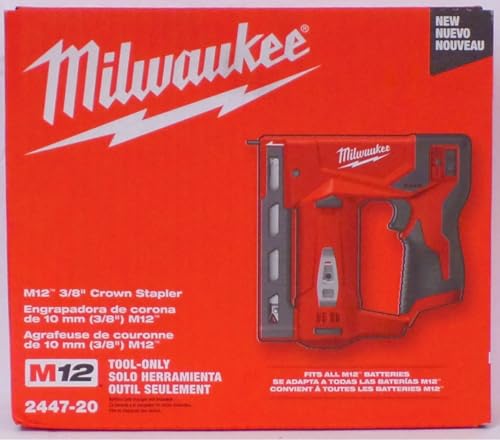
Best Compact and Best Value: Milwaukee M12 BST
The M12 BST is a 12V narrow crown stapler, and the compromise is smaller than you would expect. It fires 10mm crown staples up to around 22mm, it fits into stud bays and cupboard carcasses that an 18V tool will not, and it costs about £130-£170 bare – roughly half the Makita.
Where it gives ground is sustained rate of fire and driving into hardwood or dense sheet material, where an 18V tool has more in reserve. For second fix joinery, kitchen fitting, shopfitting and anything where you are working in awkward spaces, that trade is well worth making.
If you are already running M12 for a screwdriver and a cut-off tool, this is close to a no-brainer.

Best Budget Cordless: Ryobi R18ST50 ONE+
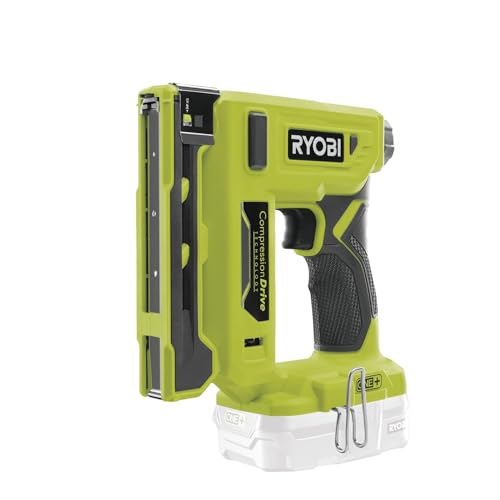
Wide crown, ONE+ battery, and around £80-£110 bare. It is not a professional tool and it does not pretend to be, but for tacking membrane on the occasional job, fixing insulation in a loft conversion or general site tacking, it works and it costs less than a tank of diesel.
Expect the depth to wander a bit in denser timber and expect to finish the odd staple with a hammer. If you already have ONE+ batteries knocking about, it is a sensible thing to have in the van.
Best Corded Option: Tacwise Duo 35
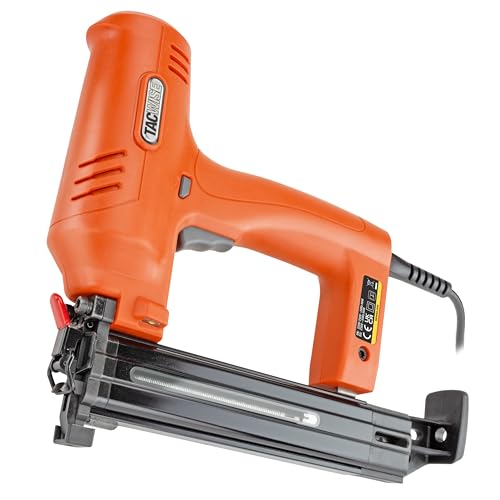
Sometimes cordless is the wrong answer. If your staple gun lives on a bench in a workshop, a mains electric tacker gives you unlimited runtime for about £65-£90 and never sits on charge. The Tacwise Duo 35 fires both staples and brads, which makes it a genuinely useful bench tool for small joinery and fit-out work.
Obvious limitation: you are tied to a lead, which rules it out for roof and loft work.
Best Manual Backup: Rapid R353 or Arrow T50
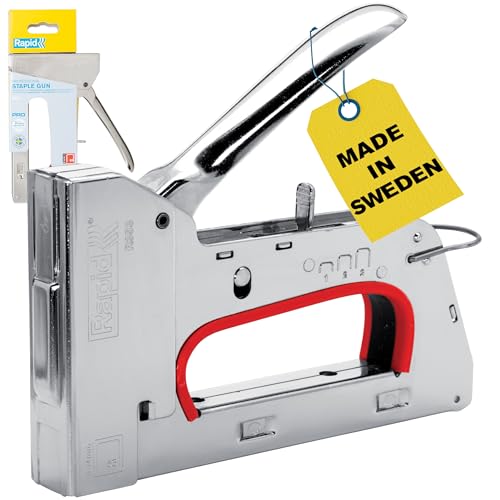
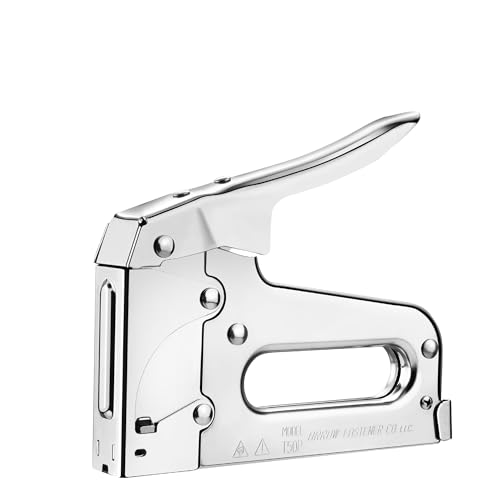
Every van should have one. A decent all-steel manual tacker costs £25-£50, weighs nothing, never runs flat, and is the tool you reach for when you need eleven staples and the batteries are in the other van. The Rapid R353 and the Arrow T50 have both been around long enough that the mechanisms are properly sorted.
Do not buy a cheap pressed-steel one from a bargain bin. They jam, they misfire, and the handle spring gives up inside a year.
Rapid PRO R353:
Arrow AT50:
Buyer’s Guide – What Actually Matters
Staple Type Availability
Before you buy the tool, check you can get the staples locally. Screwfix, Toolstation and Amazon UK all stock 10mm narrow crown and T50-style staples in quantity. Proprietary staples – the DeWalt cable staples in particular – are worth checking stock on before you commit, because running out mid-job on a Saturday is a real problem.
Depth Adjustment and No-Mar Tips
Any tool you are using on visible work needs a depth adjuster and a no-mar tip. Without them you either leave proud staples or bruise the timber. The DST112 and M12 BST both have them; most budget tools have one or neither.
Bare Tool vs Kit
If you already have batteries on a platform, always buy bare. The saving is usually £120-£200 and a staple gun is a low-drain tool that will run all day on a 2.0Ah pack. Buying into a whole new platform for a tacker alone rarely makes sense.
Dry Fire Lockout
A tool that keeps firing when the magazine is empty will mark the workpiece and, on a membrane job, leave you with holes and no fixings. Dry fire lockout is standard on the Makita and Milwaukee tools and absent on most budget ones.
FAQs
Can I use a narrow crown stapler on breather membrane?
You can fire it, but you should not rely on it. The narrow crown cuts into the membrane and pulls through under wind load. Use a wide crown tacker for anything sheet-like or flexible.
Is a cordless staple gun powerful enough for hardwood?
18V tools will sink shorter staples into oak and ash reliably; longer staples in dense hardwood are asking a lot of any tacker. If you are fixing into hardwood regularly, a pneumatic stapler on a compressor is still the stronger answer.
Do I need a separate cable tacker as an electrician?
If you clip a lot of surface cable, yes. A general tacker will crush or nick a sheath and that is a fail waiting to happen. If you mostly work in conduit and trunking, you do not need one.
What staple length should I buy?
For general trade work, 12mm and 16mm cover most jobs. Keep a box of 22mm for fixing into softer timber where you need holding power, and 6-8mm for thin sheet where a longer staple would blow through the back.
Are pneumatic staplers still worth it?
On a fixed workshop or a site with a compressor already running, yes – they are lighter, cheaper and effectively unlimited. For mobile trade work, cordless has won on convenience and the power gap has closed enough to stop mattering.
Can I fire brads from a staple gun?
Only if it is a combination tool like the Tacwise Duo 35. Dedicated staplers take staples only, and forcing brads into the magazine will jam it.
The Verdict
Buy the Makita DST112 if you want one cordless tacker that covers most trade work and you are on 18V LXT. Buy the DeWalt DCN701 if you are an electrician – it is a single-purpose tool that earns its money in one loft. Buy the Milwaukee M12 BST if you want a properly good narrow crown stapler for half the price and you can live with 12V.
Then buy a manual tacker for £30 and leave it in the van anyway. It will get used more than you expect.
Prices correct at time of writing and vary between Screwfix, Toolstation and Amazon UK. Bare tool prices assume you already own batteries on the relevant platform.
Model | Power | Staple type | Best for | Approx. price |
Makita DST112 (18V LXT) | 18V bare | 10mm narrow crown, 6-22mm | All-round trade tacking | £280-£320 bare |
Makita DST221 (18V LXT) | 18V bare | T50-style wide crown | Membrane, insulation, felt | £250-£300 bare |
DeWalt DCN701 (18V XR) | 18V bare | Insulated cable staples | Electricians, data cable | £200-£240 bare |
Milwaukee M12 BST | 12V bare | 10mm narrow crown | Compact work, second fix | £130-£170 bare |
Ryobi R18ST50 ONE+ | 18V bare | T50-style wide crown | Budget cordless, occasional use | £80-£110 bare |
Tacwise Duo 35 (corded) | 230V mains | Staples + brads | Workshop and bench work | £65-£90 |
Rapid R353 / Arrow T50 (manual) | Hand | T50-style wide crown | Van backup, light fixing | £25-£50 |