Kitd is reader-supported. If you buy through links on this page we may earn a commission from Amazon, at no extra cost to you.
The first year as a heating engineer is expensive. Between the training, the Gas Safe registration and the van, the last thing you want is a tool list that runs to hundreds of items. The good news is that you do not need most of it on day one. A tight, sensible kit gets you through the first twelve months, and you can add specialist tools as the work tells you what you actually use.
This list covers the hand tools that earn their place early. Prices and stock are as we checked them on Amazon UK at the time of writing, and every pick is a named product you can buy today. It is not a replacement for your training provider’s list, and it does not cover test equipment like flue gas analysers, which depends on the work you are doing and who you are working under.
Quick Verdict
If you only buy six things before your first job, make them these: a decent pair of water pump pliers, an adjustable spanner, a small copper pipe cutter, a larger tube cutter, a basin wrench and PTFE tape. Together they cost well under £150 and cover the bulk of the fitting, repair and servicing work you will meet in year one.
| Tool | Product | Price (approx.) | Best for |
|---|---|---|---|
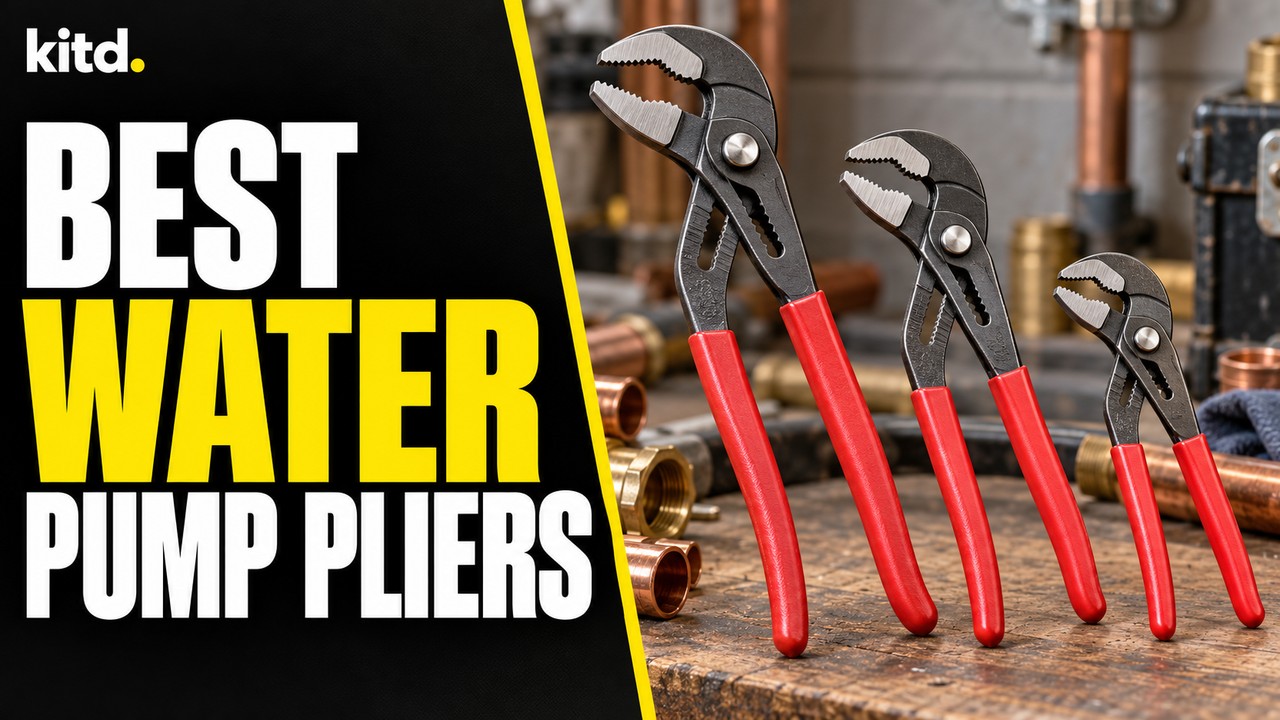
| Water pump pliers | KNIPEX Cobra 250mm | £27 | Nuts, fittings, gripping round pipe |
| Adjustable spanner | Bahco 8071 200mm | £21 | Compression fittings, valves |
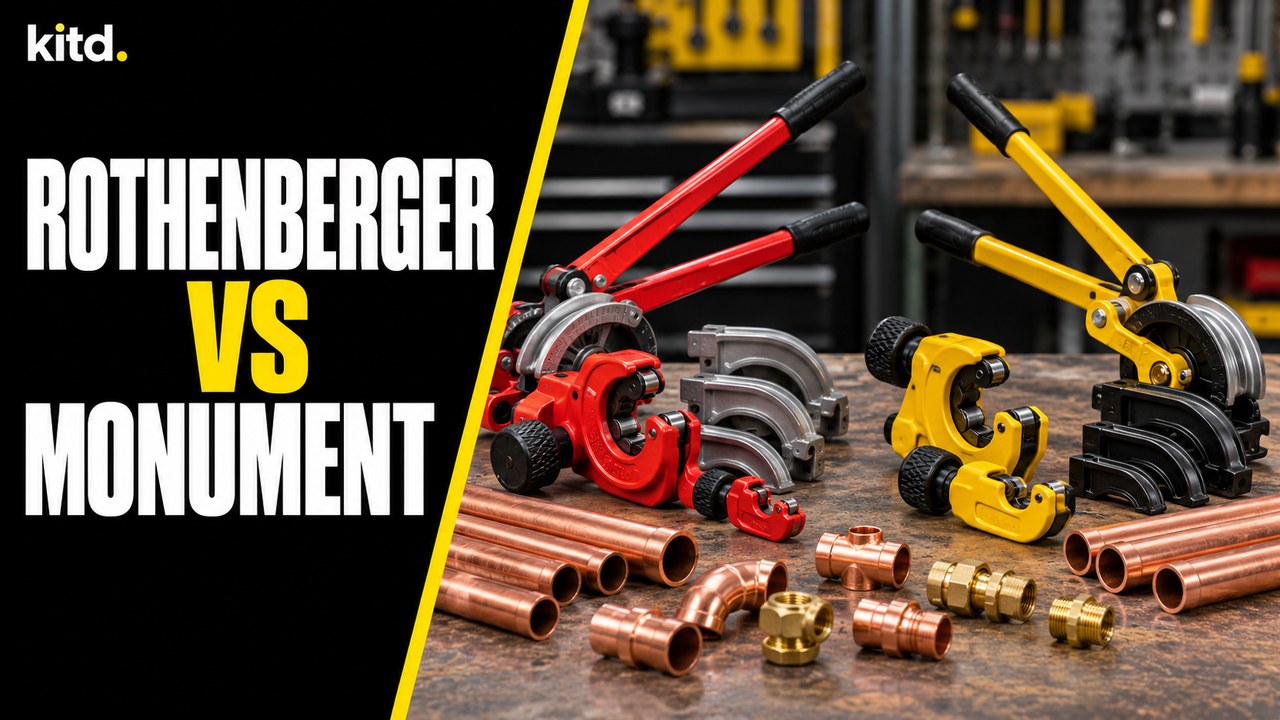
| Small pipe cutter | Monument Autocut 15mm | £14 | Cutting 15mm copper in tight spots |
| Large pipe cutter | Rothenberger Tube Cutter 35 PRO | £36 | 15mm to 35mm copper |
| Basin wrench | Monument 2-Jaw Professional | £38 | Tap connectors in awkward spaces |
| PTFE tape | Draper PTFE 12m | £3 | Threaded joints |
What a First Year Kit Needs to Do
In your first year you will mostly be working under supervision, doing installs, repairs, servicing and the sort of jobs that fill a standard working week. That means cutting and joining copper, undoing stubborn fittings, working in tight spaces behind boilers and under sinks, and keeping everything tidy.
Buy the tools that do those jobs reliably, and borrow, hire or wait for the rest. A tool you use twice a year can usually wait until you know you need it.
Buy Once, Cry Once, but Not Everywhere
For tools you use every day, such as pliers and spanners, it is worth paying for a trade brand that will last. For tools you use occasionally, a mid-range product is often enough. You will also lose, drop and lend tools in your first year, so avoid spending silly money on anything that will end up at the bottom of a customer’s bath.
The Essential Hand Tools
KNIPEX Cobra 250mm Water Pump Pliers
If one tool defines the heating engineer’s toolbag, it is the Cobra. The push-button adjustment slides the jaws to the size you need, and they lock onto round and hex shapes without slipping. They grip pipe, unions, nuts and olives, and they get into places a spanner cannot.
At around £27 with several thousand reviews, they are cheap for the amount of use they get. The 250mm size is the one most people reach for, long enough for leverage and short enough to fit in a pocket.
Pros: Excellent grip, fast adjustment, tough and long lasting.
Cons: A little heavy compared to cheaper pliers.
Best for: Every heating engineer, from day one.

- Push the button for adjustment on the workpiece
- Fine adjustment for optimum adaptation to different sizes of workpieces and a comfortable handle width
- Self-locking on pipes and nuts: no slipping on the workpiece and low handforce required
- Gripping surfaces with special hardened teeth, teeth hardness approx. 61 HRC: high wear resistance and stable gripping
- Box-joint design for high stability due to double guide

Bahco 8071 Adjustable Wrench 200mm
A good adjustable spanner is still one of the most used tools in the bag. The Bahco 8071 has a smooth, precise jaw adjustment with very little play, which matters when you are tightening compression nuts without wanting to round them off. The 200mm length is a sensible size for most boiler and valve work.
You will want a second one eventually so you can hold one fitting while you turn another, but start with one and add a second when the work demands it.
Pros: Smooth adjustment, minimal jaw play, trusted trade brand.
Cons: Not the cheapest adjustable on the market.
Best for: Compression fittings, valves and general tightening.
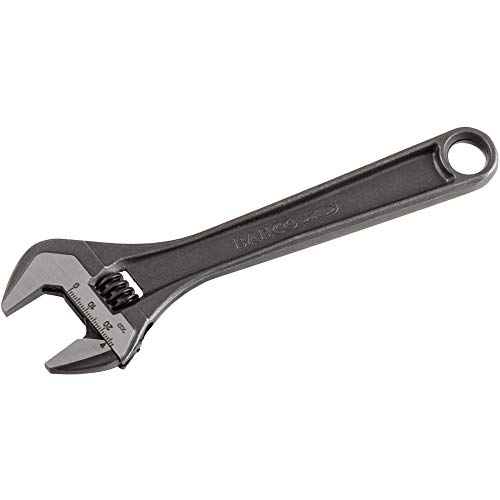
- Overall length: 200mm
- Jaw Capacity: 27mm
- Weight: 255g
- With left turning screw
- Material: High performance alloy steel
Monument Autocut 15mm Copper Pipe Cutter
A small, single-size cutter is perfect for the 15mm pipe that makes up most of your day. The Monument Autocut feeds itself as you rotate it, which makes for clean, square cuts without squeezing the pipe out of round. It fits into tight spaces where a bigger cutter will not swing.
It is a cheap tool for what it does and well worth having one in your pocket, one in the van, and ideally a spare.
Pros: Compact, self-feeding, clean cuts, excellent value.
Cons: Only cuts 15mm, so you need a second cutter for other sizes.
Best for: 15mm copper in tight spaces.

- Access to cutting copper pipes in awkward places
- It will only cut the exact size of copper pipe
- Not for use on stainless steel
- Cuts in one direction
- Ratchet handles
ROTHENBERGER Industrial Tube Cutter 35 PRO
For 22mm and 28mm pipe, and anything up to 35mm, you want a full-size tube cutter. The Rothenberger 35 PRO is a proper trade tool with two guide rollers, a fold-out internal deburrer and a spare cutting wheel stored in the handle. It cuts cleanly and holds up to regular use.
At around £36 it costs more than the small cutters, but it saves a lot of time on bigger pipework, and it covers every common size in one tool. Pair it with a deburring tool or the reamer on the cutter to finish each cut properly.
Pros: Cuts up to 35mm, fold-out deburrer, spare wheel in the handle.
Cons: Bulkier than a small cutter, so not ideal in tight spaces.
Best for: Larger pipe sizes and general workshop and site use.
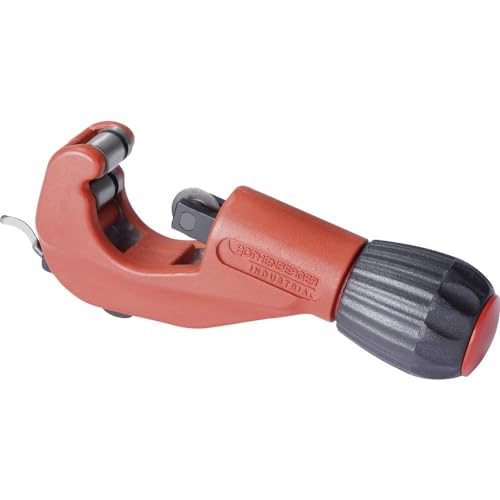
- Telescopic pipe cutter
- Robust construction and two guide rollers with recess for cutting close to the flanges
- For cutting copper, brass, aluminum and thin-walled steel tubes
- With fold-out internal deburrer; spare cutting wheel in handle
Monument 2-Jaw Professional Adjustable Basin Wrench
Anyone who has tried to undo a tap connector behind a basin knows why this tool exists. The Monument basin wrench reaches into the space behind the tap, grips the nut and lets you turn it from above. The 2-jaw design adjusts to different nut sizes, and the long handle gives you the leverage you need.
You will not use it every day, but when you need it nothing else works. It is the sort of tool you will be glad you bought the first time a customer wants their kitchen tap swapped.
Pros: Reaches awkward nuts, adjustable, trade-quality build.
Cons: A specialist tool you will use occasionally rather than daily.
Best for: Tap connectors and other awkward fittings under sinks and basins.

- The Monument 345V Adjustable Basin Grip + Wrenches Are An Excellent Choice For Tightening Or Loosening Nuts In Difficult Positions, Especially Those Located Beneath Basins Or Baths.
- The Jaws Of The Wrench Have Teeth That Can Grip Onto Uneven Shapes, Making It Highly Versatile.
- The Swivelling Head Provides Access To Areas Where Fixed Spanners May Not Work, And The Solid Steel Handle Has A Profiled End That Enables The Attachment Of A Socket And Extension For An Extended Reach.
- All Components Have Undergone Proper Heat Treatment, Ensuring A Prolonged Lifespan.
- The Wrenches Come With Small And Medium Jaws, With Sizes Ranging From 15mm To 22mm, 1/2In To 3/4In.
Draper PTFE Tape 12m
It is not glamorous, but you will go through plenty of it. PTFE tape seals threaded joints, and a few rolls in your toolbag and van are essential. The Draper roll is cheap, widely used and does the job.
Buy a pack of several rather than one roll at a time. You do not want to be caught short in the middle of a job, and a roll costs only a few pounds.
Pros: Very cheap, reliable, easy to use.
Cons: Not suitable for every joint, particularly gas, which needs the correct tape or compound.
Best for: Sealing threaded water fittings.

- Effective – Perfect for water applications, our PTFE tape provides a reliable seal, ensuring leak-free connections in plumbing and other water related tasks.
- Convenient - Equipped with a plastic reel featuring a dust cover, our PTFE tape remains clean and protected, ready for your next application.
- Reliable - Peace of mind with Draper tools quality guaranteed for reliability and performance.
- Important Note – While our tape excels in water applications, it’s not recommended for use on gas pipe work.
What to Leave Until Later
Plenty of tools look essential but can wait. Here is what we would hold off on until you know your work better.
Press Tools and Specialist Crimpers
A press tool is an excellent investment once you are doing lots of installs, but it is expensive and many employers supply one. Wait until you know what type of fittings your employer or customers use.
Flue Gas Analyser
If you work under a company, they will generally provide the analyser and handle calibration. If you go out on your own, it becomes a necessary investment, but it is a decision for later and depends on the work and the scheme you are registered with.
Expensive Cordless Kits
A decent drill driver is worth having, but you do not need a full cordless range on day one. Pick one battery platform and add to it as you go. Our guide to looking after cordless batteries in winter will help whatever you buy last longer.
How to Build Your Kit Sensibly
Start with what you will use on every job. Buy tools as you hit a job that needs them, rather than guessing in advance. Keep a note of what you borrow from colleagues, because that list tells you what to buy next.
Look after what you buy. Wipe down cutters, keep wheels sharp, and store pliers and spanners dry. Mark your tools clearly, because tools go missing on site more often than anyone admits.
FAQs
What tools does a trainee heating engineer need?
A solid core kit of pliers, an adjustable spanner, pipe cutters, a basin wrench and consumables like PTFE tape covers most early jobs. Your training provider or employer may also give you a specific list, so check that first.
Do I need to buy my own tools as an apprentice?
It varies. Some employers supply tools or give an allowance, others expect you to build your own kit. Ask before you buy anything, and keep receipts.
Is a Knipex Cobra worth the money?
Yes. They cost more than ordinary water pump pliers, but they grip better, adjust faster and last far longer. For a tool you will use every day, the price works out cheap per use.
Should I buy cheap or trade brand tools?
Trade brands for anything you use daily and that your safety or accuracy depends on. Cheaper options for occasional-use items. Avoid the very cheapest, as they tend to fail on site and cost you more in the end.
What else do I need as a new heating engineer?
You will need the right qualifications, registration, insurance and test equipment, depending on the work you do. Those are separate from this hand tool list, so check requirements with your scheme or training provider.
The Bottom Line
Your first year does not call for a huge investment. Six well-chosen tools handle the majority of jobs, and you can add to them as your work develops. Start with the Knipex Cobra, the Bahco adjustable, a small and a large pipe cutter, a basin wrench and some PTFE tape. Get good at using them, look after them, and let the work tell you what to buy next.