A track saw is the tool that quietly changes how you work. Once you have cut a full sheet of 18mm ply dead straight, splinter-free, on a pair of trestles instead of wrestling it across a table saw, you do not go back. For kitchen fitters, shopfitters, joiners and site carpenters, it is the difference between a factory edge and a rough one you have to hide with trim.
Kitd earns from qualifying purchases through Amazon links on this page.
This guide is for UK trades choosing a track saw. Every price is an approximate UK street price including VAT and will move with battery deals and promotions, so treat them as a guide rather than gospel. We cover corded and cordless, premium and budget, and which one actually earns its place in the van.
Our quick verdict
For most professional joiners, the Festool TS 55 remains the one to beat. The cut quality, the rail system and the dust extraction are still the benchmark everyone else is measured against, and the resale value softens the sting of the price. Expect upwards of £650 for the current FEBQ-Plus corded model, more once you add rails.
If you are already on a battery platform, buy into it. The Makita 18V LXT twin-battery saw and the DeWalt DCS520 (54V FlexVolt) are both superb cordless saws and save you dragging a lead across a finished floor. And if you only cut sheets occasionally, the Evolution R185CCSX at around £120-140 does 80% of the job for a fraction of the money.
How to choose a track saw
Corded vs cordless
Corded saws are cheaper, lighter and never run flat mid-cut, which is why they still dominate the workshop. Cordless has caught up on power — the Makita and DeWalt FlexVolt saws will rip 18mm ply all day — and the freedom of no lead on a finished job is worth real money. If you already own batteries in one system, that decides it. If you are starting from nothing and mostly work at a bench, corded is the sensible spend.
Cut depth
The classic 55mm blade cuts a shade over 55mm at 90 degrees, which handles almost all sheet goods and most worktops. If you regularly cut fire doors, thick worktops or stacked material, look at a 60mm-plus saw such as the Festool TS 60. For everyday joinery, 55mm is plenty.
Rail system and compatibility
The rail is half the tool. Festool and Makita share a very similar rail profile, so Makita saws generally run on Festool rails and clamps and vice versa — handy if you mix kit. DeWalt uses its own profile. Bosch runs on FSN rails that also fit Festool-style tracks. Buy at least one long rail (1.4m) for cross-cuts and a second to join for full 8×4 sheets, and add the connectors so your joined rail stays dead straight.
Dust extraction and anti-splinter
A track saw is only as clean as its extraction. Paired with an M-class extractor it captures the vast majority of dust, which matters for your lungs and for HSE compliance on site. The anti-splinter strip on the rail and a fresh blade are what give you that glue-ready edge, so budget for replacement blades and do not run a blunt one.
The best track saws at a glance
Prices are approximate UK street prices and vary by retailer, voltage, kit and promotion.
Track saw | Type | Cut depth | Best for | Approx. price |
Festool TS 55 FEBQ-Plus | Corded | 55mm | Best overall / joinery | £640-680 |
Makita DSP600ZJ | Cordless 18V LXT twin | 56mm | Best cordless (Makita) | £590-620 with batteries |
DeWalt DCS520NT | Cordless 54V FlexVolt | 59mm | Best cordless (DeWalt) | £610-650 bare + rails |
Bosch GTT 55 GCE | Corded | 57mm | Best value pro corded | £670-700 with rail |
Makita SP6000J1 | Corded | 56mm | Best mid-price corded | £440-460 |
Evolution R185CCSX | Corded | 56mm | Best budget | £120-140 |
The picks in detail
Best overall — Festool TS 55 FEBQ-Plus
The TS 55 is the saw that made track saws mainstream, and the current FEBQ-Plus version is still the one professionals reach for. The cut is glass-smooth, the plunge action is precise and predictable, and the whole thing slots into the Festool system — rails, extractors, MFT tables — better than anything else. It is not cheap at around £650, and the rails are extra, but on a kitchen or shopfitting job where the edge is on show it pays for itself. Resale value is strong too, so a used Festool holds its money.

Best cordless for Makita users — Makita DSP600ZJ
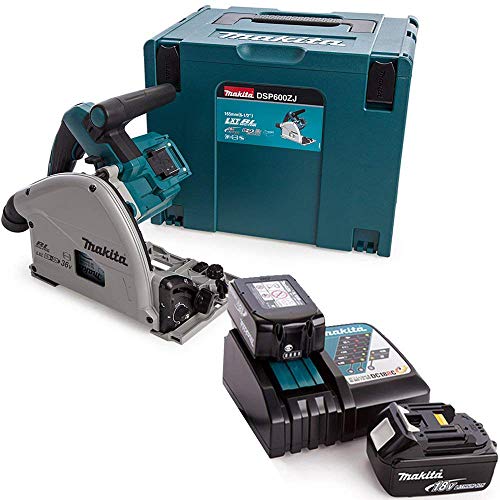
If your van already runs on Makita’s 18V LXT platform, the twin-battery DSP600ZJ is a straightforward buy — it comes complete with two 5.0Ah batteries and a charger, so there’s nothing else to find. It has the guts to plunge through 18mm ply and worktop repeatedly without bogging down, and it rides on Festool-compatible rails. At around £595 as a complete kit you are not buying another charger or batteries on top. Genuinely close to corded performance with none of the lead hassle.
Best cordless for DeWalt users — DeWalt DCS520
The DCS520 runs on 54V FlexVolt, so it borrows the same big batteries as your grinder and table saw. It is a tough, deep-cutting saw — 59mm at 90 degrees is more than most rivals — and this bare-tool-plus-two-rails bundle turns up around £620-650, sometimes less on promotion. The only catch is the proprietary rail, so it does not share tracks with a Festool or Makita on site. If you are a DeWalt house, buy it and move on.

Best value pro corded — Bosch GTT 55 GCE
Bosch’s plunge saw range has moved on from the old GKT 55 GCE to the GTT 55 GCE, now bundled with a 1.4m rail as standard. It is the quiet professional’s choice: excellent cut quality and a smooth plunge, and it runs on FSN rails that also mate with Festool-style tracks, so you are not locked in. If you want near-Festool results without the badge premium, this is the corded saw to look at.

Best mid-price corded — Makita SP6000J1
The SP6000 has been the sensible workshop track saw for years. The cut is clean, the depth stop and bevel are easy to set, and it is not quite as refined as the Festool or the newer Bosch, but for the money it is hard to argue with — a proper trade saw that will outlast plenty of dearer kit. Stock on Amazon UK is thin at the moment (see the paste note above), so check availability before you commit a customer job to it.

Best budget — Evolution R185CCSX
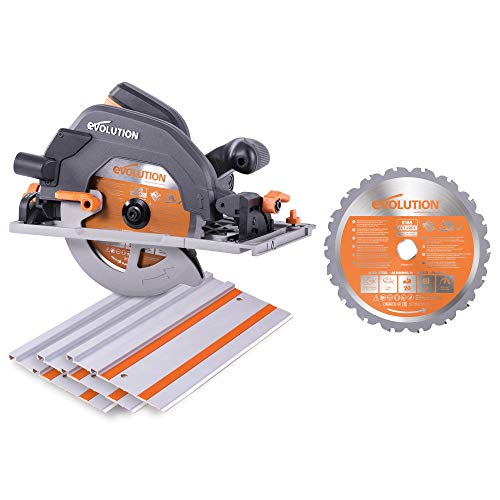
Not a true plunge saw, but a track-compatible circular saw that comes with its own rail sections for around £120-140. For a chippy who cuts the odd sheet and does not want to spend £600, it is remarkable value: straight, tidy cuts on ply and MDF, and it will even cut mild steel with the right blade. The finish and dust control are not in the Festool’s league, but for occasional sheet work it is the smart budget buy.

Looking after your track saw
A track saw lives or dies on its blade and its rail. Keep a spare fine-tooth blade in the systainer and change it the moment the cuts start to fuzz — a blunt blade tears the veneer and strains the motor. Keep the rail clean and never let it kink; a bent rail gives you a wandering cut you will chase for hours. Store the rails flat or hung, not leaning under other kit. Wax the underside of the rail occasionally so the saw glides, and check the anti-splinter strip — replace it when it stops backing up the cut.
Frequently asked questions
Is a track saw worth it over a circular saw?
For anyone cutting sheet goods regularly, yes. A track saw gives you table-saw-quality straight edges without a table saw, and it is far safer and cleaner. If you only ever cut framing timber, a good circular saw is fine — but the moment you are cutting ply, MDF or worktop for a finish, the track saw earns its keep.
Do I need the branded rail or will a cheaper one do?
Festool and Makita rails are interchangeable in practice, and Bosch FSN rails fit the same family, so you have options. Budget rails vary — some are fine, some flex. Whatever you buy, get the connectors and a couple of clamps, and check the rail is dead straight before you trust it on a visible cut.
What blade should I run for clean cuts?
For sheet goods and a glue-ready edge, run a fine-tooth (48 tooth on a 160-165mm blade) crosscut blade and keep it sharp. Drop to a coarser blade only for fast ripping of solid timber. The single biggest cause of a rough cut is a blunt or wrong-tooth-count blade, not the saw.
Corded or cordless for site work?
If you are already on Makita LXT or DeWalt FlexVolt, cordless is the obvious call — no lead trailing across a finished floor. If you are mostly benching in a workshop with power to hand, corded is cheaper and lighter and never runs flat. Both cut the same; it is about where and how you work.
Related reading