A quality manual cutter is still the tool most professional tilers reach for first — it scores and snaps the toughest porcelain cleanly, with no mess, no water and no power. For hard porcelain, notches and mosaics you need a wet saw, and for occasional tiling an entry manual cutter or a compact wet cutter covers it cheaply.
At a Glance — Comparison
Cutter | Type | Best for | Approx price |
Sigma 4BU 70cm | Manual | Pro daily straight cuts, large format | £440 |
Rubi HIT-850 N | Manual | Value pro all-rounder | £290 |
Montolit Masterpiuma 75-P3 | Manual | Large-format porcelain | £352 |
Rubi DU-200 EVO 850 | Electric wet | Hard porcelain & notches | £820 |
DeWalt DW862 | Electric wet | Mainstream powered cutting | £148 |
Vitrex 12593 630mm Pro Flat Bed | Manual | Occasional / budget | £75 |
Six picks across manual and electric cutters, from a budget occasional-use manual cutter right up to a premium large-format machine and a dedicated wet saw for hard porcelain.
1. Sigma 4BU 70cm — Best manual cutter overall
A genuine current Sigma professional pull cutter. It scores and snaps tough porcelain cleanly with no mess, water or power, and the larger bed handles big-format tiles — this is the one most working tilers should buy first.
- Scores and snaps tough porcelain cleanly
- No mess, water or power needed
- Handles large-format tiles
- Built to last years of daily use

2. Rubi HIT-850 N — Best value pro manual
A genuine current Rubi manual cutter — a professional large-format machine with the separated-base design and quality scoring wheel that make Rubi cutters a trade staple, at a sensible mid-range price.
- Professional large-format manual cutter
- Quality scoring wheel
- Long bed for big formats
- Widely stocked spares

3. Montolit Masterpiuma 75-P3 — Best for large-format porcelain
A genuine current, well-reviewed Masterpiuma — this is the cutter to buy if your work is dominated by large-format porcelain and slabs.
- Exceptional on large-format and hard porcelain
- Very clean long scores
- Premium build
- Favoured by large-format specialists
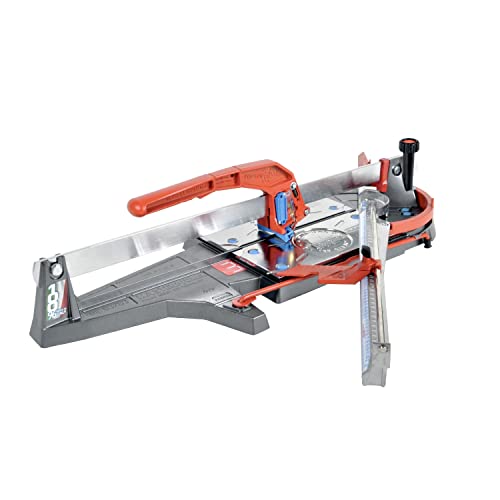
4. Rubi DU-200 EVO 850 — Best electric wet saw for trade
A genuine Rubi wet-saw machine for hard porcelain, notches and mitres that a manual cutter can’t handle. It’s a premium price for a wet saw, and worth weighing against the more affordable DeWalt DW862 below if you only need a wet saw occasionally.
- Powered diamond blade for hard porcelain and notches
- Sliding bridge for accuracy
- Genuine Rubi trade-grade build
- Powered diamond blade for hard porcelain
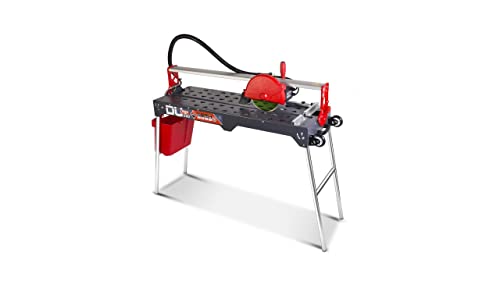
5. DeWalt DW862 — Best mainstream wet cutter
A genuine, well-reviewed DeWalt wet tile saw that undercuts the Rubi machine above by a wide margin — a sensible powered option for a tiler who needs a wet saw occasionally rather than an all-day large-format tool.
- 1270W motor with water supply hose
- Good value powered cutting
- Fine for general porcelain and ceramic
- Simple to set up
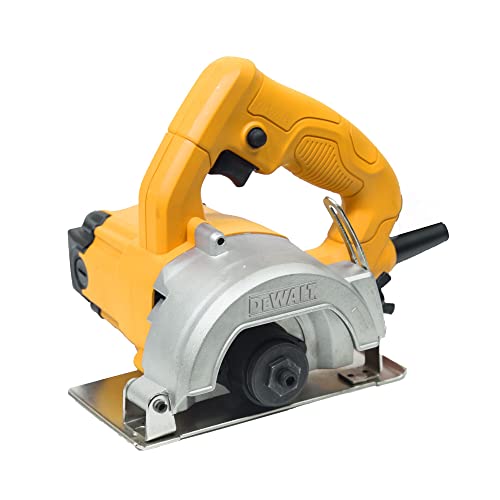
6. Vitrex 12593 630mm Pro Flat Bed — Best budget for occasional tiling
A genuine current Vitrex manual cutter — cheap, light and fine for ceramic and basic porcelain straight cuts for a multi-trade who tiles occasionally rather than for a living.
- Cheap and easy to store
- Fine for ceramic and basic porcelain
- Light for occasional use
- 630mm flat bed
No products found.
How to choose a tile cutter as a tradesperson
The first decision is manual versus electric, and it comes down to the cuts you make most. A manual score-and-snap is faster, cleaner and mess-free for straight cuts on ceramic and most porcelain — which is the bulk of any tiling job. An electric wet saw is for the cuts a manual can’t make: hard porcelain that won’t snap clean, notches around pipes and sockets, L-shapes, mitres and mosaics.
Modern tiles keep getting bigger, and a cutter that’s too short for your tiles is useless. Check the maximum cutting length before you buy — large-format porcelain and slabs need a long bed.
On a manual cutter, a clean snap starts with a clean score, and that’s down to the scoring wheel. Treat the wheel as a consumable and replace it before it ruins tiles.
A wet saw is only as good as its diamond blade. Use a proper porcelain blade for hard tiles, keep the water reservoir topped and clean, and never run a wet saw dry.
Frequently Asked Questions
What’s the best tile cutter for a UK tiler overall?
For most professional UK tilers in 2026, a quality manual cutter is the best single tool — it scores and snaps the toughest porcelain cleanly, works fast with no mess or power, and lasts for years. Pair it with a wet saw for hard porcelain, notches and mitres and you’ve covered every cut a tiling job throws at you.
Manual or electric tile cutter — which should I buy first?
Buy the manual cutter first. It handles the majority of cuts on any job faster and cleaner than a wet saw, with no water or power. Add an electric wet saw when your work needs notches, mitres, mosaics or cuts on very hard porcelain a manual can’t snap.
Can a manual cutter handle porcelain?
Yes — a quality manual cutter is designed to score and snap hard porcelain cleanly. The key is a sharp scoring wheel and good technique: one confident score and a clean snap.
Why does my tile cutter chip the edges?
On a manual cutter, chipping usually means a worn or cheap scoring wheel, too many scoring passes, or poor snapping technique. On a wet saw, chipping comes from a worn or wrong blade, cutting too fast, or low water.
The Verdict
For a working UK tiler the sensible kit is a quality manual cutter you’ll use for most cuts, backed by a wet saw for hard porcelain, notches and mitres. If you tile occasionally, an entry manual cutter and a mainstream wet cutter will see you right.
Related reading