If you’re on Makita’s 18V system, the DCF201ZW is the fan to buy — cheap, portable airflow that runs off any battery you already own. Milwaukee owners should go straight for the PACKOUT fan, and for keeping one person cool in a tight spot, the Koonie clip fan is hard to beat for the price. There’s no DeWalt pick here — DeWalt doesn’t sell a jobsite fan through Amazon UK, so DeWalt-platform owners will need to look at a mains fan instead.
At a glance: the cordless site fans compared
Same five slots as the live page — Makita’s budget LXT fan, Makita’s biggest-airflow XGT fan, Milwaukee’s PACKOUT fan, the DeWalt gap, and a personal clip fan for one person in a tight spot.
The best cordless site fans for UK trade in 2026
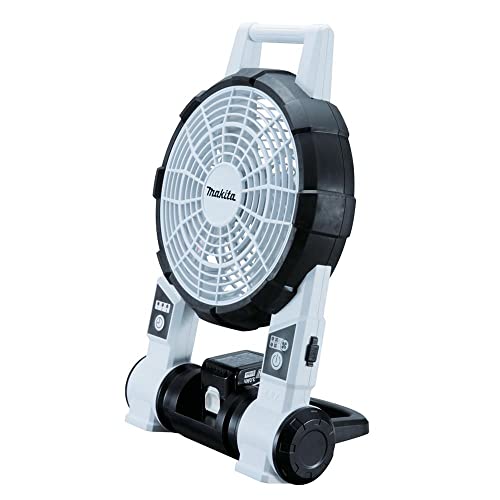
1. Makita DCF201ZW — best value on the LXT platform
The DCF102 named on the live page has been discontinued on Amazon UK; the DCF201ZW is the current genuine Makita 18V LXT fan and fills the same role — cheap, portable airflow for anyone already on the Makita 18V system.
- 6★ rating (72 reviews)
- 18V LXT, body only — runs off any Makita 18V battery
2. Makita CF003GZ — most airflow on the Makita system
The 40V XGT Industrial Fan is the direct current replacement for the CF001G named on the live page. It’s a genuine step up in airflow and price over the LXT fan above, and it’s the one to point XGT owners toward.
- 6★ rating
- 40V XGT, industrial-grade output


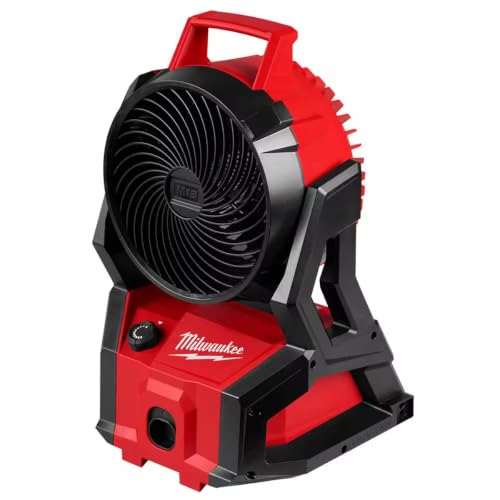
3. Milwaukee M18 Brushless PACKOUT Fan — the commercial-site favourite
Milwaukee now sells its jobsite fan under the PACKOUT name rather than as a standalone “M18 jobsite fan” — same tool, current listing, sold as a bare unit.
- 7★ rating
- M18, bare tool — PACKOUT-compatible mounting
4. DeWalt DCE511 — the DeWalt all-rounder
DeWalt has never sold a dedicated jobsite fan through the Amazon UK marketplace under this or any other model number — searched multiple ways, and only unrelated third-party “DeWalt-compatible” fans turn up. Left unboxed rather than mislabelling a clone as genuine DeWalt.
No AAWP box — no genuine Amazon UK listing found; left unboxed.
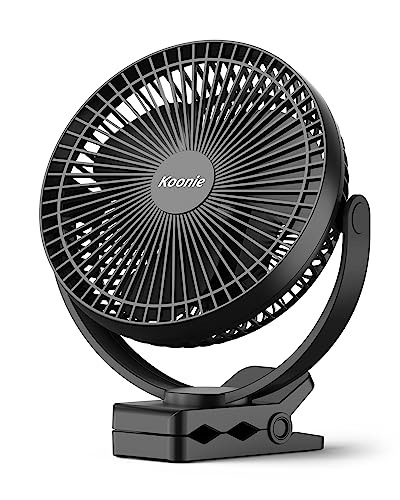
5. Koonie 10000mAh Portable Clip Fan, 8 inch — cheap cooling in tight spots
A genuine, well-reviewed personal clip fan for keeping one person cool in a van cab or a tight roof space, at a genuinely budget price.
- 7★ rating
- 8-inch, 10,000mAh rechargeable, clip mount
What a site fan is actually for
A site fan earns its place moving air through a room mid-plaster or mid-paint, clearing fumes from adhesives and solvents, and taking the edge off a hot roof space in summer. It’s not a substitute for proper ventilation on anything genuinely hazardous — just a comfort and drying-time tool for everyday site conditions.
Buyer’s guide: what to look for
Battery platform first
Buy on whichever 18V or 40V platform you already own batteries for. A fan is one of the few tools where battery runtime barely matters day to day, so there’s little reason to start a new platform just for this.
Mains option
If the fan will mostly live plugged in on a static site, a mains-only fan is cheaper and never runs out — cordless only pays off when you need to move it around without trailing a lead.
Airflow and size
Bigger fans move more air but take up more van space and cost more in batteries. Match the fan to the room sizes you actually work in, not the biggest number on the box.
Mounting and stability
A fan that clips to scaffolding, a ladder, or a PACKOUT rack earns its keep faster than one that only stands on the floor, especially on a cluttered site.
Frequently Asked Questions
Are cordless site fans worth it?
Yes, for the same reason cordless lights are — no lead to trip over and no need for a socket. They cost more per fan than a mains equivalent, but most tradespeople already own the batteries.
How long does a site fan run on one battery?
Expect two to four hours on a mid-size 18V battery at a mid speed setting, less on the top speed. The bigger 40V/M18 fans will run longer on their larger-capacity packs.
Which platform should I buy a fan on?
Whichever platform you already carry batteries for. Don’t buy a new battery platform just for a fan — the runtime difference between brands is not worth the extra cost.
Can a site fan help with dust and fumes?
It helps circulate air and clear light odours, but it is not extraction or filtration. For genuine dust or fume hazards, use proper LEV extraction and RPE, not a site fan.
More Reviews Here..
- Best Plate Compactor UK
- Working at Height UK Trade Guide
- Best Scaffold Tower UK
- Werner vs Zarges Trade Ladders Compared
Related reading