If you have ever knelt in the mud pumping a lever-action grease gun forty times to shift grease into a stiff nipple, you already know why the cordless version exists. For anyone maintaining plant, machinery, vehicles or agricultural kit, a manual grease gun is slow, hard on the hands and inconsistent. A cordless one does the pumping for you, delivers grease at a steady high pressure, and turns a tedious greasing round into a quick job. For fleet fitters, plant mechanics, groundworkers with machines to maintain and farmers, it is one of those tools that pays for itself in saved time and saved knuckles.
This is a straight guide to the cordless grease guns worth buying in the UK right now. We cover the 18V heavy hitters from Milwaukee, DeWalt and Makita, and the lighter 12V options for lower-volume work, so you can match the tool to how much greasing you actually do and which battery platform you are already on.
Our quick verdict
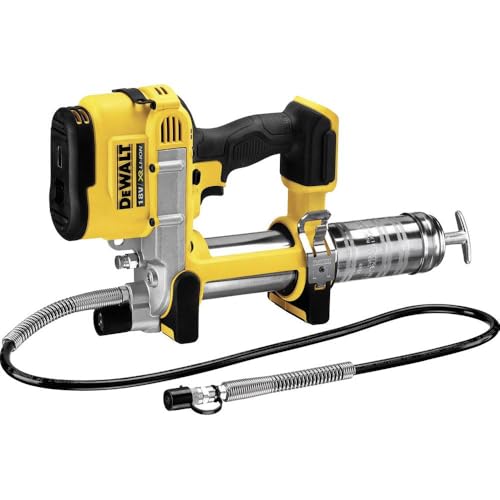
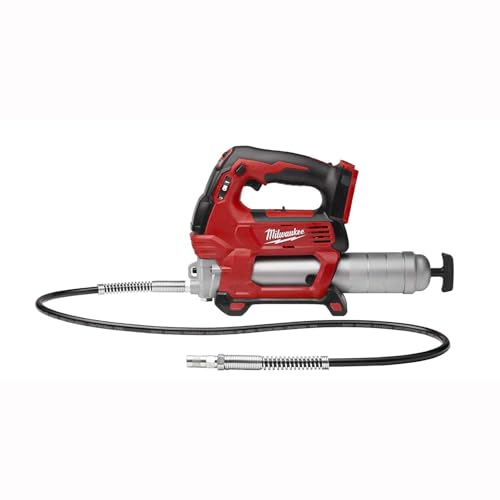
For serious, regular greasing, the 18V guns from Milwaukee, DeWalt and Makita are the ones to buy. They deliver up to around 10,000 psi, shift grease through stiff and corroded nipples without a fight, and run off the same 18V batteries as the rest of a trade kit. The Milwaukee M18 2646 is the fitter’s favourite for its two-speed control and rugged build; the DeWalt DCGG571 is the pick if you are on DeWalt XR; the Makita DGP180 is the one for Makita LXT users. Between them there is little to choose on performance – buy the one that matches your batteries.
If your greasing is lower-volume – a handful of nipples on a van, a trailer or a bit of machinery now and then – a 12V gun like the Milwaukee M12 is lighter, cheaper and easier to carry, and it will still save you the manual pumping. Just do not expect it to keep up with an all-day plant-greasing round the way an 18V gun will.
At a glance: the cordless grease guns compared
Prices are inclusive of VAT and reflect typical UK retail at the time of writing, and grease guns are frequently sold as kits with a battery, charger and case rather than bare – which is where a lot of the price difference comes from. Always confirm whether the deal is body-only or a kit, and check the hose length and included accessories, because those make a real difference in use.
| Model | Platform | Max pressure | Approx price | Best for |
| Milwaukee M18 2646 | M18 | ~10,000 psi | Kit ~£300+ | Heavy plant and fleet greasing |
| DeWalt DCGG571 | 18V XR | ~10,000 psi | Kit ~£320 | DeWalt users, all-round greasing |
| Makita DGP180 | 18V LXT | ~10,000 psi | Kit ~£400 | Makita users, machinery upkeep |
| Milwaukee M12 | M12 | ~8,000 psi | Kit ~£140+ | Lighter, lower-volume greasing |
The best cordless grease guns for UK trade in 2026
Milwaukee M18 2646 – the fitter’s favourite
The M18 2646 is the gun you see most in plant workshops and on fleet maintenance rounds. Two-speed operation lets you prime quickly on the low-pressure setting then switch to high pressure to force grease through a stubborn nipple, it delivers up to around 10,000 psi, and it shifts a solid amount of grease per minute so a full greasing round goes fast. The build is typical Milwaukee – it survives being dropped, dragged and left in a muddy toolbox. If you are on M18 it is the obvious buy; even if you are not, plenty of fitters buy into M18 partly for this tool. Sold mostly as a kit with battery, charger and a hard case.
DeWalt DCGG571 – the XR all-rounder
The DCGG571 is DeWalt’s 18V XR grease gun and it is a strong all-rounder for anyone already on the platform. It delivers high pressure for stiff nipples, runs off your existing XR packs, and the kit version comes with a 4.0Ah battery, charger, shoulder strap and a heavy-duty kitbox that makes it easy to grab and go. DeWalt quote it as roughly twice as fast as a manual gun, which is a fair reflection of how much time these tools save on a round of grease points. Around 320 pounds for the kit at the time of writing. If your kit is DeWalt, this is your gun.
Makita DGP180 – for the LXT crowd
The DGP180 is Makita’s 18V LXT grease gun, and it does the same core job as the Milwaukee and DeWalt – high pressure, cordless pumping, runs off the LXT packs you already own. It is the dearest of the three as a kit at around 400 pounds with a 5.0Ah battery, but if you are committed to Makita LXT the platform match is worth it, and the build quality is what you expect from Makita. For a workshop already running LXT it keeps everything on one battery family, which is the whole point of buying into a system.
Milwaukee M12 – the lighter, cheaper option
Not everyone needs a full 18V gun. If your greasing is a van, a trailer, a bit of machinery or the odd round of nipples rather than an all-day plant maintenance job, the Milwaukee M12 grease gun is lighter, more compact and much cheaper to buy into – kits start around 140 pounds. It still delivers serious pressure, around 8,000 psi, and it saves you the manual pumping. It will not sustain a heavy all-day greasing round the way the 18V guns do, but for lower-volume work it is the sensible, affordable choice – especially if you already run M12 for other compact tools.
18V or 12V – which do you need?
Be honest about your volume. If you are greasing plant, heavy machinery or a fleet regularly, buy an 18V gun – the extra pressure, run-time and grease throughput matter, and a 12V gun will leave you swapping batteries and working slower. If you grease occasionally and in smaller quantities, a 12V gun is lighter to carry, cheaper to buy and does the job without the bulk. The pressure difference matters most on stiff, cold or corroded nipples, where the 18V guns push through more easily. Match the tool to how much greasing you actually do, not the biggest gun on the shelf.
Buyer’s guide: what to look for
Maximum pressure
This is how hard the gun can push grease. Around 10,000 psi on the 18V guns will force grease through stiff, cold or partly seized nipples that a lower-pressure tool struggles with. If you deal with old, neglected or corroded grease points, high pressure is worth having; for clean, well-maintained kit it matters less.
Two-speed or variable control
The better guns let you prime and dispense quickly on a low-pressure, high-flow setting, then switch to high pressure to force grease home. It speeds up a round and gives you more control over how much grease goes in, which stops you overfilling and blowing seals. It is a feature worth paying for if you grease in volume.
Hose and build
A decent length of flexible hose lets you reach awkward grease points without contorting yourself, and a metal head and rugged body survive the knocks these tools take in a workshop or on plant. Check the hose length and whether a rigid extension is included, because a short hose makes some grease points a real fiddle.
Battery platform
As with any cordless tool, the smart buy shares your existing batteries. A grease gun on a platform you already own costs you just the tool; one on a new platform costs you a battery and charger on top. Unless you have a specific reason, buy the gun that matches the system your other tools run on.
FAQs
Are cordless grease guns worth it?
For anyone greasing plant, machinery, vehicles or agricultural kit regularly, yes – they save real time and spare your hands compared with manual pumping, and the consistent high pressure shifts grease through stiff nipples easily. For very occasional greasing of a single machine, a manual gun still does the job for a fraction of the price.
How much pressure do I need in a grease gun?
Around 10,000 psi on an 18V gun handles stiff, cold and corroded nipples with ease. Lower-pressure 12V guns, around 8,000 psi, are fine for clean, well-maintained grease points but can struggle with neglected ones. If you deal with old or seized kit, buy the higher-pressure tool.
18V or 12V grease gun for a mechanic?
For regular, heavy greasing of plant or a fleet, an 18V gun is the right call for pressure and run-time. For lighter, occasional work – a van, a trailer, the odd machine – a 12V gun is lighter, cheaper and perfectly adequate. Match it to your volume of work.
Do cordless grease guns fit standard grease cartridges?
Yes, the main brands take standard 400g grease cartridges, and most can also be filled by suction or bulk-fill from a tub. Check the tool’s cartridge spec, but the common 400g cartridge you buy from any merchant is the standard fit.