Best Hi-Vis Jacket UK — Waterproof & Insulated Picks
From waterproof bombers to lightweight softshells, we’ve picked the best hi-vis jackets available in the UK for construction, roadworks, rail, and general site work.
Kitd earns from qualifying purchases through Amazon links on this page.
A hi-vis jacket is one of those items you might not think much about until you’re standing in horizontal rain at 7am on a February morning, soaked through, freezing cold, and genuinely questioning your career choices. The right jacket keeps you visible, warm, dry, and able to actually do your job. The wrong one does none of those things and falls apart within three months.
The UK hi-vis market is flooded with cheap options that technically meet the standard but offer all the weather protection of a crisp packet. At the same time, premium brands charge serious money for jackets that aren’t always better than their mid-range alternatives. This guide cuts through the noise to find the hi-vis jackets that genuinely earn their place on your back — properly waterproof, sensibly designed, compliant with the standards your site demands, and built to last more than a single winter.
Every jacket below is EN ISO 20471 certified, available from UK retailers, and evaluated on the things that actually matter: waterproofing, warmth, breathability, freedom of movement, and whether it still looks presentable after six months of daily wear.
Our top picks at a glance
Hi-Vis Jacket | Best For | Class | Waterproof | Price Range |
Portwest C465 3-in-1 | Best all-rounder | Class 3 | Yes (taped seams) | £45-60 |
Snickers High-Vis Rain Jacket | Best premium pick | Class 3 | Yes | £100-110 |
Portwest S424 Softshell | Best softshell | Class 2 | Water-repellent | £40-50 |
Portwest S460 Traffic | Best waterproof on a budget | Class 3 | Yes (taped seams) | £40-45 |
Dickies Hi-Vis Bomber | Best budget option | Class 3 | Water-resistant | £20-30 |
Pulsar PR502 | Best for rail | Class 3 + RIS | Yes (taped seams) | £65-75 |
Hi-Vis classes explained: which do you actually need?
Before looking at individual jackets, it’s worth understanding the EN ISO 20471 standard that governs hi-vis clothing in the UK. Every hi-vis garment sold for professional use should be certified to this standard, and the class determines how visible you are. Getting the wrong class can get you kicked off site.
Class 1 — Minimum visibility
Class 1 garments have the smallest area of fluorescent material and reflective tape. They’re suitable only for low-risk environments where vehicles move at speeds under 30km/h — think warehouses, car parks, and private yards. A simple hi-vis vest or pair of hi-vis trousers typically falls into Class 1. For most UK construction sites and roadworks, Class 1 alone is not sufficient.
Class 2 — Mid-level visibility
Class 2 provides a larger area of fluorescent and reflective material, suitable for moderate-risk environments where vehicles and plant move at controlled speeds. Many hi-vis polo shirts, fleeces, and softshell jackets are certified to Class 2. On most UK construction sites, Class 2 is acceptable for general work away from active vehicle routes, particularly when combined with other hi-vis garments.
Class 3 — Maximum visibility
Class 3 requires the largest area of fluorescent material and reflective tape, covering the torso with long sleeves featuring reflective bands. This is mandatory for high-risk environments: highways work, railway lines, and any site where vehicles operate at speed. Most full-length hi-vis jackets and coats are designed to achieve Class 3. If your site requires Class 3 and your jacket only achieves Class 2, you can sometimes reach Class 3 by combining a Class 2 jacket with Class 2 trousers — but both must be individually certified.
The practical takeaway: if you work on construction sites, highways, railways, or anywhere with moving plant and vehicles, you almost certainly need Class 3. When in doubt, go Class 3 — no site manager has ever turned someone away for being too visible.
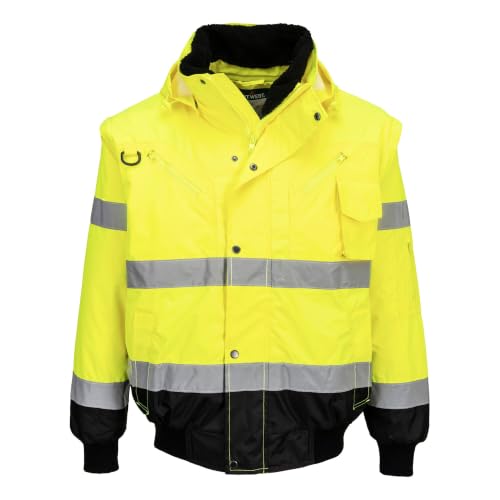
1. Portwest C465 Hi-Vis 3-in-1 Bomber Jacket — Best all-rounder
The Portwest C465 is the most versatile hi-vis jacket on this list, and arguably the best value for money in the entire UK hi-vis market. The ‘3-in-1’ designation isn’t marketing fluff — this jacket genuinely converts between a full waterproof bomber, an insulated winter coat (with removable fur lining and collar), and a lightweight body warmer by removing the sleeves. That’s three seasonal jackets for the price of one.
The outer shell is waterproof with taped seams, keeping you dry in sustained rain rather than just light showers. Multiple pockets provide generous storage for phones, pens, gloves, and whatever else you need on site. The detachable hood stows away neatly when not needed, and the two-way zip allows easy access when seated or in a harness.
At Class 3 EN ISO 20471, the C465 meets the highest visibility standard, making it compliant for highways and railway work. Who it’s best for: any tradesperson who works outdoors across all seasons and wants a single jacket that adapts to changing weather.
Worth knowing: it’s not the most breathable jacket when fully assembled with the fur lining. In warmer months or during physical work, you may overheat. If breathability is your priority, look at the softshell pick instead.

2. Snickers High-Vis Rain Jacket — Best premium pick
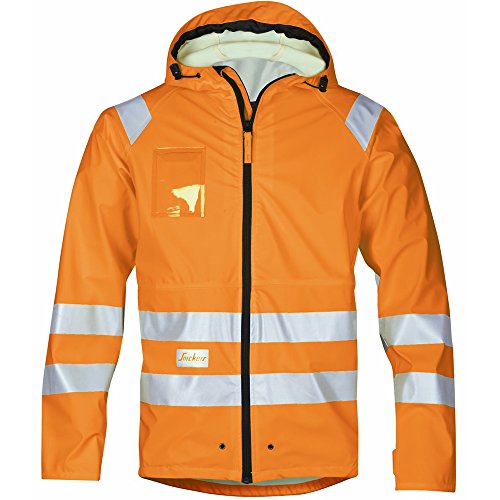
When you want premium build quality in a Class 3 waterproof, Snickers’ High-Vis Rain Jacket is the one to look at. The build quality is classic Snickers — premium materials throughout, thoughtful pocket placement, and a fit that works with layered clothing underneath without being baggy or restrictive. The jacket sits well under a harness and doesn’t ride up when you’re bending or reaching.
The trade-off is price. At over £100, it costs significantly more than alternatives like the Portwest C465. You’re paying for superior materials and Snickers’ build quality — whether that premium is worth it depends on how much time you spend working outdoors.
Who it’s best for: tradespeople who want Snickers’ fit and durability in a hi-vis waterproof and who are outside for full shifts regardless of weather.
3. Portwest S424 Classic Softshell — Best softshell
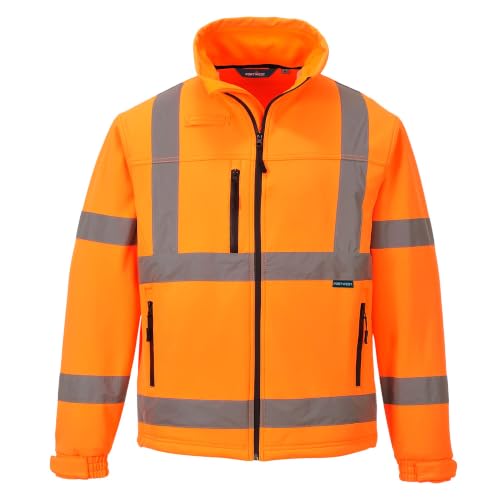
Softshell jackets occupy a sweet spot between full waterproofs and fleeces. They’re water-repellent (not fully waterproof), windproof, breathable, and stretch with your movements. For tradespeople who generate a lot of body heat during physical work, or who need to layer up and down throughout the day, a softshell is often more practical than a rigid waterproof shell.
The Portwest S424 does the softshell concept well at a sensible price. The fabric is flexible enough to feel comfortable during active work — reaching overhead, bending, climbing — without the rustling stiffness of a waterproof jacket. The water-repellent finish handles light rain and drizzle, though it won’t keep you dry in a sustained downpour.
Who it’s best for: active tradespeople who find traditional waterproofs too hot and restrictive. Ideal for spring, autumn, and milder winter days. Pairs well with a lightweight waterproof shell for the worst weather.
4. Portwest S460 Hi-Vis Traffic Jacket — Best waterproof on a budget
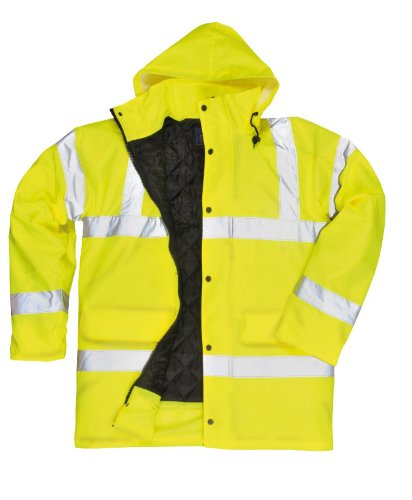
If waterproofing is your top priority and budget matters, the Portwest S460 is hard to beat. It’s a straightforward, no-nonsense waterproof hi-vis jacket with taped seams, a concealed hood, and a quilted lining for basic warmth. Class 3 certified, it meets the highest visibility standard and is a staple on UK construction sites for good reason.
The S460 won’t win any awards for style or premium materials, but it does exactly what it’s designed to do: keep you visible and dry. The taped seams prevent water ingress at the stitching points — a critical detail that separates genuinely waterproof jackets from merely water-resistant ones.
Who it’s best for: anyone who needs a reliable, compliant waterproof hi-vis jacket without a premium price tag. Excellent as a dedicated rain jacket or a backup for the worst weather days.
5. Dickies Hi-Vis Bomber Jacket — Best budget option
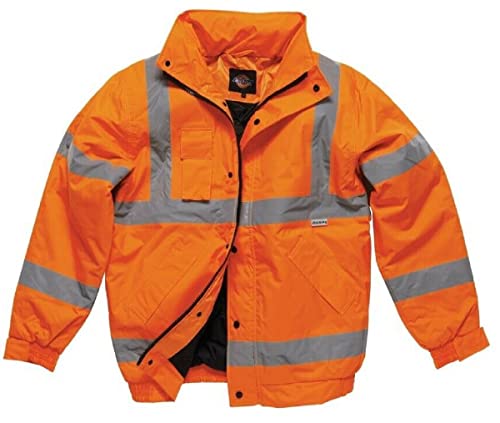
Dickies has built its reputation on affordable, functional workwear, and their hi-vis bomber jacket continues that tradition. It’s the cheapest jacket on this list, but it still delivers Class 3 compliance, a quilted lining for basic insulation, and enough durability for several months of regular use.
The honest assessment is that this is a budget jacket and it feels like one. The materials are thinner than the Portwest options, the water resistance is limited (it’ll handle a shower but not sustained rain), and the reflective tape won’t hold up to as many wash cycles. But as a starter jacket for apprentices, a spare jacket kept in the van, or a jacket for tradespeople who only need hi-vis occasionally, it’s a sensible, affordable option.
Who it’s best for: apprentices, occasional hi-vis wearers, and anyone who needs a compliant jacket at the lowest possible cost.
6. Pulsar PR502 Hi-Vis Storm Coat — Best for rail work
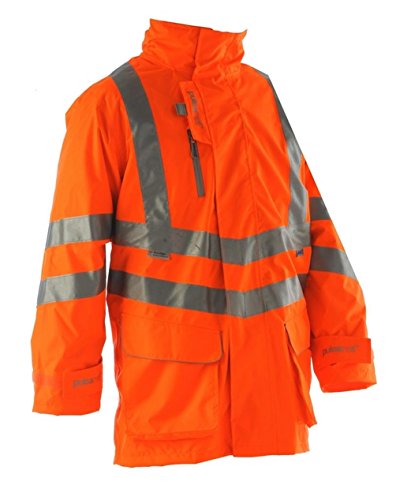
Rail work has specific hi-vis requirements beyond standard construction. The RIS-3279-TOM standard (Rail Industry Standard) mandates orange hi-vis for trackside work, with additional specifications for reflective tape placement and garment design. Not every Class 3 jacket meets rail compliance, so if you work on or near railways, you need a jacket that explicitly states RIS-3279 certification.
The Pulsar PR502 is purpose-built for this environment. It’s a heavy-duty storm coat with full waterproofing, taped seams, and a design that provides maximum coverage in the exposed, wind-swept conditions typical of railway work. It’s heavier and bulkier than the other jackets on this list, which is the trade-off for maximum protection.
Who it’s best for: rail workers, signalling engineers, and anyone who works trackside. Also suitable for highways work and other high-risk environments requiring maximum protection.
Hi-vis jacket buying guide: what actually matters
Waterproof vs water-resistant
This distinction matters enormously and is the source of most hi-vis jacket complaints. ‘Water-resistant’ means the fabric repels light rain and splashes but will eventually soak through in sustained rainfall. ‘Waterproof’ with taped seams means the jacket is sealed at every stitch point and will keep you dry in prolonged heavy rain. If you work outdoors in the UK, you need waterproof with taped seams for your primary wet-weather jacket. A water-resistant softshell is fine as a second option for drier days.
Breathability
A waterproof jacket that doesn’t breathe traps sweat inside, leaving you almost as wet from perspiration as you would have been from rain. Look for jackets with ventilation features — pit zips, mesh linings, or breathable membranes. This matters most for physically active trades like scaffolding, groundwork, and roofing where you’re generating significant body heat.
Fit and layering
A hi-vis jacket needs to fit over whatever you’re wearing underneath — which in a UK winter might be a base layer, fleece, and body warmer. Buy a jacket that accommodates layering without being so oversized that it catches on scaffolding, machinery, or tools. Try it on with your typical winter layers before committing.
Wash durability
Hi-vis jackets degrade with washing. The fluorescent material fades and the reflective tape loses effectiveness over time. EN ISO 20471 tests garments after five wash cycles, but most trade jackets need washing far more often than that. Higher-quality jackets from brands like Snickers and Portwest maintain compliance through significantly more washes than budget alternatives.
Orange vs yellow
Both orange and yellow are compliant under EN ISO 20471. Yellow is the standard choice for most UK construction and general site work. Orange is required for railway work under RIS-3279 and is sometimes preferred for highways work.
Related reading