Best Hi-Vis Vest UK 2026 — Tested for Site Wear and Visibility
Hi-vis is the workwear that quietly keeps you alive. The traffic management plan, the FLT operator at the back of the yard, the scaffolder swinging a tube on the other side of the slab — they all see you because of one cheap, lightweight bit of polyester pulled over your jumper at 7am. Get the wrong vest and it shrinks, frays, smells, or — worse — finishes the year out of spec because the reflective tape has lifted.
This is the UK trade pick of the best hi-vis vests for 2026, stocked at Screwfix, Toolstation, Amazon UK and the trade workwear specialists, rated for what tradespeople actually need: a Class 2 standard, decent fit, durable tape, and a price that makes sense for the way you use them. Whether you go through a fresh vest a week on a busy job or you’ve been wearing the same one since the slab went down in October, there’s a sensible answer in this list.
All prices below are approximate UK retail at the time of writing. Buying multipacks usually drops the per-vest price significantly, which matters if you run a crew.
Our quick verdict
If you want the one-line answer: the Portwest C470 Two Band & Brace Vest is still the best value hi-vis vest for UK tradespeople in 2026 — Class 2 certified, stocked everywhere, and cheap enough to keep half a dozen in the van without flinching. If you want a vest that lasts a season of proper site abuse, the Snickers Workwear 9410 ProtecWork is the step up. For rail or high-spec work, the Pulsar Evolution range is the right pick. And for UK-made with ID pocket detail, Leo Workwear is the one to look at.
The 6 best hi-vis vests for UK tradespeople in 2026
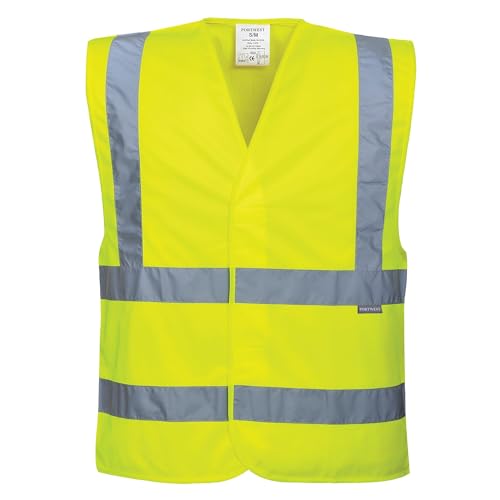
Portwest C470 Two Band & Brace Vest — Best value / fleet workwear
Price: Around £3–£6 per vest; £25–£40 for 6 to 10-packs at the trade workwear specialists
The Portwest C470 is the default hi-vis vest on UK building sites and has been for years. It is the vest most site managers hand to visitors, the vest most groundworkers keep three of in the van, and the vest stocked deep on the shelves at Screwfix, Toolstation, Amazon UK and the trade workwear retailers. Cheap, light, fully Class 2 compliant under EN ISO 20471, with two body bands and brace tape that catches headlights at distance.
It is not a luxurious vest. The polyester is thin, the side fastenings are basic touch-and-close, and the tape will start to lift if you put it through the tumble dryer with your boots in it. But for the money, you can keep a fresh one in the van every week, and on a busy job that is exactly what you want.
Pros: Class 2 certified, cheap per vest, stocked everywhere in the UK, easy to replace, multipack pricing makes sense for crews and fleets, available in yellow or orange.
Cons: Thin material, fastenings can break under heavy abuse, reflective tape lifts if washed badly, fit is generous so it can flap over a t-shirt in summer.
High Visibility: The Portwest C470 with classic reflective tape configuration will ensure you are seen. Available in all three EN ISO 20471 conforming colours. Complies with RIS 3279-TOM for rail industry (orange only)
Material: Made from 100% Polyester Warp Knit, this lightweight and comfortable waistcoat is a perfect everyday safety essential which will stand the test of time.
Multipurpose: Perfect for professionals in the construction industry, traffic/road workers and warehouse safety. Also great for general everyday use like jogging, dog waliking and roadside emergencies.
PRODUCT CARE: Max wash temp 40°C, mild process. Do not tumble dry, Line dry only. Certified to EN ISO 20471 after 50x washes.
Safety Ratings and Standards: Compliant with the latest EN ISO 20471 & ANSI standards. Portwest's Innovative and technical High Visibility range is ideal for those who will not compromise on style, comfort, protection and performance.
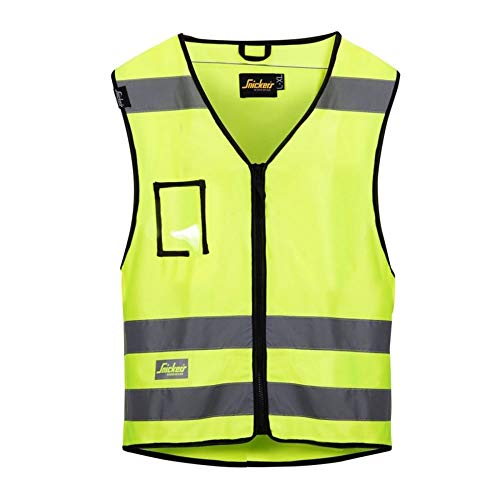
Snickers Workwear 9410 ProtecWork Hi-Vis Vest — Best all-round trade pick
Price: Around £35–£45
Snickers do hi-vis the way Snickers do everything — well-built, properly cut, and priced like they expect you to keep it for a season. The 9410 ProtecWork is a heavier-grade vest than the C470, Class 2 compliant, with sewn-in reflective tape (not heat-pressed) that genuinely survives the washing machine. The fit is the right side of close — it doesn’t balloon over a winter mid-layer and it doesn’t ride up when you bend over a brick stack.
There’s a chest pocket with a flap, two side fastenings rather than the cheap single, and a properly finished collar. If your hi-vis is on for eight hours a day and you’re sick of going through £4 vests every fortnight, this is the upgrade. Pair it with the Snickers 9402 ProtecWork hi-vis trousers if you’re working rail, highways or warehouse logistics.
Pros: Heavier-grade polyester, sewn-in reflective tape lasts properly, sensible UK trade fit, useful pocket detail, the right vest for a year of wear.
Cons: Premium price compared to the budget picks, narrower retail distribution than Portwest (Snickers specialists rather than every builders’ merchant), overkill for a job that needs vests on and off all day.
Reflective bands all around, including over the shoulders so that you’re highly visible from all directions – even when bending down
Features patented Multi-Pockets convenience, two smart side pockets, perfect for a mobile phone, PDA or glasses
Wide arm openings for maximum freedom of movement and perfect fit over a jacket
Material: 100% durable and comfortable polyester, 130 g/m²
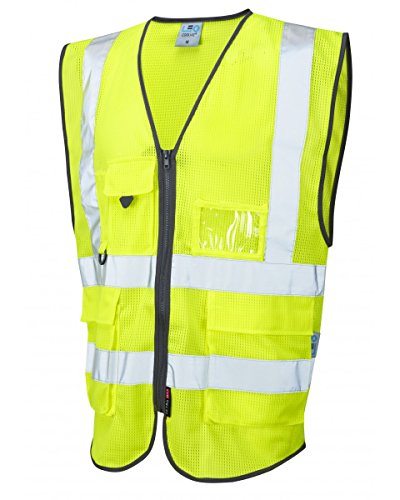
Leo Workwear Combe ID Hi-Vis Vest — Best UK-made
Price: Around £18–£28
Leo Workwear are based in Cornwall and they make a proper UK-made hi-vis range. The Combe ID Vest is their entry into the trade vest market and it earns its place on the list with two details: a clear ID pocket on the chest for site passes, and a heavier-than-average grade of fabric for the price. Class 2 certified under EN ISO 20471, with a sensibly cut shoulder yoke and reflective tape that holds up better than the budget picks.
Where Leo really wins is when the site requires ID badges visible at all times — the integrated ID pocket means you’re not pinning a card through a £4 vest every morning. UK-made, properly finished, and the price sits between the budget and premium picks.
Pros: UK-made in Cornwall, integrated ID pocket, heavier fabric than the budget picks, sensibly priced for a mid-range vest, good range of colours and sizes.
Cons: Less common in the big-shed retailers (look to the workwear specialists), still a polyester vest at heart, the ID pocket is overkill for trades that don’t need badge visibility.
A host of external storage and pocket solutions. ID Pocket. Mobile Phone Pocket. 2 Front Bellowed Storage Pockets.
Deeper Arm Holes than Standard. Scooped Sides Allowing Pocket Access.
Retromax Reflective Tape Hi-Vis Waiscoat conforms to: ISO 20471 CLASS 2 High Visibility Standard.
Pulsar Evolution EVO150 Hi-Vis Vest — Best for rail and heavier use
Price: Around £20–£32
Pulsar are the rail-spec workwear brand most UK trades will recognise from highways and infrastructure jobs. The Evolution EVO150 vest is RIS-3279 rail-spec compliant as well as EN ISO 20471 Class 2, which means it meets the orange-only spec required by Network Rail and the highways principal contractors. The fabric grade is heavier than the budget vests, the tape is sewn in, and the construction holds up to genuine site abuse.
If you do any rail or highways work, this is the easiest spec answer — buying a budget vest and finding it doesn’t pass the site safety check is an expensive lesson. For general building, it’s overkill, but it’s the vest that lasts longest in real use.
Pros: Rail-spec RIS-3279 compliant, heavy-grade fabric, sewn-in tape, sensible fit, the right pick for highways and rail work.
Cons: Premium price for general building, the orange-only rail spec is a constraint if you wanted yellow, narrower retail distribution.
Scruffs Pro Hi-Vis Vest — Best slimmer fit
Price: Around £10–£15
Scruffs have built their UK trade business on workwear that fits younger and slimmer than the old Portwest-shaped vests, and the Pro Hi-Vis Vest carries that across. Class 2 certified under EN ISO 20471, with side fastenings that sit closer to the body, and reflective tape laid out in the standard two-band-and-brace pattern. The vest doesn’t flap, doesn’t ride up under a tool belt, and finishes at a length that works under a Scruffs jacket or hoodie.
It’s not as durable as the Snickers or the Pulsar — the fabric weight is closer to the C470 than to the premium picks — but the fit and the brand familiarity make it the easy pick for first-fix carpenters, electricians and second-fix lads who want their hi-vis to look like the rest of their kit.
Pros: Slimmer trade fit, decent price, stocked at Screwfix and the workwear specialists, brand familiarity if you already wear Scruffs.
Cons: Mid-grade fabric — won’t last as long as the premium picks, no ID pocket detail, not rail-spec compliant.
Site Hi-Vis Vest (B&Q / Screwfix Site brand) — Best for occasional and visitor use
Price: Around £4–£8
The own-brand Site hi-vis vest from B&Q and the equivalent Screwfix in-house picks are the right answer when you need a stack of vests for visitors, apprentices on day one, or the occasional trip into a yard. EN ISO 20471 Class 2 certified, basic single side fastening, heat-pressed tape, and the kind of generous fit that means one size fits most. Cheap enough to write off when somebody walks off site still wearing it.
These aren’t the vests you’d ask a brickie to wear five days a week — the tape lifts faster, the fit is generous, and the fabric is the lightest of the picks here. But for the role they fill, they’re exactly right.
Pros: Cheap enough to keep a stack of, easy to find at any big-shed retailer, Class 2 compliant, generous fit covers visitors and apprentices.
Cons: Heat-pressed tape lifts with poor washing, light fabric, fit is too generous for daily wear, basic fastenings.
UK hi-vis vests compared at a glance
Vest
Standard
Approx Price
Best for
Snickers Workwear 9410 ProtecWork
EN ISO 20471 Class 2
£35–£45
All-round trade pick
Portwest C470 Two Band & Brace
EN ISO 20471 Class 2
£3–£6 / £25–£40 (6/10-pack)
Best value / fleet workwear
Leo Workwear Combe ID Vest
EN ISO 20471 Class 2
£18–£28
UK-made / ID pocket
Pulsar Evolution EVO150
EN ISO 20471 Class 2 / RIS-3279
£20–£32
Rail spec / heavier use
Scruffs Pro Hi-Vis Vest
EN ISO 20471 Class 2
£10–£15
Slimmer fit / younger trades
Site Hi-Vis Vest (B&Q / Screwfix)
EN ISO 20471 Class 2
£4–£8
Visitor / occasional use
What to look for in a UK hi-vis vest
EN ISO 20471 — the standard that actually matters
All proper UK hi-vis is certified under EN ISO 20471, which replaced EN 471 a few years ago. Class 2 is the standard for general site and traffic-adjacent work — two horizontal reflective bands and either braces or full-shoulder tape on a yellow or orange fluorescent body. If a vest doesn’t carry the EN ISO 20471 mark on the inside label, it doesn’t count as PPE under UK CDM rules and the site manager is entirely right to send you back to the van for a proper one.
RIS-3279 — the rail-spec on top
If you’re doing any work on the rail network, the additional Network Rail spec is RIS-3279-TOM. It tightens the colour requirement to orange only, sets a minimum tape area, and requires the vest to pass specific washing and durability tests. Pulsar, Leo and the rail-specialist brands certify to this — the budget Portwest C470 doesn’t. Check the site spec before you turn up.
Yellow vs orange
Yellow is the default for general building, warehouse and traffic-adjacent work. Orange is the rail and highways default. Both are EN ISO 20471 compliant — the colour choice is about which sector you’re working in, not which is more visible. Some sites specify the colour, so check the welfare induction.
Sewn-in vs heat-pressed reflective tape
This is the single biggest predictor of how long a hi-vis vest lasts. Heat-pressed tape (the budget option) lifts at the edges after a few washes — particularly if you let the vest sit damp in the boot of the van. Sewn-in tape (the premium option) holds for the life of the vest. If you’re buying a vest you intend to wear daily, pay the extra for sewn-in.
Fit and length
A hi-vis vest that flaps in the wind is a nuisance and a hazard. Look for side adjustment that pulls the vest close to your body, and a length that sits at the top of your tool belt — not above it (so the side fabric escapes the belt) and not too far below it (so the tape gets covered up). The Snickers and Scruffs picks fit closer than the older Portwest cut.
Pocket detail
Most hi-vis vests have one chest pocket if any. The Leo Workwear ID pocket is the standout for sites that require visible badges. For general use, you’ll keep your phone, pencils and tape in your trousers anyway — pocket detail on a vest is a nice-to-have rather than a deal-breaker.
How we’d buy
If you run a small crew and need vests on most days but you’re sick of throwing them away every fortnight, the answer is a 10-pack of Portwest C470 for the cab, plus a Snickers 9410 ProtecWork in your locker for the days you’re on for ten hours. If you’re a sole trader or first-fix lad who wants the vest to feel like part of your kit, a Scruffs Pro or a Leo Workwear Combe ID is the right pick. Rail and highways: Pulsar Evolution, no debate.
Don’t try to economise across the board on hi-vis. The budget vests are right for the right job — visitors, occasional yard trips, fleet basics — but if you’re wearing it eight hours a day five days a week, buy the proper one. A £35 Snickers vest worn for a year costs less per shift than a £4 vest you replace every fortnight.
Frequently asked questions
Is a hi-vis vest enough for highways work?
On most live-traffic highways jobs the requirement is Class 3 hi-vis — that’s a vest plus hi-vis trousers, or a long-sleeved hi-vis jacket. A Class 2 vest on its own won’t pass the site induction. Check the contractor’s spec before you turn up.
How often do hi-vis vests need replacing?
EN ISO 20471 doesn’t specify a wear limit, but the standard the tape and fabric are tested to is 25 washes for a budget vest and 50+ for the premium picks. Practically, replace any vest where the tape is lifting, the fluorescent colour has dulled visibly, or the fabric is torn through. If in doubt — replace. They’re cheap insurance.
Can you wash a hi-vis vest in the machine?
Yes — at 30°C or 40°C, inside out, no tumble dryer. The reflective tape doesn’t like high heat. Don’t iron it. Don’t bleach it. A budget vest will survive ten or fifteen washes properly done; a premium vest will survive fifty.
Yellow or orange — which is more visible?
Both colours meet the visibility standard at Class 2. Yellow is the general building and warehouse default; orange is the rail and highways default. Visibility against the background matters more than the colour itself — yellow against a grass verge, orange against autumn leaves, either against a grey concrete slab. Use what the site specifies.
Do hi-vis vests come in sizes?
The budget Portwest, Site and similar vests are usually one-size-fits-most with adjustable side fastenings. The Snickers, Scruffs, Leo and Pulsar picks come in proper S to XXL sizing for a closer fit. If you wear a vest daily, size it properly — it’ll sit better under a jacket and won’t flap.
Final verdict
For most UK trades in 2026, the right answer is a stack of Portwest C470 vests in the van for daily use, replaced as they wear, plus a Snickers 9410 ProtecWork for the days you’re on a long job and don’t want to think about it. Rail and highways lads: Pulsar Evolution, every time. UK-made and ID-pocket needed: Leo Workwear Combe. Younger trades who want the slim fit: Scruffs Pro.
Buy properly, wash gently, and replace before the tape lifts. Hi-vis is the cheapest bit of PPE you’ll own — and the one most likely to save your back.