


Our quick verdict
For most UK tradespeople the Makita HM0870C (or its anti-vibration 240V sibling, the HM0871C) is the breaker to buy. At just over 5kg it is light enough to use on a wall or overhead in short bursts, but it still delivers proper breaking energy for footings, screed and light slab work, and it takes standard SDS-Max points and chisels. It is the sensible middle ground.
If you are on the tools all day – groundworks, demolition, breaking floors regularly – step up to the Bosch GSH 11 VC. It is heavier and pricier, but its vibration control is the best here and that is what saves your hands over an eight-hour shift. For heavy downward breaking on site, DeWalt’s 10kg SDS-Max breaker is the 110V workhorse.
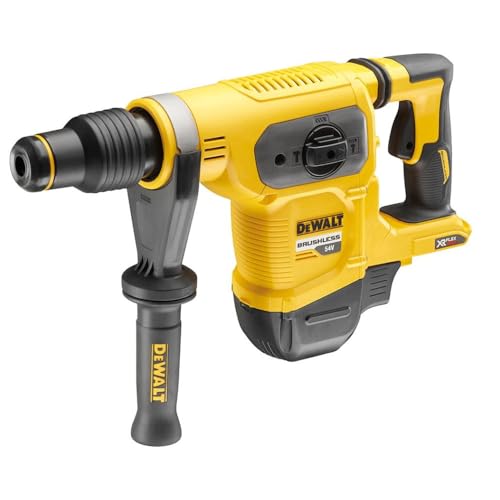
Already on FlexVolt? The DeWalt DCH481N gives you cordless SDS-Max chiselling with no lead. And if you only break concrete a few times a year, do not overspend – the Einhell TC-DH 43 or the JCB 1700W hex breaker will do the job for well under £250.
At a glance: concrete breakers compared
Prices are inclusive of VAT and reflect typical Amazon UK pricing at the time of writing (September 2026). Breakers are heavy, high-draw tools, so always check current pricing and whether you need the 110V or 240V version before you buy.
Model | Type / weight | Power | Approx price | Best for |
Makita HM0870C / HM0871C | SDS-Max, ~5kg | Corded 110V / 240V | ~£340–£380 | All-round mid-weight breaking |
Bosch GSH 11 VC | SDS-Max, 11kg, 23J | Corded 110V / 240V | ~£850 | All-day use, lowest vibration |
DeWalt 10kg SDS-Max breaker | SDS-Max, 10kg | Corded 110V | ~£530 | Heavy floor breaking on site |
DeWalt DCH481N | SDS-Max rotary hammer | Cordless 54V FlexVolt | ~£515 body | FlexVolt owners going cordless |
JCB 1700W breaker | 30mm hex | Corded 240V | ~£230 | Heavy hex breaking on a budget |
Einhell TC-DH 43 | SDS-Hex, 43J | Corded 240V | ~£160 | Occasional and budget demolition |
The best concrete breakers for UK trade in 2026
1. Makita HM0870C / HM0871C – the all-round best buy
The HM0870C is the breaker most tradespeople should own. It uses the SDS-Max system, so points, flat chisels and clay spades swap in without tools, and at around 5kg it is light enough to hold horizontally into a wall or work overhead for short spells without wrecking your shoulders. Makita quotes roughly 11.4 joules of impact energy, which is plenty for footings, screed, tile beds, light floor slabs and breaking out around drainage.
It has a soft-start motor, variable speed and constant speed under load, and comes in a carry case. On Amazon the 110V site version is the HM0870C/1. For domestic and workshop use, go for the 240V HM0871C/2 – the same tool with Makita’s AVT anti-vibration technology built in, and one of the best-reviewed breakers on Amazon UK with over 600 ratings. It is not the tool for lifting a thick reinforced road, but for the day-to-day breaking a builder, groundworker or bathroom fitter actually does, it is hard to beat.
110V site version:

2. Bosch GSH 11 VC – best for all-day use
If you break concrete for a living, the GSH 11 VC earns its keep. It is an 11kg SDS-Max breaker aimed squarely at demolition and heavy groundwork, with 23 joules of impact energy – roughly double the Makita – so it eats through thick slabs and reinforced sections. Where it really stands out is the Vibration Control system: a decoupled handle and counter-balanced hammer mechanism that keeps measured hand-arm vibration low for a tool this powerful.
That vibration figure is not a marketing line – it directly affects how long you can legally and safely run the tool under UK HAVS rules. Lower vibration means more trigger time before you hit your daily exposure limit. Add adjustable impact force, a service display that warns you before the brushes need changing and 12-position Vario-Lock chisel adjustment, and it is the breaker to pick if your hands need to last another twenty years. It is not cheap – expect around £850 on Amazon – but it is the one you will still be using in ten years.
3. DeWalt 10kg SDS-Max Breaker (110V) – best for heavy floor breaking
When the job is downward – lifting concrete floors, breaking up a yard, splitting a thick path – a heavy breaker beats a mid-weight tool. DeWalt’s 10kg SDS-Max breaker is the 110V site workhorse: an in-line design that puts your weight directly behind the chisel, 12 preset chisel positions for quick re-orientation, and a modular build that makes servicing faster and cheaper when it has taken a season of abuse.
It is happiest used vertically, letting its own weight and hammer action do the work. It is not a wall tool – too heavy for horizontal work – but for breaking floors and hard standing it is a workhorse that will outlast a lot of hire-shop kit. It is 110V, so run it off a transformer.

4. DeWalt DCH481N FlexVolt – best cordless for FlexVolt owners
Cordless breaking has come a long way. The DCH481N is a 54V FlexVolt SDS-Max hammer with a chisel-only mode, so it takes the same SDS-Max points and chisels as the Makita and Bosch – with no cable, no transformer and no trip hazard. For anyone already invested in DeWalt FlexVolt batteries, it is the obvious way to add SDS-Max breaking without another platform, and it is superb for first-fix drainage, snagging and jobs where dragging a lead out is more hassle than the breaking itself.
Be realistic about what it is: a rotary hammer that also chisels, not a dedicated heavy breaker, so it hits lighter than the corded tools above. You will also get through batteries on sustained demolition. It suits burst work rather than breaking a floor all day. Buy it body-only if you already have the big FlexVolt packs.
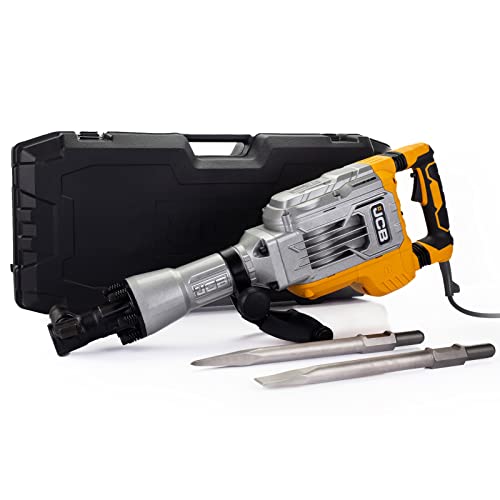
5. JCB 1700W Demolition Hammer – best heavy hex breaker on a budget
If you need a big downward hex breaker for floors and paths but cannot justify pro-brand money, the JCB is the pick. It is a 1700W, 240V unit with a 30mm hex chuck that takes standard demolition steels and clay spades, an anti-vibration handle and a multi-position side handle, and it comes in a case. JCB claims 65 joules of impact energy – treat budget-brand energy figures with some caution, but it hits hard and it is well reviewed on Amazon UK.
It is a two-hands, downward-only tool, and 240V means it is for domestic jobs and your own yard rather than a 110V site. For breaking out a patio, a garage floor or old footings a few times a year, it is a lot of breaker for around £230.
6. Einhell TC-DH 43 – best budget breaker
Not everyone breaks concrete often enough to justify a Makita or Bosch. If you lift the odd path, break out a hearth or do occasional demolition, the Einhell TC-DH 43 does the job for a fraction of the price. It is a 1600W, 240V hex breaker with 43 joules of single impact energy, an SDS-hex chuck for quick steel changes and an extra handle for control. With more than 2,000 reviews, it is by far the most-bought breaker on Amazon UK.
Treat it as what it is: an occasional-use tool. The vibration is higher than the pro tools, so wear proper gloves and take breaks, and do not expect it to survive daily professional demolition. For a homeowner-plus, a landlord or a trade that only breaks concrete now and then, it costs less than a couple of days’ hire.
Corded 110V, corded 240V or cordless – which do you need?
This is the first decision, and it is about where you work. On a commercial or new-build site you will almost always need 110V and a transformer – it is the safe, expected standard and many sites will not let a 240V lead through the gate. For domestic jobs, workshops and your own use, 240V plugs straight into the wall and is simpler. The Makita and Bosch come in both, so buy the voltage that matches where you spend most of your time.
Cordless is the newer option and it is now genuinely viable for burst work. For remote jobs and anywhere a cable is a nuisance, a FlexVolt SDS-Max hammer removes a real headache. Just be realistic about runtime: sustained all-day demolition still favours corded, and the batteries to feed a cordless breaker are not cheap. Match the tool to your typical day, not the one big job you do twice a year.
Buyer’s guide: what to look for
Impact energy, not wattage
The number that matters is impact energy in joules per blow – that is what actually breaks concrete. Motor wattage tells you little. A mid-weight breaker around 11 to 13 joules handles most trade work; heavy demolition wants 20 joules and up. More energy means faster breaking but a heavier tool, so match it to the job rather than chasing the biggest figure. Be wary of very high figures on budget breakers – they are not always measured to the same standard as the pro brands.
Vibration and HAVS
Hand-arm vibration is a real occupational risk and it is regulated under UK HSE rules. Every breaker has a declared vibration figure in metres per second squared, and it sets how long you can safely use the tool before hitting your daily exposure limit – your trigger time. A breaker with good anti-vibration lets you work longer and protects your hands over a career. Take the vibration spec seriously, use anti-vibration gloves, and rotate the work where you can.
Chisel system: SDS-Max or hex
SDS-Max is the standard for mid-weight breakers – quick tool-free changes and a huge range of points, chisels and spades. Big heavy breakers often use a 28mm or 30mm hex collar instead, which takes larger, tougher and usually cheaper steels for serious floor and road work. Neither is better outright; SDS-Max suits versatile mid-weight use, hex suits heavy downward breaking.
Weight and orientation
Weight decides how you can use the tool. A 5kg breaker works horizontally into walls and overhead; a 10kg-plus unit is a downward, floor-breaking tool and will exhaust you fast if you try to hold it out. Be honest about whether your work is walls and light slab, or floors and hard standing, and buy the weight class to suit.
FAQs
Do I need a breaker or will an SDS drill do?
For light chiselling – lifting tiles, chasing a little, breaking a thin screed – an SDS-Plus drill in hammer-only mode is fine. For anything thicker or sustained, a dedicated breaker is far quicker, hits harder and will not cook itself doing a job it was not built for. If you break concrete more than occasionally, own a breaker.
What is the difference between SDS-Max and hex breakers?
SDS-Max is a chuck standard for mid-weight breakers with fast tool-free steel changes and a wide accessory range. Hex breakers use a large hex collar (commonly 28mm or 30mm) built for the heaviest downward demolition, taking bigger, cheaper steels. Choose SDS-Max for versatile mid-weight work and hex for heavy floor and road breaking.
Is a cordless concrete breaker powerful enough?
For burst work, yes. A 54V FlexVolt SDS-Max hammer handles chasing, drainage and light breaking without a cable. The limit is impact energy and runtime under sustained use, plus battery cost, so for all-day floor breaking corded is still the more economical and more powerful choice.
Do I need 110V for site use?
On most UK commercial and construction sites, yes – 110V run through a transformer is the required standard and many sites will refuse 240V tools. For domestic work, workshops and personal use, 240V is fine and simpler. Buy the voltage that matches where you actually work most.
Prices and availability change quickly, so check the current price and confirm the voltage before you buy. Whatever you pick, look after your hands – a breaker with good vibration control and sensible trigger time is money well spent.
Related reading