Quick Verdict
Makita’s LXT range is the wider, deeper platform and remains the safer default for most UK trades. Bosch Professional’s 18V System answers back with genuinely strong individual tools and a slightly more refined feel in the hand — worth the look if you value ergonomics and don’t need the absolute widest tool range on the market. Neither platform is a wrong choice; this is closer than DeWalt vs Milwaukee.
Battery Platforms — The Foundation
Makita: Dual-Platform Strategy
Makita runs two separate battery systems: LXT (18V, the range most trades will actually buy into, with 250+ tools) and XGT (40V Max, for the heaviest categories like SDS-max breaking and large grinding). The two don’t share batteries, so choosing Makita on the trade-tool side generally means committing to LXT and only adding XGT tools if you specifically need the extra power.
Bosch Professional: One Platform, Maximum Flexibility
Bosch runs a single 18V Professional System across its entire trade range, from compact drivers up to SDS-plus rotary hammers, so every battery you buy works in every Bosch Professional tool without a second platform to think about. It’s a simpler proposition than Makita’s dual-platform split, even if the top-end power ceiling doesn’t quite reach XGT territory.
Tool Range — Who’s Got More?
Makita’s combined LXT and XGT range is larger than Bosch Professional’s 18V System — more niche and specialist tools, and a longer history of UK trade adoption that shows up in second-hand availability and merchant stock levels. Bosch’s range is still genuinely deep for a single-platform system, covering the vast majority of what a general trade user needs, but if you’re chasing a specific niche tool, Makita is statistically more likely to make it.
Price — What’ll It Cost You?
A genuine current Bosch Professional combi/impact kit — the GSB 18V-55 combi drill paired with the GDR 18V-200 impact driver, 2×4.0Ah batteries and L-BOXX case — currently runs a little above the equivalent Makita LXT twin kit, reflecting Bosch’s slightly more premium positioning within the trade-tool space.


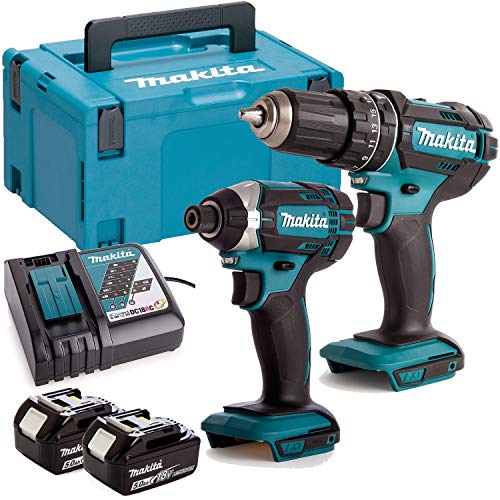
Makita’s DLX2131TJ twin kit (DHP482 combi drill and DTD152 impact driver, 2×5.0Ah batteries) is the more affordable of the two, and remains one of the best-reviewed entry points into LXT on Amazon UK.
Build Quality & Performance
Both brands build to a genuine trade standard and either will survive daily site abuse without complaint. Bosch Professional tools tend to feel a shade more refined in the hand — slightly better balance and vibration control on the drivers in particular — while Makita’s advantage shows up more in raw torque and runtime figures on the higher-spec LXT and XGT tools.
Charging Speed & Battery Technology
Both platforms offer fast chargers that will top up a mid-capacity battery in under an hour, and both use standard lithium-ion cells with similar real-world runtimes at matched capacities. Bosch’s ProCORE batteries pack more cells into the same footprint for a genuine capacity advantage over a same-size standard pack; Makita’s advantage is simply having a wider spread of capacities available across more of its range.
Smart Features & Connectivity
Neither Bosch Professional nor Makita LXT/XGT offers a connected tool-tracking ecosystem to match Milwaukee’s One-Key — this is one area where both these platforms trail the segment leader. If tool tracking and torque logging matter to your business, that’s a reason to look outside this specific comparison rather than a point in either brand’s favour here.
Warranty & UK Support
Both brands offer a standard 1-year warranty that extends to 3 years with free online registration, and both maintain proper UK service networks with genuine spare parts availability — a real advantage over cheaper import brands where getting a tool repaired can be a genuine headache.
Which Should You Choose?
Go with Bosch Professional if:
you want a single simple battery platform with no second system to think about, you value tool feel and ergonomics highly, or you’re already invested in Bosch’s Professional accessories and blue-tool ecosystem.
Go with Makita if:
you want the widest possible tool range and the strongest second-hand market, you might eventually need XGT-level power for heavy SDS-max or demolition work, or you’re buying into a platform that the widest range of UK tradespeople already use.
Frequently Asked Questions
Are Bosch Professional and Bosch Green (DIY) batteries interchangeable?
No — Bosch Professional’s 18V System batteries are a separate line from the Bosch Green/Power for All Home & Garden range; they use a different pack design and aren’t cross-compatible.
Can Makita LXT batteries be used in XGT tools?
No — XGT is a separate 40V platform with its own battery mount; LXT and XGT batteries don’t fit each other’s tools.
Which platform is cheaper to buy into?
Bosch Professional and Makita LXT are broadly comparable at the entry level; exact pricing shifts with retailer offers, so it’s worth comparing current twin-kit prices before deciding.
Does either brand offer a body-only option to save money?
Yes — both Bosch Professional and Makita sell the vast majority of their tools as bare units (body only) for anyone already holding batteries and a charger on that platform.
Which has the better resale value in the UK?
Makita LXT, by a clear margin — it has been on UK sites longer and in greater volume, so used tools and batteries are easier to buy and sell.
Final Verdict
Makita LXT is the safer, wider-ranging default for most UK trades, and the platform most likely to already be running on the van next to yours. Bosch Professional is a genuinely strong single-platform alternative that’s worth serious consideration if you want one simple battery system and prize tool feel — just don’t expect quite the same tool-range depth or second-hand market that Makita offers.
Related reading