Best Cordless Grinder UK 2026 — Top 6 Angle Grinders Reviewed
Cordless grinders have come a long way. A few years ago, the idea of ditching the cord on a grinder would’ve got you laughed off site. Now? The latest 18V and brushless models from the big brands can genuinely compete with their corded counterparts for most trade applications.
Whether you’re cutting rebar, grinding welds, cleaning up metalwork, or trimming tiles, a good cordless grinder gives you the freedom to work anywhere without dragging an extension lead across the site. And with modern batteries delivering serious runtime, you can actually get through a proper day’s work on a single charge.
We’ve rounded up the best cordless angle grinders available in the UK for 2026. Every pick on this list is something we’d be confident recommending to a working tradesperson — no toys, no gimmicks.


Our Top Picks at a Glance
| Product | Best For | Price Range |
| Milwaukee M18 FUEL CAG115XPDB | Best Overall (115mm) | £130–£160 |
| DeWalt DCG405N 18V XR | Best Value (125mm) | £100–£130 |
| Makita DGA504Z 18V LXT | Best for Makita Users (125mm) | £90–£115 |
| DeWalt DCG418N 54V FlexVolt | Best Heavy Duty (125mm) | £180–£220 |
| Bosch GWS 18V-10 SC | Best for Control (125mm) | £140–£170 |
| Makita DGA467Z 18V LXT | Best Compact (115mm) | £80–£100 |
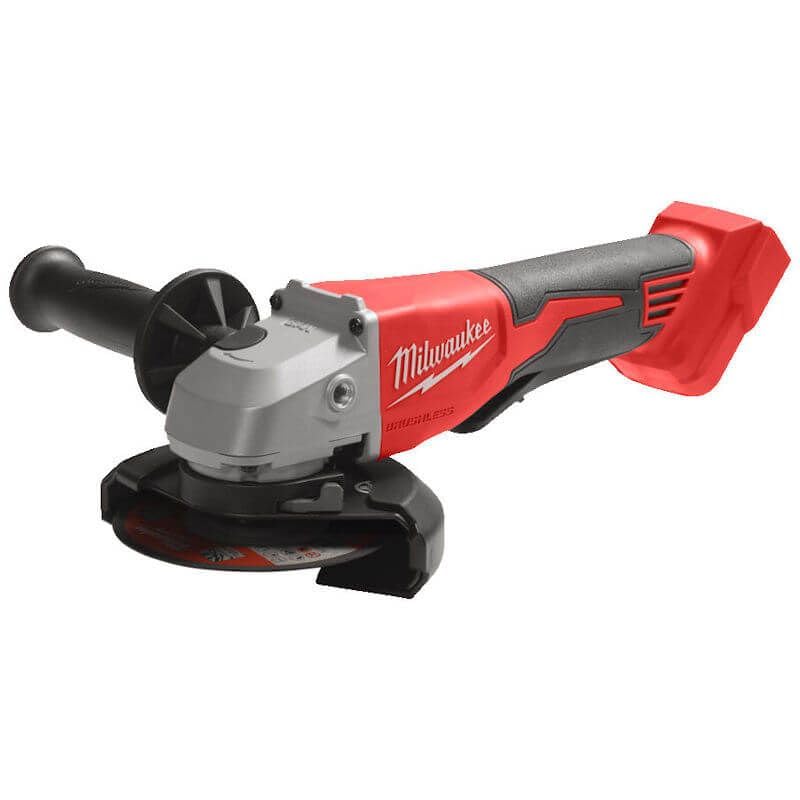
1. Milwaukee M18 FUEL CAG115XPDB — Best Overall
The Milwaukee M18 FUEL 115mm grinder is, for our money, the best cordless grinder you can buy in the UK right now. It combines serious power with excellent safety features and the kind of build quality that justifies the Milwaukee price tag.
The POWERSTATE brushless motor delivers performance comparable to many corded grinders, with enough torque for cutting, grinding, and finishing across metal, masonry, and tile. The FIXTEC quick-change nut means disc changes take seconds without needing a spanner, and the electronic brake stops the disc in under two seconds — a genuine safety feature that you’ll appreciate daily.
Anti-vibration side handle, paddle switch with dead-man function, and overload protection round out a tool that’s been designed for professional daily use. Pair it with a HIGH OUTPUT 5.0Ah or 6.0Ah battery for best results. At £130–£160 (bare unit), it’s not cheap, but the performance and reliability justify the premium.
Pros: Outstanding power and performance. Electronic brake. FIXTEC quick-change. Anti-vibration handle. M18 FUEL build quality. 5-year warranty.
Cons: Premium price. 115mm disc only — no 125mm option in this model. Battery sold separately.
- Ergonomic design
- Ideal Product
- Enhanced features
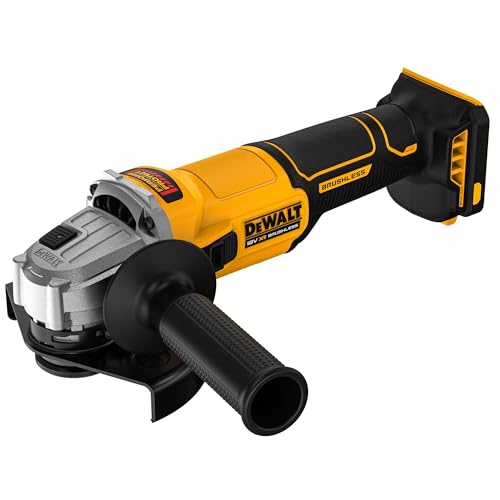
2. DeWalt DCG405N 18V XR 125mm — Best Value
The DeWalt DCG405N is one of the most popular cordless grinders on UK building sites, and for good reason. It delivers strong performance at a price that undercuts most of its competitors, and the 125mm disc capacity gives you more versatility than 115mm models.
The brushless motor provides a no-load speed of 9,000 RPM with enough grunt for cutting rebar, grinding welds, and general metalwork. The electronic brake stops the disc quickly, and the mesh cover protects the motor from dust ingress — important when you’re throwing up sparks and grit all day.
The trigger-style switch with lock-off is easy to operate with gloves, and the overall ergonomics are comfortable for extended use. At £100–£130 for the bare unit, it’s excellent value and widely available at Screwfix, Toolstation, and online. If you’re on the DeWalt platform, this is a no-brainer.
Pros: Excellent value for money. 125mm capacity. Electronic brake. Dust-protected motor. Widely available.
Cons: Not quite as powerful as the Milwaukee FUEL. No FIXTEC-style quick-change. 3-year warranty (vs Milwaukee’s 5).
- SUPERIOR POWER AND UNMATCHED PERFORMANCE: Its 18V brushless motor provides enhanced efficiency and durability, longer lifespan, and reduced maintenance compared to brushed motors.
- ELECTRONIC CLUTCH: Reduces the kickback reaction in the event of a pinch or stall, minimizing the risk of injury and potential damage to the workpiece. Experience superior control and confidence, especially during demanding cutting and grinding tasks.
- MESH DEBRIS COVERS: Restrict dust being sucked through the motor. These covers help maintain optimal airflow and cooling, reducing the risk of overheating and extending the lifespan of the motor. Particularly beneficial in dusty environments, ensuring reliable operation and minimizing maintenance needs.
- ERGONOMIC: Designed with a rubber overmould for enhanced grip and comfort. It reduces fatigue during prolongued use while also ensuring toughness and great control.
- VERSATILE: Equipped with a side handle that can be positioned in two different locations, providing greater comfort and control for the user. This versatility allows for optimal handling and stability during various cutting and grinding tasks, accommodating different user preferences and work conditions.

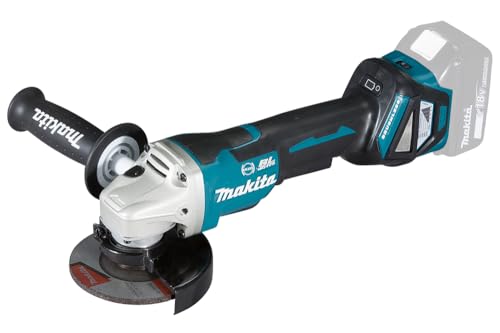
3. Makita DGA504Z 18V LXT 125mm — Best for Makita Users
If you’re running Makita’s 18V LXT platform, the DGA504Z is the grinder to go for. It’s a well-built, brushless 125mm angle grinder with Makita’s Automatic Speed Change Technology, which adjusts the motor speed and torque automatically based on the load. In practice, this means smoother operation and better battery life.
The electronic brake, soft start, and anti-restart function are all present for safety. The slide switch is easy to operate and the overall balance and weight feel right for sustained use. Makita’s build quality is solid — these are tools that handle site conditions well.
At £90–£115, it’s competitively priced and a strong performer. The only reason it doesn’t rank higher is that the Milwaukee and DeWalt options edge it on outright power in some applications. But for most everyday grinding and cutting tasks, you won’t notice the difference.
Pros: Automatic Speed Change Technology. Good price. Reliable Makita build quality. Electronic brake and soft start. 125mm disc capacity.
Cons: Slightly less powerful than Milwaukee FUEL. Slide switch can be less intuitive than paddle. No quick-change nut.
- Ideal for heavy duty grinding applications
- 125mm wheel diameter, bore 22.23mm, maximum wheel thickness 6mm
- Slide type switch with lock-on function
- Automatic Torque Drive Technology (ADT)
- Automatic speed control
4. DeWalt DCG418N 54V XR FlexVolt 125mm — Best Heavy Duty
If you need cordless grinding power that genuinely rivals a mains-powered grinder, the DeWalt 54V FlexVolt is the answer. Running on DeWalt’s FlexVolt battery system, this thing delivers performance that would have been unthinkable from a cordless grinder just a few years ago.
The 54V brushless motor churns out serious torque — enough for heavy cutting, aggressive grinding, and sustained use on tough materials. If you’re regularly cutting rebar, thick steel, or masonry, this is the cordless grinder that won’t leave you wishing you’d brought the corded one.
Electronic brake, kickback detection, and a no-volt release switch cover the safety side. The FlexVolt batteries are backwards compatible with your 18V DeWalt tools, so they do double duty. At £180–£220 (bare), it’s a premium option, but for heavy-duty users, the power is worth it.
Pros: Exceptional power — closest to corded performance. 54V FlexVolt system. Kickback detection. Heavy-duty brushless motor. FlexVolt battery cross-compatibility.
Cons: Expensive. Heavier than 18V grinders. FlexVolt batteries are pricey. Overkill for light grinding work.
- DCG440N XR FlexVolt Angle Grinder 54V Bare Unit
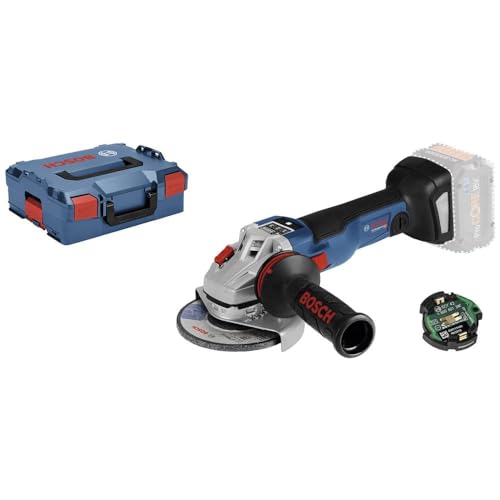
5. Bosch GWS 18V-10 SC Professional — Best for Control
Bosch Professional has taken a slightly different approach with the GWS 18V-10 SC, building in features that give you more control over the tool than most competitors. The standout is the connected functionality via Bluetooth — you can adjust speed settings, configure startup behaviour, and monitor tool usage through the Bosch Toolbox app.
Beyond the smart features, it’s a genuinely excellent grinder. The brushless motor delivers strong, consistent power, the KickBack Control stops the motor if a sudden snag is detected, and the drop control detects if the grinder is dropped and cuts the motor instantly. The build quality is typically Bosch Professional — solid, precise, and well-finished.
At £140–£170, it’s priced at the premium end, and some tradespeople will find the smart features unnecessary. But if you appreciate the extra safety features and the ability to fine-tune the tool to your preferences, it’s a compelling choice.
Pros: Bluetooth connectivity for custom settings. KickBack and Drop Control. Excellent build quality. Variable speed. Smooth, powerful motor.
Cons: Premium price. Smart features require app setup. Some tradespeople won’t use the connected features.
- Small angle grinder delivers power equal to a 1,000 W corded grinder via brushless motor and ProCORE18V battery
- Drop Control, KickBack Control, and intelligent brake system provide maximum user protection and convenience
- Bluetooth module for setting adjustments via Toolbox app; user interface for active tool feedback and speed selection
- AMPShare: Batteries and chargers are fully compatible with the Bosch Professional 18V System as well as many other tools from brands in the AMPShare battery partnership
- Items included: GWS 18V-10 SC (125mm), connectivity module GCY 30-4, L-BOXX
6. Makita DGA467Z 18V LXT 115mm — Best Compact
Not every grinding job needs a big, powerful tool. Sometimes you need something compact and nimble — for tight spaces, overhead work, or lighter-duty tasks where a full-size grinder is overkill. The Makita DGA467Z fits this niche perfectly.
It’s one of the most compact 18V brushless grinders on the market, with a slim body and low weight that makes it comfortable for extended use and easy to manoeuvre in confined spaces. The brushless motor still delivers respectable performance for a compact tool, and the paddle switch with dead-man function keeps things safe.
At £80–£100, it’s well-priced for a Makita brushless tool. It won’t replace a full-size grinder for heavy cutting or sustained grinding, but as a second grinder for lighter tasks or tight spaces, it’s ideal.
Pros: Very compact and lightweight. Comfortable for extended use. Good for tight spaces. Well-priced. Brushless motor.
Cons: Less powerful than full-size grinders. 115mm disc only. Not suited for heavy-duty sustained work.
- Brushless motor
- Anti-restart function
- Electronic current limiter for overload protection
- Safety paddle switch
- Automatic torque drive technology
Buyer’s Guide: Choosing a Cordless Grinder
115mm vs 125mm
The disc size determines how deep you can cut. A 115mm grinder cuts to about 28mm depth — fine for most sheet metal, angle iron, and lighter cutting tasks. A 125mm grinder cuts to about 35mm, which gives you a bit more versatility for thicker materials. If in doubt, go with 125mm — the size and weight difference is minimal.
Brushless vs Brushed
Always go brushless for a cordless grinder. Brushless motors are more efficient (better battery life), more powerful (more torque), more durable (no brushes to wear out), and generate less heat. Every grinder on our list is brushless, and in 2026 there’s no reason to buy anything else.
Safety Features
Grinders are one of the most dangerous power tools on site, so safety features matter. Look for an electronic brake (stops the disc quickly when released), a dead-man switch (stops if you let go), anti-restart protection (won’t start when the battery is inserted if the switch is on), and ideally kickback detection. These aren’t optional extras — they’re essential.
Battery Considerations
Grinders are power-hungry tools. A 2.0Ah battery will give you very limited runtime. For proper trade use, run your cordless grinder on at least a 5.0Ah battery — ideally a 6.0Ah or HIGH OUTPUT pack. Keep a spare charged and ready. There’s nothing worse than a grinder dying halfway through a cut.
Do You Still Need a Corded Grinder?
For most trade applications, a good cordless grinder with a decent battery is enough. The exception is sustained heavy grinding or cutting where you’re running the grinder constantly for extended periods — think fabrication work or large amounts of metalwork. For that, a corded grinder still makes sense as a primary tool, with the cordless as a flexible secondary option.
Frequently Asked Questions
What size cordless grinder should I buy?
For general trade use, a 125mm grinder is the most versatile choice. If you mainly use the grinder for lighter tasks or in tight spaces, a compact 115mm model will serve you well. For heavy-duty work on thicker materials, consider a 150mm or larger model on a higher-voltage platform.
How long does a cordless grinder last on one battery?
It depends heavily on what you’re doing. Light grinding might get you 30–45 minutes on a 5.0Ah battery. Heavy cutting through steel will drain it in 10–15 minutes. Always carry a spare battery. HIGH OUTPUT or larger capacity batteries make a noticeable difference to runtime.
Are cordless grinders as powerful as corded?
The latest 18V brushless models from Milwaukee, DeWalt, and Makita come very close to corded performance for most tasks. The DeWalt 54V FlexVolt arguably matches it. For sustained heavy work, corded still has the edge on uninterrupted power, but for the majority of trade tasks, cordless is now more than capable.
Final Verdict
The Milwaukee M18 FUEL CAG115XPDB takes our top spot for its combination of power, safety features, and Milwaukee build quality. If you’re on the DeWalt platform, the DCG405N is exceptional value and the 54V FlexVolt option is a beast for heavy-duty work.
Makita users are well served by the DGA504Z, and the Bosch GWS 18V-10 SC is worth a look if you value smart features and fine control. Whichever you choose, make sure it’s brushless, has an electronic brake, and pair it with the biggest battery you can get.
Related reading