Starting a carpentry apprenticeship is exciting, but walking into a tool shop for the first time can feel overwhelming. There are thousands of tools on the shelves, every old hand on site has a different opinion, and your budget probably isn’t limitless. We’ve been there, and we’ve seen plenty of first-year apprentices either spend a fortune on kit they’ll barely touch, or buy the cheapest gear available and end up replacing it within weeks.
This guide cuts through the noise. We’ll cover exactly what you need in your first year as a carpenter — the tools you’ll use every single day, the ones worth spending a bit more on, and the stuff you can safely leave until later. We’ve focused on tools available from UK retailers like Screwfix, Toolstation, and Amazon UK, with realistic prices in pounds.
A quick note before we start: most employers and colleges will give you a tool list. If yours differs from what’s here, follow theirs first. This guide is meant to fill in the gaps and help you make smarter buying decisions.
Hand Tools — The Non-Negotiables
These are the tools you’ll reach for every day on site. They form the backbone of your kit, and it’s worth buying decent quality here because you’ll use them constantly.
1. Tape Measure (8m)
You’ll measure hundreds of times a day. A cheap tape measure with a wobbly hook and a blade that won’t stand out will slow you down and introduce errors. Go for a well-known brand with a sturdy hook, clear markings, and a blade that holds rigid when extended.
What to buy: The Stanley FatMax 8m is the industry standard for good reason. The blade stands out to around 3.3 metres, the markings are clear, and it’ll survive being dropped off a scaffold. Expect to pay around £13–£18 from Screwfix or Toolstation.
Budget alternative: The Roughneck 8m tape is solid and usually a few quid cheaper, typically around £10–£12.
- The 3-rivet, corrosion resistant, true-zero hook allows accurate inside and outside measurements
- Mylar wrapped coating extends the blade life up to 10 times longer
- Specially designed multi function hook grabs on the side, top and the bottom
2. Claw Hammer (20oz)
A 20oz claw hammer is the standard weight for site carpentry — heavy enough for framing and general work, but not so heavy it’ll tire your arm out by lunchtime. Avoid rubber-handled cheapies; they absorb shock badly and the heads can work loose.
What to buy: The Estwing E3-20C is forged from a single piece of steel, which means the head will never fly off. The leather grip absorbs vibration nicely. It’s pricier at around £35–£45, but this is genuinely a buy-it-for-life tool.
Budget alternative: The Roughneck 20oz claw hammer has a solid fibreglass handle and anti-vibration grip for around £12–£16. Good enough to get you started.
- HAMMER_MALLET
- Easy to use
- Value for money
3. Chisel Set
You’ll need chisels for hinge recesses, lock mortises, and general fitting work. A basic set of bevel-edge chisels in 6mm, 12mm, 19mm, and 25mm covers most first-year tasks. Don’t bother with a massive set — four good chisels beat eight mediocre ones.
What to buy: The Irwin Marples MS500 set is a solid choice for site work. The through-tang construction means you can strike them with a mallet or hammer without worry, and they hold an edge well. A 3- to 5-piece set runs around £20–£35.
Budget alternative: Stanley FatMax chisels are widely available and take a decent edge. A 5-piece set costs around £18–£25 from Screwfix.
- Lightweight construction at just 1.01 Kgs
- High performace for the home or tradesman
- Package Dimensions: 4.4 L x 36.0 H x 28.8 W (centimeters)
- Proven reliable Irwin Marples technology
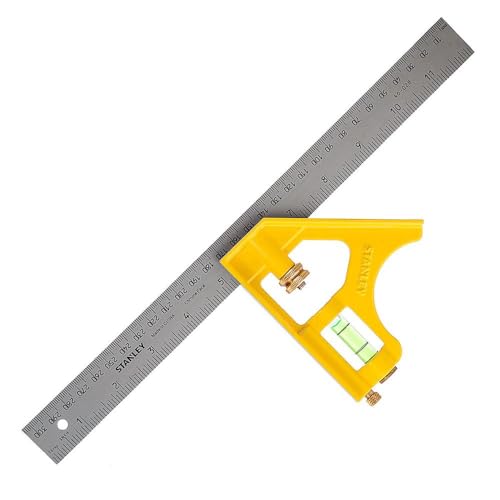
4. Combination Square (300mm)
A combination square is your go-to for marking 90-degree and 45-degree lines, checking square, and setting depth measurements. You’ll use it constantly. The key thing is accuracy — a square that isn’t square is worse than useless.
What to buy: The Stanley 300mm combination square does the job well for around £12–£18. Check it against a known straight edge when you first buy it.
Worth the upgrade: If budget allows, a Stabila combination square or a Bahco is more accurate out of the box and built to last, typically £25–£35.
- Precision die cast body with 3 precision machined faces for accuracy
- 360° vial for all round visibility
- High quality brass nut and scriber fittings for long life
- High visibility reading etched and coated blade for rust resistance
- Metric / imperial graduations
5. Hand Saw
Even with power tools on site, you’ll regularly need a hand saw for quick cuts, trimming, and working in tight spaces. A good general-purpose panel saw with around 7–8 teeth per inch handles most carpentry cutting.
What to buy: The Stanley FatMax 500mm fine-cut saw is a reliable choice. It cuts cleanly and the blade stays sharp for a reasonable time.
Also consider: A Bahco Superior hand saw, around £15–£20, is popular on UK sites for its hardpoint teeth and smooth cutting action.
- Length: 500mm
- Aggressive teeth
- 3 cutting edges for accurate and faster cutting
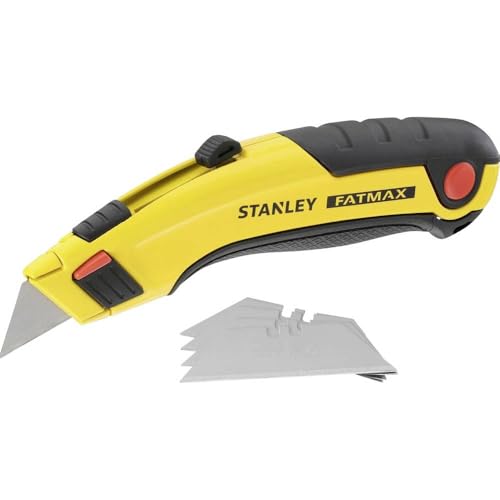
6. Utility Knife
You’ll use this more than almost any other tool — cutting plasterboard, trimming membranes, sharpening pencils, opening packaging. Get one with a retractable blade and a solid locking mechanism.
What to buy: The Stanley FatMax retractable knife is around £8–£12 and comes with blade storage in the handle. Buy a pack of spare blades at the same time — a blunt utility knife is dangerous.
- An auto rise blade storage holder even presents a single blade for changing and there is a blade wiper to remove debris from blade
- The thumb pad (for comfort) and ergonomic cutting angle make it ideal for flooring applications
- Ergonomically designed to keep knuckles clear of the work surface
7. Screwdriver Set
You need a set that covers Phillips, Pozi, and flat-head in at least two sizes each. Magnetic tips are genuinely useful on site. Don’t buy a giant 30-piece set you’ll never use — a focused 6- to 8-piece set is plenty.
What to buy: The Wera Kraftform Plus set is a favourite among tradespeople for its comfortable grip and durability. A 6-piece set runs around £20–£30 from Screwfix or Amazon UK.
Budget alternative: Stanley FatMax screwdrivers are good value — a 6-piece set costs around £12–£18 and will serve you well.
- Kraftform Screwdriver with reduced bit diameter and teilweise smaller handle diameters
- Kraftform handle for quick and easy use
- Allows screwing in confined spaces situations
- Safe Working at a voltages up to 1000 V through routine tests in a water bath
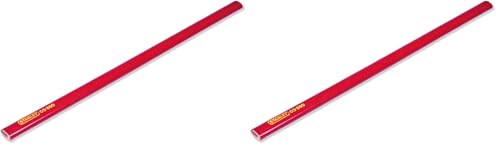
8. Carpenter’s Pencils and Marking Knife
Standard round pencils roll off everything. Carpenter’s pencils are flat, so they stay put, and the wide lead is visible on rough timber. A marking knife gives you a cleaner, more precise line for joinery work. Both cost next to nothing, so there’s no excuse not to have them.
What to buy: A pack of Stanley carpenter’s pencils costs about £3. For a marking knife, the Stanley 10-049 is around £5–£8.
- The information below applies to each unit in the pack
- Length: 176mm
- With soft lead
- Colour: red
Measuring and Layout Tools
Accuracy is everything in carpentry. Beyond your tape and combination square, these tools will earn their place in your kit quickly.
9. Spirit Level (600mm)
A 600mm spirit level is the most versatile size for first-year work — long enough for checking door frames and short walls, but compact enough to fit in your toolbox. Accuracy matters here: a spirit level that reads off will haunt you.
What to buy: Stabila 70-2 levels are the gold standard on UK sites. The 600mm model costs around £25–£35, and the accuracy is outstanding.
Budget alternative: The Stanley FatMax 600mm level is accurate enough for most first-year work at around £15–£20.
- A traditional spirit level ideal for general purpose use around the office, home and for the DIY and professional maintenance kit.
- Features one horizontal & two vertical Vials.
- Shock-absorbing end caps
- Vials accurate to 0.5mm per metre (0.029° = 0.5mm/m) in normal working position
- Vials are guaranteed to remain accurate for 10 years.
10. Sliding Bevel
A sliding bevel lets you copy and transfer angles, which comes up more often than you’d expect — roof work, skirting, and fitting around irregular walls. It’s a small, cheap tool that saves a lot of head-scratching.
What to buy: A Stanley 200mm sliding bevel costs around £8–£12 and does the job perfectly.
Carrying and Storage
There’s no point having good tools if they’re rattling around loose in the back of a van. You need something to carry them in and keep them organised.
11. Toolbox or Tool Bag
As a first-year carpenter, a sturdy open-top tool bag works better than a closed toolbox — you can see everything at a glance and grab what you need quickly. Hard-sided toolboxes are better for protecting precision tools, but a bag is more practical for daily site work.
What to buy: The Stanley FatMax 18-inch open-mouth tool bag is tough, has plenty of pockets, and costs around £25–£35. For a hard case, the DeWalt TSTAK or Stanley FatMax toolbox are both solid at around £20–£30.
- Heavy-Duty 18" Construction — Features A Robust, Hard Waterproof Base That Protects Your Tools From Moisture And Damage, Making It Ideal For Use On Wet Surfaces And Demanding Job Sites
- Smart Storage With Multiple Pockets — Designed With Numerous Interior And Exterior Pockets For Organised, Easy-Access Storage Of Tools, Accessories, And Small Parts, Keeping Everything Secure And Within Reach
- Comfortable Carry Options — Includes A Padded Shoulder Strap And Reinforced Handles For Versatile, Fatigue-Free Carrying, Whether Heading To A Job Site Or Moving Between Workspaces
12. Tool Belt (Optional but Recommended)
Once you’re working at height or moving around site regularly, a tool belt saves constant trips back to your toolbox. You don’t need a full-blown framing rig in your first year — a simple nail pouch and hammer loop will do.
What to buy: A Dickies work apron or a basic leather nail pouch from Screwfix costs around £10–£20 and keeps your essentials within reach.
Personal Protective Equipment
Your employer should provide basic PPE, but many apprentices end up buying their own because the supplied stuff is uncomfortable or poor quality. At minimum, make sure you have the following.
13. Safety Boots
Steel or composite toe caps, ankle support, and a sole rated for puncture resistance. You’ll be on your feet all day, so comfort matters as much as protection. Break them in before your first day if you can.
What to buy: DeWalt Apprentice or Scruffs Switchback boots are popular with UK tradespeople. Expect to pay around £45–£70 for a decent pair.
- High spec S3 antistatic mid-ankle safety boot
- Aluminium toe and composite midplate provide lightweight, flexible protection from sole penetration
- Nubuck leather, water-resistant upper
- Underfoot shock absorption and Poron sock for extra cushioning
- Durable moulded toe protects against scuffs
14. Safety Glasses, Ear Defenders, and Dust Masks
Non-negotiable on any site. Safety glasses should be EN166-rated, ear defenders should carry an SNR rating of at least 25dB, and dust masks should be FFP2 or FFP3 depending on the task. A basic set of all three costs under £20 from Screwfix.
Your First Power Tools — When You’re Ready
Most first-year apprentices won’t need their own power tools straight away — your employer will usually supply the heavy gear. But as you progress, there are two power tools worth investing in personally.
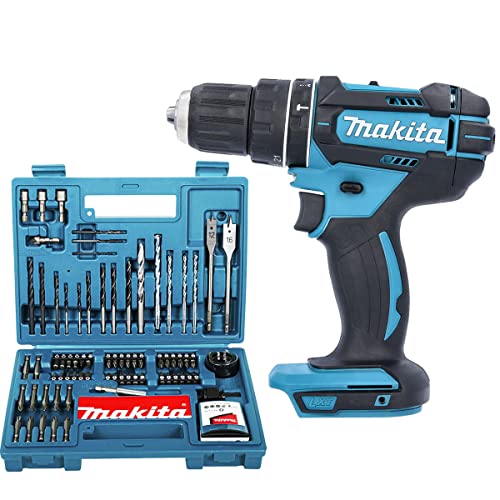
15. Cordless Drill/Driver (18V)
An 18V combi drill handles drilling, screw driving, and light hammer drilling. This is the one power tool every carpenter eventually owns. Pick a battery platform you’re happy to grow into — once you’ve bought a couple of batteries, you’ll want other tools on the same system.
What to buy: The Makita DHP482 or DeWalt DCD776 18V combi drill kits with two batteries start from around £100–£140. Both are proven on UK sites and have huge ranges of compatible tools.
Budget alternative: Bosch Professional GSB 18V kits start from around £80–£100 and are solid performers.
- Makita DHP482 18V LXT Combi Drill with B-53811 100Pcs Drill & Screwdriver Set
- Brand: Makita
- Color: Blue
- Product Type: Drill
16. Impact Driver (18V)
An impact driver makes driving screws into hardwood and framing work dramatically easier. If you’re doing any second-fix or decking work, you’ll wonder how you managed without one. Buy it on the same battery platform as your drill.
What to buy: The Makita DTD152 or DeWalt DCF885 are both well-proven at around £60–£90 for the body only (use the same batteries as your drill).
First Year Carpenter Tool Kit — Quick Reference
Here’s a summary of everything we’ve covered, with approximate costs to help you budget. Prices are based on typical UK retail at time of writing.
|
Tool |
Recommended Pick |
Budget (approx.) |
Priority |
|
Tape Measure 8m |
Stanley FatMax 8m |
£13–£18 |
Essential |
|
Claw Hammer 20oz |
Estwing E3-20C |
£35–£45 |
Essential |
|
Chisel Set |
Irwin Marples MS500 |
£20–£35 |
Essential |
|
Combination Square |
Stanley 300mm |
£12–£18 |
Essential |
|
Hand Saw |
Stanley FatMax 500mm |
£12–£16 |
Essential |
|
Utility Knife |
Stanley FatMax Retractable |
£8–£12 |
Essential |
|
Screwdriver Set |
Wera Kraftform Plus 6pc |
£20–£30 |
Essential |
|
Carpenter’s Pencils |
Stanley (pack) |
£3 |
Essential |
|
Spirit Level 600mm |
Stabila 70-2 |
£25–£35 |
Essential |
|
Sliding Bevel |
Stanley 200mm |
£8–£12 |
Recommended |
|
Tool Bag |
Stanley FatMax 18″ |
£25–£35 |
Essential |
|
Tool Belt/Pouch |
Dickies Work Apron |
£10–£20 |
Recommended |
|
Safety Boots |
DeWalt Apprentice |
£45–£70 |
Essential |
|
Safety Glasses + Ear Def. |
Screwfix own brand |
£15–£20 |
Essential |
|
Combi Drill 18V |
Makita DHP482 Kit |
£100–£140 |
When ready |
|
Impact Driver 18V |
Makita DTD152 (body) |
£60–£90 |
When ready |
Total estimated cost for hand tools and essentials: around £220–£350. Add power tools when you’re ready and the total comes to roughly £380–£580, depending on brands and deals.
Tips for Buying Smart
Buy the best hand tools you can afford. Your tape measure, hammer, and chisels will last decades if you buy quality. Power tools change and improve — hand tools don’t.
Commit to one battery platform early. Makita LXT, DeWalt XR, and Milwaukee M18 are the three dominant 18V systems on UK sites. Pick one and stick with it. Mixing platforms means carrying multiple chargers and batteries, which gets expensive and annoying fast.
Mark everything. Spray paint the handles of your tools a distinctive colour, or use electrical tape. Tools go missing on site — it’s not always theft, but communal toolboxes have a way of absorbing unmarked gear.
Don’t buy everything at once. Start with the essentials listed above and add tools as your work demands them. Your second year will have different needs than your first.
Look after your edge tools. Learn to sharpen your chisels properly — a sharp chisel is safer and more effective than a dull one. A basic combination sharpening stone costs under £15 and is all you need to maintain a working edge.
What Not to Buy in Your First Year
Save your money on these until you actually need them:
Laser levels — useful, but your employer should supply these, and a spirit level does the job for first-year tasks.
Specialist saws (mitre saw, circular saw, plunge saw) — your employer should provide these. Wait until you know what type of carpentry you’re specialising in before investing.
Full framing tool belts — a simple nail pouch is plenty until you’re regularly doing first-fix framing.
Cheap multi-tool sets — those 200-piece “complete” tool kits from unknown brands are a false economy. The tools are usually poor quality and you’ll replace them quickly.
Final Thoughts
Your first year as a carpenter is about learning the fundamentals, and that starts with having the right basic kit. You don’t need to spend a fortune, but you do need tools you can rely on. Focus your budget on quality hand tools — a good hammer, a set of sharp chisels, and an accurate tape measure will serve you far longer than any power tool.
Every experienced carpenter we know says the same thing: buy cheap, buy twice. That doesn’t mean you need the most expensive option every time, but steer clear of anything that feels flimsy in your hand. The recommendations in this guide strike a balance between quality and value, and they’re all available from UK retailers you can visit in person or order online.
Welcome to the trade. Now get your tools together and get out there.