Best Claw Hammer UK 2026 — Tested for Trade Use

Ask any chippy what the most overlooked tool in the bag is and they’ll point at the hammer hanging off their belt. Cordless nailers have taken over a lot of the heavy work, but a proper claw hammer still earns its keep on every site — pulling proud nails, knocking studs into line, tapping floorboards down, and a hundred other little jobs that aren’t worth firing up a battery for.

The trouble is, the market is flooded with cheap pound-shop hammers that loosen, chip, or just plain hurt to swing all day. We’ve put the most popular UK options through real graft — from second-fix joinery to roof carcassing — to find the ones worth your money in 2026.

Below you’ll find six picks across budget, mid-range, and premium, plus a buyer’s guide if you’re not sure what weight or handle to go for.

At a glance

HammerWeightHeadHandleApprox PriceBest For
Roughneck Gorilla V-Series20ozDrop-forged steelBi-material rubberAround £22Best budget
Stanley FatMax AntiVibe20ozForged steelAnti-vibe rubberAround £30Best all-rounder
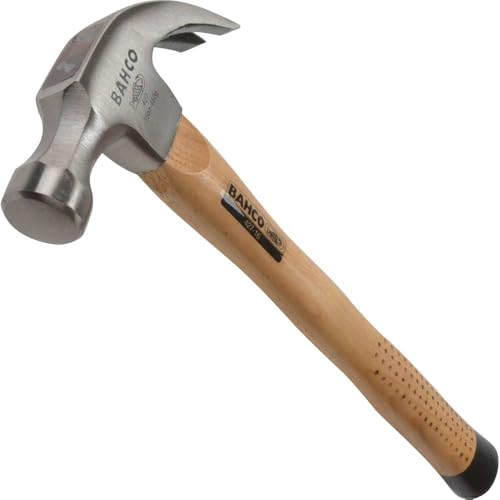
Bahco 429-1616ozDrop-forged steelHickory woodAround £35Best wood-handle
Estwing E3-16C16ozOne-piece forged steelBonded leatherAround £42Best for finishing
Estwing E3-25S25ozOne-piece forged steelShock-reduction gripAround £52Best for framing
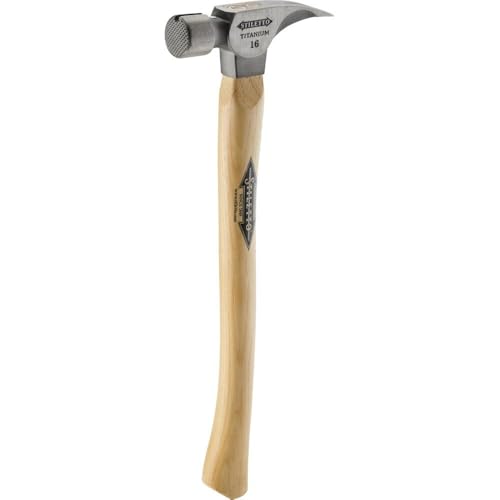
Stiletto TI16MC16oz titaniumTitanium headCurved hickoryAround £220Best premium

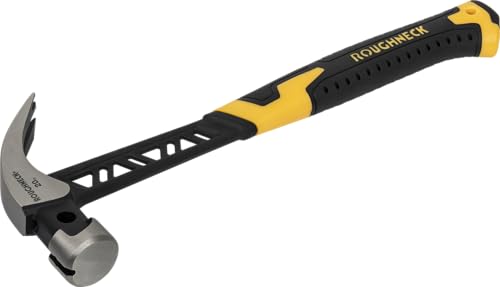
1. Roughneck Gorilla V-Series 20oz — Best Budget

If you’re after a hammer that costs less than a takeaway and still won’t let you down on site, the Roughneck Gorilla is the one we keep coming back to. It’s sold all over Toolstation and Screwfix and has been the go-to first hammer for apprentices for years.

The 20oz drop-forged head is hefty enough for proper carpentry work but won’t wear your wrist out on lighter second-fix tasks. The bi-material rubber grip soaks up a fair bit of vibration — not as much as the FatMax, but more than you’d expect at this price. Magnetic nail-start slot in the head is a nice touch when you’re working one-handed up a ladder.

Pros

  • Hard to beat at around £22
  • Magnetic nail starter built into the head
  • Decent vibration damping for the price

Cons

  • Rubber grip can perish if left in a damp van over a winter
  • Not the prettiest finish — the head paint chips quickly

Verdict: Brilliant first hammer for an apprentice or a back-up to keep in the van. We wouldn’t hesitate to recommend it to a builder on a tight kit budget.

2. Stanley FatMax AntiVibe 20oz Curve Claw — Best All-Rounder

The Stanley FatMax 1-51-944 is probably the most common claw hammer on UK building sites and there’s a good reason for that. It hits the sweet spot between price, comfort, and durability that’s hard to argue with.

The AntiVibe technology is the headline feature — there’s a tuning fork built into the handle that genuinely cuts down on the buzz when you whack a stubborn nail. After a full day driving 100mm wires into oak studs we noticed considerably less wrist fatigue compared to a standard solid-handle hammer. The curved claw pulls nails cleanly without chewing up the surrounding timber.

Pros

  • Genuine vibration reduction makes a difference on long days
  • Tough enough to outlast multiple sets of work boots
  • Widely stocked at Screwfix, Toolstation, B&Q and Amazon UK

Cons

  • Heavier than its 20oz suggests — might feel chunky for finer joinery
  • Rubber grip wears smooth after a year or two of heavy use

Verdict: If you only buy one claw hammer for general site work, this is it. It’s the default recommendation for general builders, carpenters doing first-fix, and anyone doing a mix of trades.

3. Bahco 429-16 16oz Hickory Handle — Best Wood-Handle Hammer

There’s a generation of joiners who won’t touch a steel-handled hammer, and the Bahco 429 is the reason it’s still a viable choice. Swedish-made, drop-forged head, proper hickory handle — it’s an honest tool with no gimmicks.

Wood handles flex slightly under load, which softens the impact on your elbow. They’re also easy to replace if you ever do crack one (which is rare unless you’re abusing it as a wrecking bar). The 16oz weight is ideal for second-fix carpentry, kitchen fitting, and finishing work where you don’t want to mark the timber.

Pros

  • Replaceable hickory handle — buy it for life
  • Beautifully balanced for finer carpentry
  • Looks the part on a client-facing job

Cons

  • Not the tool for framing or rough demo work
  • Hickory needs the occasional rub of linseed oil to stay in good nick

Verdict: Our pick for second-fix carpenters and kitchen fitters who appreciate a traditional tool. Pair it with a heavier hammer for first-fix work.

4. Estwing E3-16C 16oz Curved Claw — Best for Finishing

Estwing’s one-piece forged steel hammers are a fixture in tradespeople’s tool bags on both sides of the Atlantic. The E3-16C is the lighter curved-claw version — ideal for finishing, joinery, and cabinet work where you need accuracy more than raw power.

Because the head and shaft are forged from a single piece of steel, there’s nothing to come loose. The bonded leather grip is the bit you’ll either love or find a bit slippy in wet conditions — some users wrap it with grip tape after a year. The balance is exceptional and the head finish is mirror-polished from the factory.

Pros

  • One-piece construction — the head will never come off
  • Beautifully balanced for precise work
  • Iconic stacked-leather grip looks the part

Cons

  • Transmits more vibration than the FatMax — not for sustained framing
  • Leather grip needs care if you work in the wet

Verdict: A serious tool for serious finishing work. If you’re a kitchen fitter, joiner, or carpenter who values a hammer that’ll last 20 years, this is the one. The shock-reduction grip version (E3-16S) is worth the small premium if you find leather slippery.

5. Estwing E3-25S 25oz Framing Hammer — Best for Heavy Framing

When you’re punching 100mm or 150mm nails into oak studs and roof timbers, you want weight on your side. The E3-25S is Estwing’s heavyweight — a 25oz one-piece steel framing hammer with a milled face for better grip on the nail head and a straight rip claw.

The shock-reduction grip is essential at this weight. We’ve used the leather-grip version of this hammer on roof carcassing and the difference the shock grip makes after a couple of hours of swinging is significant. The milled face is a love-it-or-hate-it feature — brilliant for outdoor framing where you’ll cover it later, less ideal for finishing where you want a clean strike mark.

Pros

  • Plenty of mass for driving big nails fast
  • Shock-reduction grip is genuinely needed at this weight
  • Straight rip claw doubles as a prybar when you need it

Cons

  • Too heavy for second-fix or finishing
  • Milled face will mark visible timber

Verdict: Specialist framing tool. If you’re a roofer, timber-frame builder, or doing a lot of first-fix carcassing, this is the hammer for the job. Pair it with a 16oz curved claw for everything else.

6. Stiletto TI16MC 16oz Titanium — Best Premium

Yes, it’s well over £200. Yes, we’ve included it anyway. The Stiletto TI16MC is a 16oz titanium-headed hammer with a 14oz steel face insert and a curved hickory handle. Because titanium is roughly 45% lighter than steel for the same volume, you get the swing weight of a 16oz hammer with the driving force of a much heavier head — and dramatically less recoil through your wrist.

Pro framers and roofers in the US swear by Stilettos for reducing tennis elbow and shoulder strain on long-term framing work. They’re less common on UK sites because of the price, but if you’re framing or roofing for a living and you’re starting to feel it in your joints, the maths works out fast on chiropractor bills alone.

Pros

  • Around 10x less recoil than a steel hammer of equivalent driving force
  • Replaceable steel face insert — head lasts decades
  • Game-changer for tradespeople with wrist or elbow problems

Cons

  • Eye-watering price
  • Not great for heavy demo or pulling huge nails — titanium dents
  • Hard to get hold of in the UK — mostly imported

Verdict: A genuine career investment for full-time framers and roofers. Most tradespeople don’t need this hammer — but the ones who do, really do.

How to choose a claw hammer

Weight

Hammer weight is measured in ounces (oz) and refers to the head, not the whole tool. As a rough guide:

  • 12–14oz — finishing work, cabinet making, very light second-fix
  • 16oz — the all-purpose carpentry weight; great for second-fix and general use
  • 20oz — the do-everything weight for general builders and first-fix
  • 22–28oz — framing, roofing, heavy first-fix, demo

If you’re only buying one, 20oz is the safest bet. If you can stretch to two, pair a 16oz curved claw for fine work with a heavier framing hammer for first-fix.

Curved claw vs straight (rip) claw

Curved claws give better leverage for pulling nails out cleanly. Straight — or “rip” — claws are designed to be hammered into joints and used as a prybar to split timber apart. Most carpenters reach for a curved claw most days; framers and demo specialists often prefer the straight claw.

Handle material

Three main options:

  • One-piece forged steel (Estwing) — indestructible, transmits the most vibration unless paired with a good shock grip
  • Steel core with rubber overmould (Stanley FatMax, Roughneck) — best vibration damping, most affordable, can perish over time
  • Hickory wood (Bahco, traditional brands) — great feel, naturally damps vibration, can be replaced if cracked

There’s no wrong answer — it’s mostly down to personal preference. If you suffer with elbow or wrist pain, a rubber-grip anti-vibe model or a titanium head will give you the most relief.

Magnetic nail starter

The slot at the back of the head that holds a nail upright while you start it one-handed. Genuinely useful when you’re up a ladder or working in awkward corners. Most modern claw hammers have one — the Estwings don’t, which is a small mark against them for ladder work.

Final thoughts

For most UK tradespeople, the Stanley FatMax AntiVibe 20oz remains the best all-round buy in 2026. It’s tough, comfortable, sensibly priced, and you can pick one up at any merchants on the way to a job.

Apprentices and budget-conscious buyers won’t go wrong with the Roughneck Gorilla. Second-fix joiners and kitchen fitters should look at the Bahco 429 or the Estwing E3-16C. And if you’re a full-time framer with the cash to spare, the Stiletto really is a different class of tool.

Whichever you go for, buy once and look after it — a decent claw hammer should last you the best part of a working lifetime.

Share the Post:

More Reviews...