Kitd is reader-supported. If you buy through links on this page we may earn a commission from Amazon, at no extra cost to you.
Every winter the same thing happens. The drill that ran all day in September dies by mid-morning in January, a battery that was fine yesterday refuses to charge, and somebody blames the brand. Most of the time the battery is not faulty. It is cold.
Lithium-ion batteries are sensitive to temperature, both hot and cold. A little care in how you store, charge and carry your batteries over winter gets you more runtime, a longer battery life and fewer dead packs on a frosty morning. This guide covers what happens to a cordless battery in the cold and what to do about it.
Quick Summary
Keep batteries warm and dry when you are not using them, let a cold battery come up to room temperature before you charge it, carry a spare in your jacket or cab, and do not leave packs in a freezing van overnight if you can avoid it. A decent charger and a proper storage case make all of that easier.
What Cold Does to a Cordless Battery
A lithium-ion cell delivers power through a chemical reaction, and cold slows that reaction down. The result is lower available capacity and a higher internal resistance, so the battery sags under load. You see it as shorter runtime and tools that bog down or cut out under heavy loads such as a SDS drill or a circular saw.
The effect is temporary. Warm the battery up and the capacity comes back. The real danger is charging a battery that is cold. Charging lithium-ion cells below freezing can damage them, and most good chargers will refuse to charge a battery that is outside the safe range. That is why a battery from a cold van may flash an error on the charger.
Storing Batteries in Winter
Keep Them Out of the Van Overnight
A van can drop well below freezing overnight. If you can, bring your batteries indoors at the end of the day. A garage or utility room is better than a van, and a heated room is better still, but you do not need to store them in the warm. Cool and dry is fine.
Store at a Partial Charge
If you are not going to use a battery for weeks, store it at around half charge rather than flat or full. A fully discharged battery can slip into a protective state that some chargers will not wake up, and a fully charged battery that sits for months ages faster.
Keep Them Dry
Moisture and terminals do not mix. Wipe batteries before you put them away, and store them in a case or on a rack rather than loose in a tool bag where they can pick up damp, grit and metal swarf.
Charging in Cold Weather
Let Batteries Warm Up First
If a battery has been in a cold van, bring it inside and leave it for 30 minutes or so before charging. Many chargers have a temperature cut-off and will wait, but giving the battery time to warm avoids the error lights.
Use the Right Charger
Use the charger made for your platform. Cheap non-genuine chargers may lack proper temperature protection. Fast chargers are convenient, but they put more stress on a cold battery, so if you are not in a hurry a slower charge is kinder.
Do Not Charge on a Cold Floor
Charging a pack in an unheated garage or on a concrete floor in January does it no favours. Put the charger on a bench in a spot that stays above freezing.
Getting Better Runtime on Cold Days
A warm battery works harder. Keep the pack you are using in an inside pocket until you need it, rotate packs through your jacket, and keep spares in the cab with the heater on rather than in the load area. The heat from the tool itself also helps once you start working.
A bigger battery also copes better. A higher amp-hour pack has more reserve for the cold and for heavy loads, so the 5Ah pack is worth carrying for demanding tools in winter even if you use a 2Ah on lighter jobs.
Kit That Helps
None of this needs expensive kit, but a few items make the job easier. The products below were checked on Amazon UK at the time of writing.
DeWalt 18V XR 5Ah Battery DCB184
A bigger pack is the simplest way to cope with winter. The DCB184 is a 5Ah XR battery that costs £49.99 and has more than 1,300 reviews. It gives you reserve for cold mornings and heavy tools.
Pros: 5Ah capacity, widely available, strong reviews.
Cons: More weight than a smaller pack.
Best for: Heavy tools and cold-day runtime.

- Compatible with all DEWALT 18V XR Li-Ion tools for efficiency, versatility and faster applications
- 5Ah Li-Ion battery technology offers extended runtime. Up to 66% more runtime than a standard 3Ah battery pack
- LED state of charge indicator helps manage pack charging
- Lightweight design provides the user with upgraded 5Ah Power without increasing the size or weight over the 18V 3Ah battery pack
- No memory effect and virtually no self-discharge for maximum productivity and less downtime

DeWalt 18V XR 4Ah Battery DCB182
The 4Ah DCB182 costs £39.99 and has more than 5,500 reviews. It is a lighter, cheaper pack that suits drills and impact drivers well.
Pros: Very well reviewed, cheaper than the 5Ah, lighter.
Cons: Less reserve in the cold.
Best for: Drills and drivers on lighter work.

- BUILT FOR DEMANDING PROFESSIONALS: For 100 years, DEWALT has been the brand of choice for demanding professionals who require tools that are innovative, tough, and built to last. With a legacy of excellence and a future of continued innovation, DEWALT tools are engineered to deliver superior performance and durability, ensuring you can tackle the most challenging tasks with confidence and precision.
- UPGRADED POWER AND EFFICIENCY: The DEWALT 18V XR 4Ah Battery, DCB182-XJ, offers enhanced power without increasing size or weight compared to the 18V 3Ah battery pack. Its inbuilt protection features and no memory effect ensure maximum productivity and longer battery life, making it an essential addition for professionals seeking reliable and efficient power solutions.
- LIGHTWEIGHT DESIGN: Provides the user with upgraded 4Ah power without increasing the size or weight over the 18V 3Ah battery pack.
- INBUILT PROTECTION: Protects against overheat, overload, and deep discharge, increasing battery life.
- NO MEMORY EFFECT: Virtually no self-discharge for maximum productivity and less downtime.
Makita DC18RC Fast Charger
The Makita DC18RC is a genuine fast charger for 7.2V to 18V Li-ion batteries at £22.99, with nearly 700 reviews. Using genuine Makita chargers means the pack gets proper temperature monitoring.
Pros: Genuine charger, low price, fast charging.
Cons: Makita packs only.
Best for: Makita users who want a second charger for home or van.
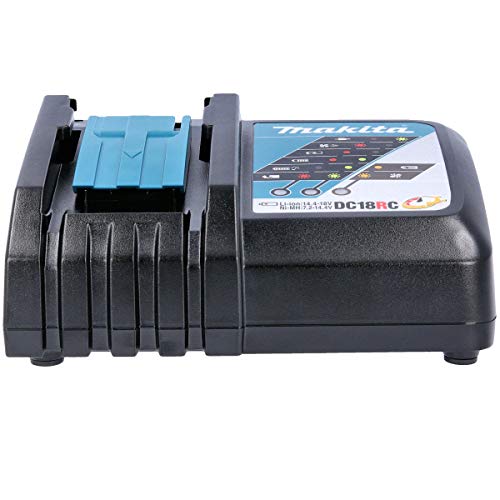
- Makita Dc18Rc Genuine Li Ion 7 2V 18V Fast Battery Charger 240V Bl1830 Bl1840 Brand: Makita Product Type :Battery Charger.
- Makita DC18RC Genuine Li ion 7.2V 18V Fast Battery Charger 240V BL1830 BL1840
- Brand: Makita
- Product type: BATTERY CHARGER
Milwaukee M12-18C Rapid Charger
The Milwaukee Rapid charger handles M12 and M18 batteries and costs £27.99, with more than 1,100 reviews. One charger for both ranges is handy if you run both.
Pros: Charges M12 and M18, well reviewed, fair price.
Cons: Milwaukee only.
Best for: Milwaukee users who run both voltages.

- Consegna gratuita nel regno unito.
- M18 redlithium ion 2.0 ah 4.0 ah 5.0 ah 6.0 ah 9.0 ah battery packs recharge in 26 min 47 min 59 min 68 min 95 min or less
- M18 redlithium ion 2.0 ah 4.0 ah 5.0 ah 6.0 ah 9.0 ah battery packs recharge in 26 min 47 min 59 min 68 min 95 min or less
Milwaukee Packout Organiser Case
A rigid case keeps batteries together, dry and protected. The Milwaukee Packout Organiser costs £44.98 and has over 700 reviews. It slots into the Packout system, which makes it easy to bring batteries in from the van each night.
Pros: Rigid, stackable, over 700 reviews.
Cons: Sits inside Milwaukee Packout system, and costs more than a plain bag.
Best for: Keeping spare packs organised and portable.
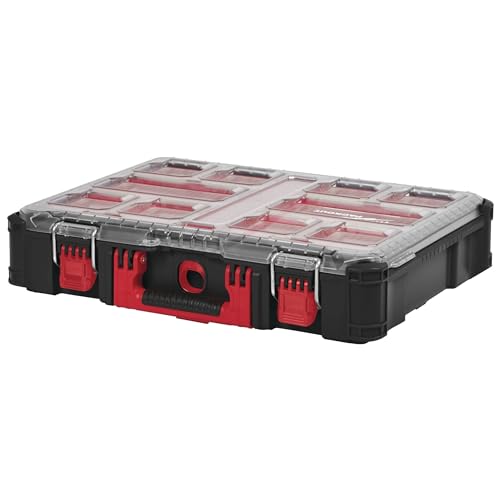
- Milwaukee pack out organiser case
- Item Package Length: 12.0cm
- Item Package Width: 38.0cm
- Item Package Height: 50.0cm
Signs a Battery Is Done
Winter is when weak batteries show themselves. If a pack drops to nothing very quickly even after warming up, swells, gets hot in normal use or fails to hold a charge, stop using it. Do not try to revive a damaged lithium-ion battery. Take it to a proper recycling point, as many retailers take them back.
FAQs
Is it bad to leave batteries in a cold van?
It does not usually ruin them, but they will deliver less power and may not charge until warmed. Repeated deep cold is not good for long-term life, so bring them in when you can.
Can I charge a cordless battery below freezing?
You should not. Let it warm to room temperature first. Most chargers will refuse to charge a battery that is too cold.
How should I store batteries over a long break?
At about half charge, somewhere cool and dry, and check them every few weeks.
Do bigger batteries last longer in the cold?
They have more reserve, so they cope better, but they are still affected by the temperature. Keeping them warm helps all packs.
Should I use non-genuine batteries?
Cheap unbranded packs often lack proper protection and may not cope with cold. A genuine battery is the safer choice.
Final Thoughts
Treat your batteries like you treat yourself in winter: keep them warm, dry and out of the cold. Rotate packs through your pocket, let them warm up before charging, and carry a bigger battery for the hard jobs. A little attention now saves you buying replacement packs in spring.