The brick trowel is the one tool a bricklayer has in their hand all day, every day, so it is worth getting right. A good one becomes an extension of your arm — balanced, the right weight, with a grip that does not chew your palm raw by mid-afternoon. A bad one fights you on every spread, tires your wrist out by dinner and, if it is welded rather than forged, snaps at the heel when you least expect it. Over a working week the difference adds up to real fatigue and real money.
Kitd earns from qualifying purchases through Amazon links on this page.
This guide is for UK bricklayers, groundworkers and general builders who lay brick and block regularly, as well as apprentices buying their first proper trowel. We have judged them on the things that matter on site: blade weight and balance, grip comfort over a long day, whether they are forged in one piece or welded, and value.
Our quick verdict
If you want a one-line answer: a Marshalltown 11-inch London pattern is the trowel most UK bricklayers should buy. It is forged in one piece, the balance is spot-on for laying brick all day, and it is the trowel we would hand a second-year and tell them to stop looking. If you want a British-made forged blade with a bit of heritage for less money, the Spear & Jackson Tyzack broad heel is the one to beat. If you are watching every penny, a Ragni soft-grip does most of the job for less. And if you lay a lot of block or heavy work and want more mortar per pick-up, size up to a Philadelphia-style blade, just know your wrist will feel the extra reach by Friday.
How to choose a brick trowel
London pattern vs Philadelphia
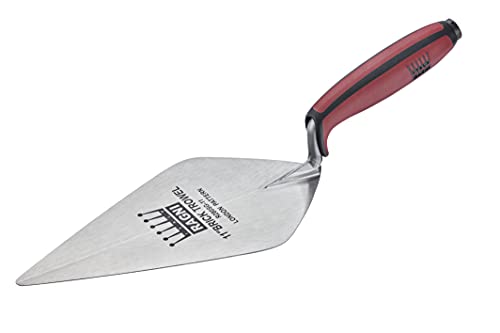
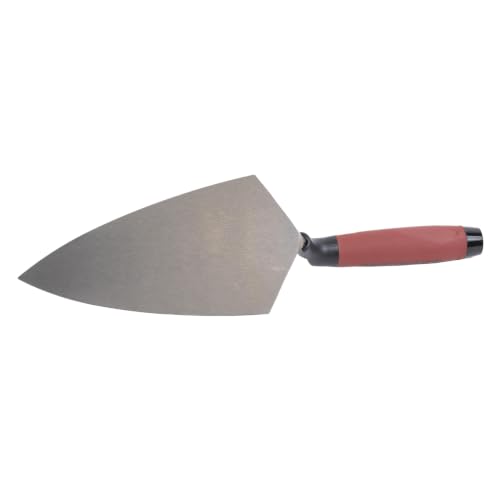
Almost every trowel sold to UK brickies is a London pattern — a narrower blade with a rounded heel that carries mortar forward and feels nimble in the hand. It suits standard brick-and-block work and is what most people mean by a brick trowel in this country. The Philadelphia pattern, more common in North America, has a wider blade with a squarer heel that holds more mortar and suits laying block and stone, but it is heavier and less common on UK merchants’ shelves. For general UK bricklaying, stick with a London pattern unless you specifically want the extra mortar capacity for blockwork.
Forged vs welded — why the neck matters
This is the single most important thing to check. A quality trowel is forged from one piece of high-carbon steel, so the blade, heel and shank flow together with no weak point. A cheaper trowel welds the blade to the shank, which leaves a join at the neck and heel that can crack or snap under load — usually at the worst moment, halfway up a lift. Every trowel we recommend here is a one-piece forged blade. If a trowel does not say forged, assume it is welded and treat it as a short-term tool.
Blade size and your wrist
Blade length is usually given in inches, and 11 inches is the everyday choice for UK brickwork. It carries a sensible amount of mortar while keeping the weight and the leverage on your wrist manageable over a full day. Step up to 12 or 13 inches and you carry more mortar per spread, which speeds up block and big jobs, but the extra weight and reach load the wrist harder — fine for a seasoned brickie, punishing for an apprentice still building the muscle. If in doubt, start at 11 inches; you can always add a bigger trowel once your hand is in.
Handle and grip
You hold this tool for eight hours, so the handle is not a detail. Modern soft-grip handles cushion the palm and cut down the fatigue and blistering you get from a bare wooden handle, especially when your hands are wet. Traditional wooden handles are still loved by some old hands for the feel and the fact you can sand or replace them, but for most people on site a soft grip is the comfortable, low-fuss choice. Whatever you pick, make sure it has a bit of a finger guard or a shaped heel so your knuckles are not riding on the mortar board.
The best brick trowels at a glance
Trowel | Pattern / size | Construction | Best for | Approx. price |
Marshalltown 11″ London | London, 11″ | One-piece forged | All-round everyday bricklaying | £60-70 |
Spear & Jackson Tyzack 10″ broad heel | London broad heel, 10″ | One-piece forged | British-made forged value | £22-28 |
Ragni R280sg 11″ soft grip | London, 11″ | Forged blade | Apprentices and spares | £16-22 |
OX Pro Philadelphia | Philadelphia | One-piece forged | Comfort grip, extra mortar | £26-32 |
Marshalltown Philadelphia | Wider, ~12″ | One-piece forged | Blockwork and big mortar loads | £58-65 |
The picks in detail
Best overall — Marshalltown 11″ London pattern
Marshalltown is the name you will see in more brickies’ hands than any other, and the 11-inch London pattern is the sensible default. The blade is forged from a single piece of high-carbon steel, so there is no welded neck to worry about, and the balance is dialled in for laying brick all day rather than for a showroom. It costs more than the budget options but it is a buy-once tool that will outlast several cheaper trowels. For most UK bricklayers this is the one to own.

Best British-made value — Spear & Jackson Tyzack broad heel
The Tyzack name has been on British trowels for generations, and Spear & Jackson’s soft-feel broad heel keeps that going with a one-piece forged blade in hardened and tempered carbon steel. It feels a touch firmer and a fraction heavier in the heel than the Marshalltown, which some brickies prefer for the way it loads mortar, and it usually undercuts the Marshalltown by a wide margin, which makes it the value pick for anyone who wants a proper forged blade with British heritage without paying the top price.
No products found.
Best budget — Ragni 11″ soft grip London
Ragni make honest, well-priced trade tools and their soft-grip London pattern is the one to hand an apprentice or keep as a spare. The forged blade and moulded soft handle do the everyday job perfectly well, and while the steel and finish are a step below the Marshalltown and Tyzack, you would have to lay a lot of brick to feel the difference on ordinary work. Buy it knowing what it is — a dependable budget tool, not a lifetime blade.
Best comfort grip — OX Pro Philadelphia
OX have built a reputation on chunky, comfortable handles and finger protection. Their Philadelphia-pattern trowel carries a one-piece forged blade on par with the better names here, with a grip that’s kinder on your hand than a bare wooden handle — worth a look if you suffer with wrist or hand fatigue. The wider blade also carries a bit more mortar per pick-up than a standard London pattern, so it splits the difference between comfort and capacity.


Best for blockwork — Marshalltown Philadelphia
If you lay a lot of block, or you want to move more mortar per pick-up on a big job, sizing up to a wider Philadelphia-style trowel earns its place. The bigger blade carries more mortar and lets a strong, experienced bricklayer work faster on long runs. The trade-off is weight and leverage — the extra reach loads your wrist harder over the day, so it is a tool for someone whose hand is already in rather than an apprentice.
Looking after your brick trowel
A good trowel rewards a little care. Knock the mortar off and wipe the blade down at the end of every day — dried-on mortar pits the steel and throws the balance off, and a quick clean keeps the blade slick for the next morning. A well-used trowel develops a polished, slightly worn-in blade that actually lays better than a brand-new one, so do not be precious about the patina; just keep it clean and dry so it does not rust. Store it somewhere it cannot get bent or have the edge nicked, because a kinked blade or a dinged edge never spreads quite right again. Treated well, a forged trowel from any of the names here will outlast years of cheaper tools.
Frequently asked questions
What size brick trowel should a beginner buy?
Start with an 11-inch London pattern. It carries enough mortar to get real work done while keeping the weight and the strain on your wrist manageable while you build up the muscle and technique. Bigger blades carry more mortar and suit experienced brickies on block and big jobs, but they punish an unconditioned wrist. Get your hand in on an 11-inch first and add a larger trowel later if the work calls for it.
Are forged trowels really worth it over welded ones?
Yes. A forged trowel is made from one piece of steel, so there is no welded join at the neck or heel to crack under load — which is exactly where cheap welded trowels snap. Forged blades also flex more predictably and keep their balance for years. The extra few pounds over a welded budget trowel buys you a tool that will not let you down halfway up a lift and will outlast several cheap ones, so for anyone laying brick for a living it is money well spent.
London pattern or Philadelphia pattern for UK work?
For UK bricklaying, London pattern almost every time. It is the standard shape here — a narrower blade with a rounded heel that carries mortar forward and feels nimble for brick-and-block work — and it is what UK merchants stock. The wider Philadelphia pattern holds more mortar and suits block and stone, but it is heavier, less common on UK shelves and more than most brickies need. Buy a London pattern unless you have a specific reason to want the extra capacity.
Soft grip or wooden handle?
For most people on site, soft grip. Modern soft handles cushion the palm, cope with wet hands and noticeably cut fatigue and blistering over a long day. Wooden handles are still favoured by some old hands for the feel and the fact you can sand or replace them, and there is nothing wrong with one if you prefer it — but if you suffer with hand or wrist fatigue, a soft grip is the kinder, lower-fuss choice.
The bottom line
For most UK bricklayers the answer is a Marshalltown 11-inch London pattern — forged, balanced and comfortable enough to lay brick all day. The Spear & Jackson Tyzack is the British-made value pick for a lot less money, the Ragni is the easy budget and apprentice choice, and a Philadelphia blade is there for when you need to move serious mortar on block. Buy forged, start at 11 inches, keep the blade clean, and a decent trowel will see you through years of work that a cheap welded one would not survive a season of.
Related reading