A blowtorch is one of those tools every plumber owns and almost nobody thinks hard about — right up until they’re soldering a joint behind a kitchen unit with a flame that won’t behave. Get the right torch and soldering copper becomes a non-event: heat fast, flow the solder, move on. Get the wrong one and you’re cooking the wall, wasting gas and second-guessing every joint.
Kitd earns from qualifying purchases through Amazon links on this page.
This is a UK-focused roundup for working plumbers and heating engineers, not a DIY list. Chosen on the things that actually matter on site: how hot it runs, how it ignites, how it behaves in tight spaces, and whether it’ll still be working in five years.
Quick verdict
For most plumbers, the Rothenberger Super Fire 2 is the one to buy. Trigger ignition, runs on MAPP or propane, hot enough for everything up to 28mm without drama, and built to last. If you’re soldering larger bore all day or doing heavy commercial work, step up to a Sievert Powerjet for the raw output and serviceability. If you just need a reliable backup or a self-contained kit, the Rothenberger Rofire and a GoSystem swivel torch will see you right.
What to look for in a plumber’s blowtorch
Gas type is the first decision. MAPP (technically MAP-Pro) gas burns hotter than propane — roughly 2,000°C against around 1,750°C in open air — which means faster heat-up on copper and the ability to handle larger joints without hanging around. Most modern trade torches run happily on either, so buy a MAPP-and-propane compatible head and use MAPP for speed, propane when you want cheaper running for smaller work.
Ignition matters more than people expect. Trigger or piezo auto-ignition lets you light and kill the flame one-handed every time you reposition, which on a day of repeated joints saves real time and gas — you’re not running the flame between solders. Cheaper torches without it mean a striker and a flame that stays lit. A ‘cool tip’ or insulated burner tube stops the head getting dangerously hot near walls and your hand. And a swivel or flexible head earns its money the first time you solder a joint pointing up into a tight space.
The best plumber’s blowtorches
Torch | Gas | Ignition | Best for |
Rothenberger Super Fire 2 | MAPP / propane | Trigger | Best overall for most plumbers |
Sievert Powerjet 2535 | MAPP / propane | Piezo | Heavy and commercial soldering |
Rothenberger Rofire kit | MAPP / propane | Piezo | Best all-in kit with gas |
GoSystem Quick Pro Auto Swivel | MAPP / propane | Piezo, auto-swivel | Budget pick / tight spaces |
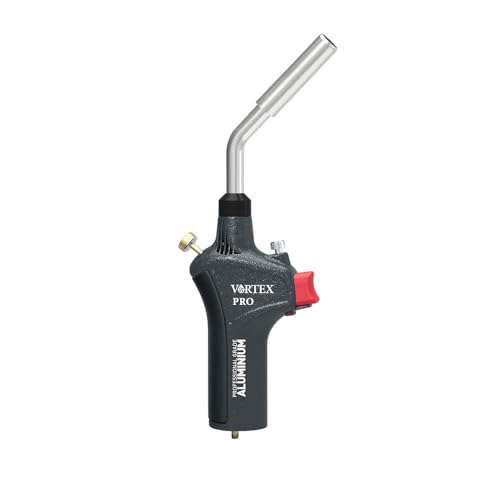
Arctic Hayes VPRO Vortex Pro | Propane / MAPP | Piezo | Second torch, awkward angles |
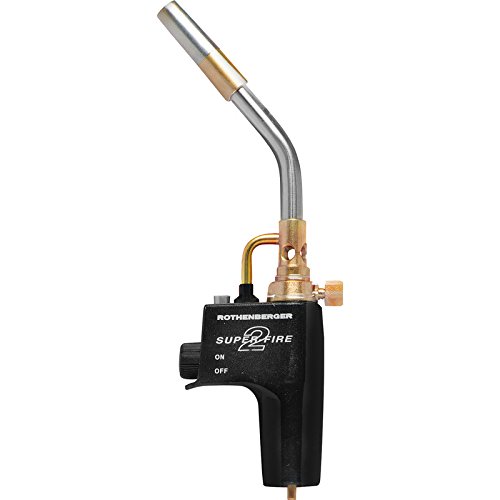
Rothenberger Super Fire 2 — best overall
This is the torch you’ll see in more UK plumbers’ bags than any other, and for good reason. The trigger ignition lights the gas instantly and cuts it the moment you let go, so you’re only burning gas when you’re actually heating a joint. The flame is adjustable from a fine point for working close to a wall up to a broad, hot flame that brings 22mm and 28mm copper up to temperature quickly. It runs on Rothenberger MAPP or propane cylinders and the build is genuinely durable — plenty of plumbers report a decade of service.
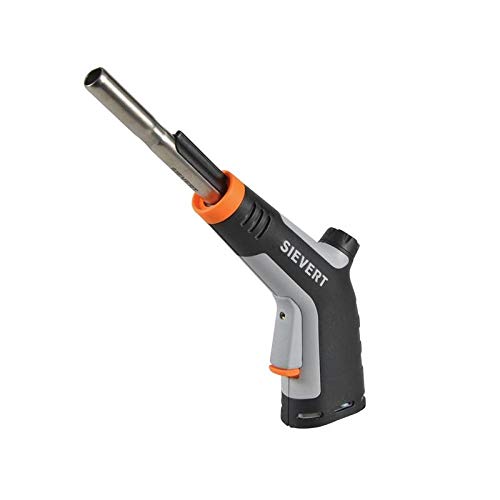
Sievert Powerjet 2535 — for heavy and commercial work
When you’re soldering larger bore, doing a lot of it, or working on commercial heating systems, Sievert is the professional’s professional. The cyclone burner gives excellent raw heat output with piezo ignition, and the Swedish-made build is serviceable rather than disposable. It costs more than a Rothenberger head and it’s overkill for a bit of domestic first fix, but for full-time heavy soldering it’s the one that won’t let you down.
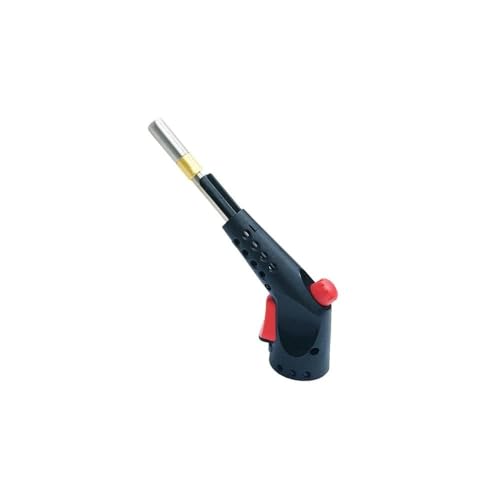
Rothenberger Rofire kit — best all-in kit
If you’re starting out or want a self-contained set, the Rofire pairs a piezo torch head with a gas cylinder in a carry case. You get everything you need to solder out of the box, the auto-ignition is convenient, and it tucks neatly into the van. It’s not quite as refined as the trigger-fed Super Fire 2 for all-day use, but as a complete, ready-to-go package it’s excellent value.
GoSystem Quick Pro Auto Swivel — best budget trade pick
Not every plumber needs to spend £80-100 on a torch head, and GoSystem’s auto-swivel torch does the job at a fraction of the price. Piezo ignition, MAPP/propane compatibility and enough output for standard domestic soldering, with a swivel head thrown in that the pricier options don’t always offer. It won’t have the longevity of the premium torches, but as a backup that lives in the van, or a first torch while you find your feet, it’s sensible money.
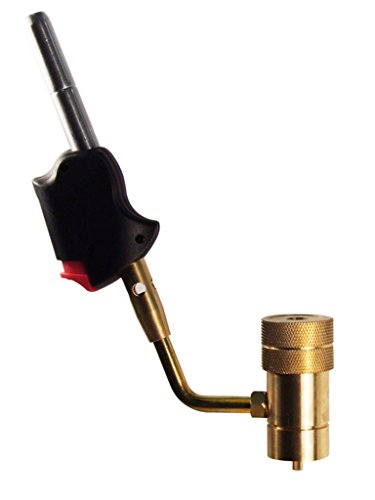
Arctic Hayes VPRO Vortex Pro — for tight spaces and as a second torch
The one that earns its place when access is awful. Arctic Hayes’ vortex burner design directs a tighter, more controllable flame than a basic head, which is exactly what you need soldering a joint tucked behind a boiler or up against a joist. Not your everyday torch necessarily, but a smart second one for the jobs that make you swear.

MAPP vs propane — which gas should you run?
MAPP heats faster and hotter, so it’s the better choice for speed and for anything 22mm and up. The trade-off is cost — MAPP cylinders are pricier than propane. Propane is cheaper and perfectly capable of soldering smaller domestic joints; it just takes a little longer to bring the copper up. The practical answer for most plumbers is to own a torch that takes both, run MAPP for the bulk of your soldering where speed pays, and keep propane around for lighter work. Whatever you choose, store and transport cylinders upright and secured, and never leave a lit torch unattended.
Buyer’s guide and safety
Beyond the torch itself, a few things make soldering safer and cleaner. A flame mat or heat-resistant pad protects walls, timber and the back of units from scorching — cheap insurance against a callback or worse. Keep a damp cloth and, on bigger jobs, a fire extinguisher to hand; soldering near old timber and insulation is a real fire risk and most insurers expect a hot-works approach. Check your cylinder seals and hose (if you run a hose torch) regularly, and replace any cylinder that won’t seat cleanly on the head. Finally, let the joint and torch cool before you pack up — that ‘cool tip’ is cooler, not cold.
Frequently asked questions
What is the best blowtorch for plumbing in the UK?
For most UK plumbers the Rothenberger Super Fire 2 is the best all-round choice — trigger ignition, MAPP or propane, hot enough for everything up to 28mm and built to last. Heavy commercial soldering is where a Sievert set pulls ahead.
Is MAPP gas better than propane for soldering copper?
MAPP burns hotter and heats copper faster, which helps on larger joints and speeds up a day of soldering. Propane is cheaper and fine for smaller domestic work. A torch that runs both gives you the best of each.
Do I need an auto-ignition or trigger torch?
It’s not essential, but it’s a real upgrade. Trigger or piezo ignition lets you light and kill the flame one-handed every time you move, which saves gas and time across a day of repeated joints. Once you’ve used one, a striker-lit torch feels like a step back.
How long does a gas cylinder last?
It depends on the gas, the flame size and how much you run it, but a standard MAPP or propane cylinder will typically cover a good run of domestic soldering before it needs swapping. Trigger torches stretch a cylinder further because you’re not burning gas between joints.
Is a blowtorch or a press-fit system better?
Press systems like Viega or Geberit are faster and remove the fire risk, and a lot of commercial work has moved that way. But press fittings cost more per joint and you need the tool, so for most domestic plumbing soldering with a good torch remains cheaper and entirely standard. Many plumbers carry both.
Final word
A blowtorch isn’t a glamorous tool, but a good one quietly makes you faster and your joints cleaner. For the majority of UK plumbers the Rothenberger Super Fire 2 is the sensible buy — get it, run it on MAPP, and you’ll barely think about it again. Step up to Sievert if your work is heavy and constant, keep a budget auto-ignition torch as a van spare, and add a second torch for the jobs where access is the real enemy.
Related reading