If you’ve ever tried to strip radiators or run cable on a freezing building site with numb fingers and a soaking wet hoodie, you already know — a decent winter work jacket isn’t a luxury, it’s a necessity. The right jacket keeps you warm, dry, and moving freely so you can actually get on with the job instead of counting down the hours to your tea break.
The trouble is, there are hundreds of “work jackets” on the market, and half of them are either built for the high street or fall apart after a month on site. We’ve dug through the best options available in the UK right now — from budget-friendly thermals to battery-powered heated jackets — so you don’t have to waste your hard-earned cash on something that doesn’t perform.
Whether you’re a sparky, a plumber, a chippy, or you spend your days on scaffolding, this guide covers six winter work jackets that are actually worth your money in 2026. Let’s get into it.
Quick Picks
| Product | Best For | Price Range |
| Scruffs Trade Thermo Jacket | Best Overall | £50 – £65 |
| Snickers 1148 AllroundWork Winter Jacket | Best Premium | £120 – £160 |
| Helly Hansen Chelsea Evolution | Harsh Conditions | £100 – £140 |
| Milwaukee M12 Heated Jacket | Best Heated | £130 – £180 |
| TuffStuff 273 Hatton Thermal | Best Budget | £35 – £50 |
| DeWalt Barton 3-in-1 Jacket | Most Versatile | £60 – £85 |
1. Scruffs Trade Thermo Jacket
(Best Overall)
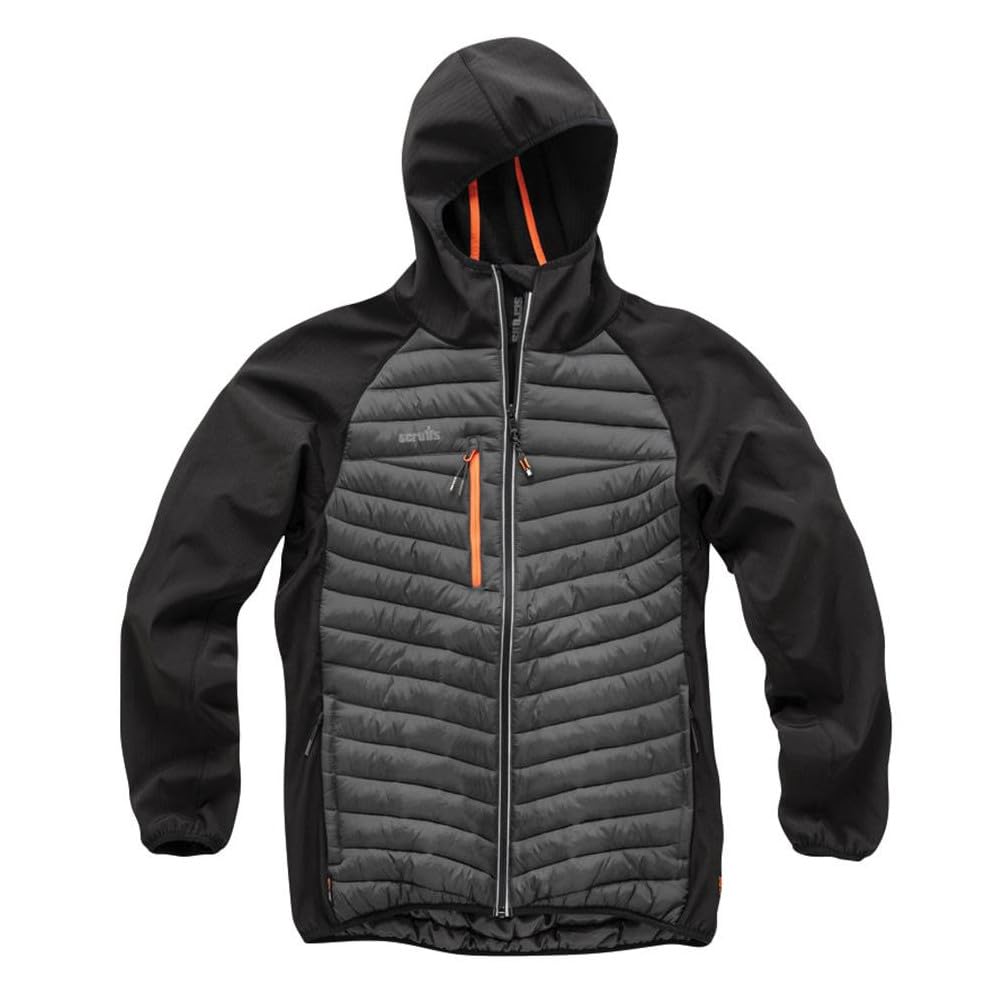
The Scruffs Trade Thermo is the jacket we’d recommend to most tradespeople without hesitation. It’s padded with Insatherm® insulation that genuinely holds heat in, even on those bitter January mornings when you can see your breath the second you step out of the van. The softshell nylon outer is wind and water resistant, and the whole thing moves with you rather than turning you into the Michelin Man.
Build quality is solid — reinforced stitching where it matters, a high fleece-lined collar that keeps the draught off your neck, and pockets that are actually useful. The chest pocket fits a phone, and the hand pockets are fleece-lined too. It’s one of those jackets that feels like it was designed by someone who’s actually worked on site.
At around £50–£65, it’s properly good value. Not the cheapest jacket out there, but a long way from the premium end, and you’re getting quality that punches well above its price tag. It won’t handle a full downpour — you’d need a waterproof shell for that — but for daily site use through autumn and winter, it’s a cracker.
Pros:
-
- Excellent warmth-to-weight ratio
-
- Fleece-lined collar and pockets
-
- Great value for money
-
- Moves well — doesn’t restrict arms
Cons:
-
- Not fully waterproof — water resistant only
-
- Limited colour options
2. Snickers 1148 AllroundWork Winter Jacket — Best Premium
[AAWP PRODUCT BOX — Snickers 1148 AllroundWork Winter Jacket]
Snickers is one of those brands that divides opinion in every site canteen — some lads swear by it, others reckon you’re just paying for the name. With the 1148, though, even the sceptics tend to come around. This is a properly engineered winter jacket that’s built for people who work outside every day, not weekend warriors.
The body-mapping insulation puts warmth where you need it most without adding bulk in the arms and shoulders, so you can still swing a hammer or pull cable without feeling like you’re wearing a sleeping bag. It’s windproof, water-repellent, and the fit is spot on — Snickers sizing is consistent, which is more than you can say for some brands.
Yes, it’s expensive at £120–£160. But if you’re working outside five or six days a week from October to March, this jacket will last you multiple winters and stay comfortable throughout. Think of it as an investment rather than a purchase. If your budget stretches to it, you won’t be disappointed.
Pros:
-
- Body-mapped insulation — warm without bulk
-
- Excellent freedom of movement
-
- Built to last multiple seasons
-
- Consistent Snickers sizing and fit
Cons:
-
- Premium price point
-
- Not a full waterproof — water repellent only
3. Helly Hansen Chelsea Evolution Winter Jacket — Best for Harsh Conditions
[AAWP PRODUCT BOX — Helly Hansen Chelsea Evolution Winter Jacket]
Helly Hansen have been making workwear for harsh conditions since 1877, and the Chelsea Evolution range is proper proof they know what they’re doing. This jacket is designed for the worst of British winter — driving rain, freezing wind, the whole miserable lot. It features Primaloft® Black insulation that keeps you warm even when damp, which is a game-changer on an exposed site.
The 4-way stretch construction means it moves with you beautifully, and the articulated sleeves give you a full range of motion overhead. Water resistance is impressive too — not quite Gore-Tex territory, but it’ll handle steady rain without letting moisture through. The detachable hood is a nice touch for when the weather clears up.
It sits in the £100–£140 range, which puts it firmly in the mid-to-premium bracket. For anyone working regularly in exposed or coastal conditions, it’s a no-brainer. The quality is outstanding and you’re getting genuine Scandi engineering that’s been tested in conditions far worse than a rainy Tuesday in Manchester.
Pros:
-
- Primaloft® insulation works even when damp
-
- Excellent stretch and range of motion
-
- Detachable hood
-
- Proven in extreme conditions
Cons:
-
- Higher price point
-
- Can run slightly warm for indoor/outdoor transitions
4. Milwaukee M12 Heated Jacket — Best Heated Jacket
[AAWP PRODUCT BOX — Milwaukee M12 Heated Jacket]
If you’re already in the Milwaukee ecosystem, the M12 heated jacket is a bit of a game-changer. It uses the same 12V batteries as their compact power tools, so if you’ve got a couple of M12 batteries kicking about, you’re already sorted. The carbon fibre heating elements warm up in seconds and the three heat zones across the chest and back distribute warmth evenly.
The 2025/2026 model features Milwaukee’s Hexon Heat Technology, which heats up faster and covers a wider area than previous versions. On a 3.0Ah battery, you can get up to 12 hours of runtime on the low setting — more than enough for a full day on site. The ToughShell outer is durable and wind-resistant, and the overall fit is decent for a heated jacket.
The catch? You need the batteries, and if you’re not already on the M12 platform, the total cost (jacket plus battery and charger) can hit £180 or more. But for anyone who regularly works in freezing conditions — roofers, scaffolders, anyone up a ladder in January — the difference a heated jacket makes is enormous. Once you try one, you won’t go back.
Pros:
-
- Battery-powered heating — genuine game-changer in the cold
-
- Up to 12 hours runtime
-
- Compatible with M12 batteries you may already own
-
- Fast heat-up with Hexon Heat Technology
Cons:
-
- Needs M12 batteries (not included in body-only option)
-
- Expensive if buying into the platform from scratch
5. TuffStuff 273 Hatton Thermal Jacket — Best Budget
[AAWP PRODUCT BOX — TuffStuff 273 Hatton Thermal Hooded Jacket]
Not everyone wants to spend £100+ on a work jacket, and the TuffStuff 273 Hatton proves you don’t have to. At roughly £35–£50, it’s the cheapest jacket on this list, but don’t let the price fool you — it punches well above its weight. The fleece-lined collar is cosy, the insulation is decent for the money, and it’s lightweight enough that it doesn’t weigh you down.
It’s water and wind resistant rather than fully waterproof, so you’ll still want a shell layer for proper wet days. But for everyday autumn and winter use — warehouse work, workshop days, quick site visits — it does the job brilliantly. The fixed hood with drawcord adjustment is handy, and the multiple zip pockets keep your essentials secure.
Is it as warm or as durable as the Snickers or Helly Hansen? No, obviously not. But at this price, it’s disposable in the best possible way — if it gets trashed after a hard winter, you haven’t lost much and you’ve had a warm, comfortable season. Brilliant for apprentices or anyone who needs a jacket that just works without breaking the bank.
Pros:
-
- Fantastic price — under £50
-
- Lightweight and comfortable
-
- Fleece-lined collar
-
- Hood with drawcord adjustment
Cons:
-
- Not as durable as premium options
-
- Insulation won’t handle extreme cold
6. DeWalt Barton 3-in-1 Jacket — Most Versatile
[AAWP PRODUCT BOX — DeWalt Barton 3-in-1 Jacket]
The DeWalt Barton is a clever bit of kit — it’s a waterproof outer shell with a removable inner fleece, which means you’ve essentially got three jackets in one. Outer shell only for wet days, fleece only for mild cold, or both together when winter really bites. For anyone who works across different conditions throughout the week, that versatility is hard to beat.
The outer shell is fully waterproof with taped seams, which is a step up from most jackets at this price point. The inner fleece is warm and comfortable as a standalone layer, and it zips into the shell quickly and easily. Build quality is what you’d expect from DeWalt — solid without being exceptional, with reinforcement in the right places.
At £60–£85, it’s excellent value considering you’re getting two wearable layers. The fit can be slightly bulky when both layers are combined, which is worth noting if you need a lot of arm movement. But for the price and the flexibility it offers, the Barton is a seriously smart buy for anyone who doesn’t want to carry three different jackets in their van.
Pros:
-
- Three jackets in one — shell, fleece, or combined
-
- Fully waterproof outer with taped seams
-
- Great value for money
-
- Works across multiple seasons
Cons:
-
- Can feel bulky with both layers
-
- Fleece isn’t as warm as dedicated insulated jackets
Buyer’s Guide: Choosing the Right Winter Work Jacket
Insulated vs Heated — Which Do You Need?
For most tradespeople, a good insulated jacket will do the job. Heated jackets are brilliant for anyone who spends long periods standing or working in exposed positions — think scaffolders, roofers, and security staff. If you’re constantly moving (carrying materials, swinging tools), your body heat plus decent insulation is usually enough. If you’re stationary in the cold, heated is worth every penny.
Waterproof vs Water Resistant — Know the Difference
Water-resistant jackets will handle light rain and drizzle, but they’ll eventually let moisture through in a sustained downpour. Fully waterproof jackets (look for taped seams and a waterproof rating of 5000mm+) will keep you dry in heavy rain. If you work outside every day in the UK, waterproof is worth the extra spend. If you’re mostly indoors or under cover, water-resistant is fine.
Freedom of Movement
This is massive and often overlooked. A jacket that’s warm but restricts your arms is useless on site. Look for stretch panels, articulated sleeves, or body-mapped insulation that puts padding on your core but keeps the arms and shoulders slim. Always try reaching overhead and across your body before committing to a jacket.
Pockets and Storage
Sounds basic, but pocket layout matters more than you’d think. A good winter work jacket should have at least one internal pocket (for your phone away from the rain), fleece-lined hand pockets, and a chest pocket. Napoleon pockets are a bonus for keeping small tools or a pencil handy. Avoid jackets where all the pockets are on the outside with no weather flap.
Layering Compatibility
The best approach to winter workwear is layering — a base layer, mid layer, and outer jacket. Make sure your jacket fits comfortably over a hoodie or fleece without being too tight. Equally, it shouldn’t be so oversized that it flaps about and catches on things. Adjustable cuffs, hem, and hood help you dial in the fit across different layer combinations.
Durability and Build Quality
A winter work jacket takes a hammering — rubbing against scaffolding, catching on sharp edges, getting covered in dust and paint. Look for reinforced stitching at stress points, ripstop or heavy-denier fabric, and quality zips (YKK is the gold standard). Cheaper jackets will do a season; better ones will last three or four. Work out the cost per winter and the premium options often make more sense.
Frequently Asked Questions
Are heated jackets safe to wear on site?
Yes, heated jackets from reputable brands like Milwaukee and DeWalt are designed with safety in mind. The low-voltage batteries (12V–20V) pose no electrical risk, and the heating elements are sealed and insulated. They’re perfectly safe for use on construction sites, in workshops, and outdoors. Just make sure you’re buying from a trusted brand and not a cheap import.
Can I wash my winter work jacket in a washing machine?
Most modern work jackets are machine washable, but always check the care label first. Generally, you should wash on a gentle cycle at 30°C, remove any batteries or electronic components (for heated jackets), and avoid using fabric softener as it can damage water-repellent coatings. Hang dry rather than tumble dry to preserve insulation loft.
What’s the warmest jacket on this list?
In terms of pure warmth, the Milwaukee M12 heated jacket wins — battery-powered heat is hard to beat. For passive insulation, the Snickers 1148 and Helly Hansen Chelsea Evolution are the warmest, both using advanced insulation technology that traps heat extremely effectively. The TuffStuff Hatton is the least warm but is still perfectly adequate for mild to moderate cold.
Do I need a hi-vis winter jacket?
If you’re working on or near roads, railways, or any site where vehicles are moving, yes — you’ll need hi-vis that meets EN ISO 20471. Several brands offer hi-vis versions of their winter jackets (Portwest is particularly strong here). If you’re working indoors or on private sites without vehicle movements, standard colours are fine.
Final Verdict
For most UK tradespeople, the Scruffs Trade Thermo Jacket is the best all-round choice — it’s warm, well-built, and properly affordable. If you want to step up to something premium, the Snickers 1148 AllroundWork is outstanding and will last you years. For the worst weather, Helly Hansen’s Chelsea Evolution is hard to beat, and if you’re already invested in Milwaukee’s M12 platform, their heated jacket is an absolute game-changer for freezing conditions.
On a tight budget? The TuffStuff 273 Hatton is brilliant for the money and will see you through a winter no bother. And if you want maximum versatility from a single purchase, the DeWalt Barton 3-in-1 gives you three jackets for the price of one.
Whatever you choose, don’t cheap out on your winter jacket. You’re wearing it every day for five or six months of the year — it’s one of the most important bits of workwear you’ll buy. Stay warm, stay dry, and get the job done.
[AAWP COMPARISON TABLE — Scruffs Trade Thermo vs Snickers 1148 vs Helly Hansen Chelsea Evolution vs Milwaukee M12 vs TuffStuff 273 vs DeWalt Barton]