
Brand
Makita, DeWalt
Product Type
Impact Drivers
Year
2026
If you work in any trade, you need an impact driver. Not a combi drill pretending to be one — a proper impact driver that’ll sink 100mm screws into hardwood without breaking a sweat or your wrist.
The good news: every major brand makes an excellent impact driver in 2026. The bad news: they all want £100-200 of your money, and the spec sheets make them look nearly identical.
So which one’s actually worth buying? We’ve compared the flagship 18V impact drivers from the big four — Makita, DeWalt, Milwaukee, and Bosch — to help you decide.
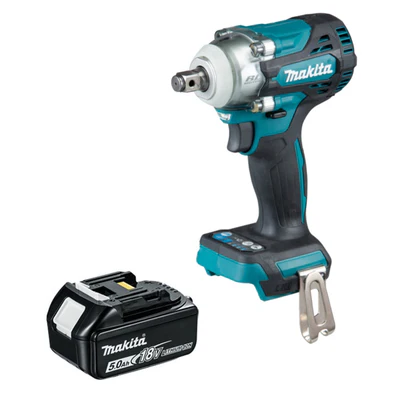
Quick Picks
Best Overall: Milwaukee M18 FID3 The most powerful 18V impact driver available, with exceptional build quality and four useful drive modes.
Best for Makita Users: Makita DTD172 Compact, refined, and feature-rich. The best impact driver Makita has ever made.
Best Value: DeWalt DCF887 Proven reliability, strong performance, and typically £30-50 cheaper than competitors.
Best for Light Trades: Bosch GDR 18V-200 Excellent power-to-size ratio and AMPShare compatibility for multi-brand battery users.
What We Tested
| Model | Max Torque | RPM | IPM | Length | Weight | Price (body) |
|---|---|---|---|---|---|---|
| Milwaukee M18 FID3 | 226Nm | 3,900 | 4,400 | 113mm | 1.0kg | £130-150 |
| Makita DTD172 | 180Nm | 3,600 | 3,800 | 114mm | 1.1kg | £120-140 |
| DeWalt DCF887 | 205Nm | 3,250 | 3,800 | 135mm | 1.0kg | £85-110 |
| Bosch GDR 18V-200 | 200Nm | 3,400 | 4,000 | 126mm | 1.1kg | £85-100 |
All prices are for body-only tools. Kit prices with batteries and charger vary significantly.
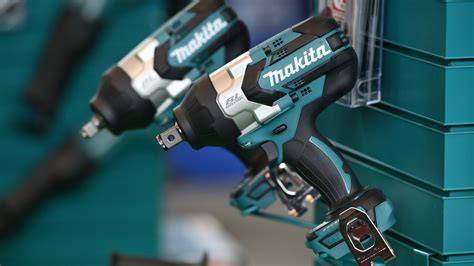
Milwaukee M18 FID3 — Best Overall
Specs:
- Max torque: 226Nm
- No-load speed: 1,750 / 3,000 / 3,900 rpm
- Impact rate: 1,400 / 3,600 / 4,400 ipm
- Length: 113mm
- Weight: 1.0kg (bare)
- Price: £130-150 (body)
The Verdict:
The M18 FID3 is the third-generation FUEL impact driver, and it’s the most powerful 18V hex driver you can buy. At 226Nm, it outguns the competition by a meaningful margin — you’ll feel the difference when driving long screws into dense timber.
But power isn’t everything. What makes the FID3 genuinely excellent is how usable that power is. The four-mode DRIVE CONTROL system gives you:
- Mode 1: Low speed for precision work and starting screws
- Mode 2: Reduced power to prevent stripping fasteners or damaging materials
- Mode 3: Maximum performance for the toughest applications
- Mode 4: Auto-adjusting mode that balances all three automatically
Mode 4 is the one most people leave it on. It’s smart enough to start slow and ramp up as resistance increases. Fewer stripped screws, less damage to materials, faster work.
At 113mm, it’s also the shortest impact driver in this comparison. That matters when you’re working in back boxes, under floors, or anywhere access is tight.
The downsides? Milwaukee batteries are excellent but not cheap. And if you’re not already on the M18 platform, the total investment to get started is higher than Makita or DeWalt.
Who It’s For:
Tradespeople who want the most capable impact driver available and are already invested in Milwaukee’s M18 system — or willing to switch.
Buy If: You need maximum power and don’t mind paying for it. Skip If: You’re on another battery platform and happy with it.
Makita DTD172 — Best for Makita Users
Specs:
- Max torque: 180Nm
- No-load speed: 1,100 / 2,100 / 3,200 / 3,600 rpm
- Impact rate: 1,100 / 2,600 / 3,600 / 3,800 ipm
- Length: 114mm (135mm with battery)
- Weight: 1.1kg (bare)
- Price: £120-140 (body)
The Verdict:
The DTD172 is Makita’s flagship LXT impact driver, and it shows. This is a beautifully refined tool that feels right from the moment you pick it up.
At 180Nm, it’s the least powerful driver in this comparison on paper. In practice, you’d struggle to notice. Unless you’re regularly driving massive lag bolts or 150mm+ screws, 180Nm is more than enough for virtually any task.
What Makita prioritises instead is control and usability. The four-stage impact power selection includes dedicated modes for:
- Wood mode: Starts slow to prevent wandering, then accelerates
- Bolt mode: Auto-stops when the bolt is adequately loosened to prevent spin-off
- T-Mode (Thick metal): Optimised for heavy fastening
- T-Mode (Thin metal): Reduced power to prevent overtightening
The quick-shift button above the trigger lets you cycle through modes without stopping work. The dual LED lights eliminate shadows in the work area. The anti-wobble mechanism uses dual ball bearings to hold bits more securely.
It’s typical Makita: maybe not the most powerful, but thoughtfully designed and excellent to use all day.
Who It’s For:
Anyone on the LXT platform who values refinement and control over raw power. Electricians, plumbers, kitchen fitters, and anyone doing lots of repetitive screwdriving.
Buy If: You’re already on Makita LXT and want the best impact driver for the platform. Skip If: You need maximum torque for heavy structural work.
DeWalt DCF887 — Best Value
Specs:
- Max torque: 205Nm
- No-load speed: 0-1,000 / 2,800 / 3,250 rpm
- Impact rate: 3,800 ipm
- Length: 135mm
- Weight: 1.0kg (bare)
- Price: £85-110 (body)
The Verdict:
The DCF887 has been around for years, and that’s actually a selling point. It’s proven, reliable, and still competitive with newer models.
At 205Nm, it sits between the Milwaukee and Makita on torque — more than enough for any reasonable task. The three-speed selector covers precision work through to maximum power, plus there’s a dedicated precision drive mode for delicate fastening.
The LED ring light is excellent — three LEDs around the chuck eliminate shadows completely. Build quality is solid, with DeWalt’s characteristic rugged feel.
But here’s the real story: the DCF887 is consistently £30-50 cheaper than equivalent Makita or Milwaukee drivers. Body-only prices frequently dip below £90 at the major retailers. For that money, you’re getting a genuinely excellent impact driver that’s held up to years of real-world testing.
The trade-off? It’s slightly longer than the competition at 135mm. If you’re constantly working in tight spaces, that extra 20mm might matter. For most users, it won’t.
DeWalt has newer impact drivers — the DCF850 and DCF860 — but the DCF887 remains the sweet spot of performance, features, and value.
Who It’s For:
Value-conscious buyers who want proven performance without paying flagship prices. Anyone on the XR platform looking to add an impact driver.
Buy If: You want the best balance of performance and price. Skip If: You need the absolute shortest tool for confined spaces.
Bosch GDR 18V-200 — Best for Light Trades
Specs:
- Max torque: 200Nm (350Nm breakaway)
- No-load speed: 0-3,400 rpm
- Impact rate: 0-4,000 ipm
- Length: 126mm
- Weight: 1.1kg (bare)
- Price: £85-100 (body)
The Verdict:
Bosch Professional doesn’t get talked about as much as the big three, but the GDR 18V-200 is genuinely excellent.
At 200Nm tightening torque (350Nm breakaway), it sits right in the competitive range. The compact 126mm head length makes it suitable for tight spaces. And the brushless motor delivers efficient, reliable performance.
What makes the Bosch interesting is the AMPShare compatibility. Bosch Professional batteries work across multiple brands in the AMPShare alliance, giving you more flexibility than locked-in ecosystems. If you already have Bosch batteries for other tools — garden equipment, for example — this becomes very cost-effective.
The downside is fewer features than the flagship Makita or Milwaukee. No fancy drive modes, no automatic speed adjustment — just a variable speed trigger and your judgment. For experienced users, that’s fine. For less confident operators, the smart modes on other drivers are genuinely useful.
Build quality is excellent, and Bosch’s warranty and parts availability are both strong in the UK.
Who It’s For:
Bosch Professional users, anyone who values AMPShare flexibility, or tradespeople who prefer straightforward tools without electronic assists.
Buy If: You’re on Bosch Professional 18V or want AMPShare compatibility. Skip If: You want advanced drive control modes.
Impact Driver vs Impact Wrench — Know the Difference
Before we go further, let’s clear up common confusion.
Impact drivers use a ¼” hex chuck and are designed for driving screws and small bolts. They’re what this article is about.
Impact wrenches use a square drive (usually ½” or ⅜”) and are designed for loosening and tightening larger bolts and nuts — think wheel nuts, scaffolding couplers, structural bolts.
If you’re a mechanic or scaffolder, you probably need an impact wrench. Everyone else — electricians, plumbers, carpenters, general builders — wants an impact driver.
Some tools (like the Bosch GDX series) combine both with interchangeable chucks, but dedicated tools generally perform better.
What Actually Matters When Choosing
Torque: More is better, but anything over 180Nm handles most trade tasks. Don’t obsess over spec-sheet differences.
Size: Shorter is better for confined spaces. The Milwaukee FID3 at 113mm is noticeably more compact than the DeWalt DCF887 at 135mm.
Weight: They’re all around 1kg bare, 1.5-1.7kg with battery. Not significant differences.
Drive modes: Nice to have but not essential. Experienced users often leave tools on maximum and control speed with the trigger.
Battery platform: The most important factor. Match your existing batteries. Switching platforms is expensive and rarely worth it for one tool.
Price: Body-only vs kit pricing varies wildly. If you have batteries, buy body-only. If you’re starting fresh, kits often offer better value.
Which One Should You Actually Buy?
You’re on Milwaukee M18: Buy the M18 FID3. It’s the best impact driver on the platform and arguably the best overall.
You’re on Makita LXT: Buy the DTD172. It’s the most refined Makita impact driver ever made, with excellent features and typical Makita quality.
You’re on DeWalt XR: Buy the DCF887. Proven, reliable, and great value. The newer DCF850/DCF860 are good but not dramatically better.
You’re on Bosch Professional 18V: Buy the GDR 18V-200. Solid performance, compact, and keeps you in the AMPShare ecosystem.
You’re starting fresh with no existing batteries:
Consider what tools you’ll buy next. The impact driver isn’t the end — you’ll likely add a combi drill, multi-tool, circular saw, and more. Choose the platform that offers the best overall range for your trade, then buy that platform’s impact driver.
For most UK tradespeople, that means Makita LXT or DeWalt XR. Both have massive tool selections, wide availability, and proven reliability. Milwaukee M18 is excellent but slightly more expensive across the range.
Frequently Asked Questions
Do I need an impact driver if I have a combi drill?
Yes, if you’re driving screws regularly. Combi drills can drive screws, but impact drivers do it faster, with less fatigue, and with better control. Most tradespeople carry both.
Can I use regular drill bits in an impact driver?
You can, but you shouldn’t. Impact-rated bits are designed to handle the hammering action. Regular bits will break. Use proper impact-rated accessories.
18V or 12V?
18V for trade use. 12V is lighter but less powerful — better suited for light DIY or as a secondary tool for fiddly work.
Brushed or brushless?
Brushless, always. More efficient, longer lasting, and more powerful. Every tool in this comparison is brushless.
The Bottom Line
All four impact drivers in this comparison are excellent professional tools. You won’t regret buying any of them.
If we had to pick one to recommend to a tradesperson starting fresh, it would be the DeWalt DCF887 for its combination of proven performance, competitive pricing, and the flexibility of the XR/FlexVolt ecosystem.
But if you’re already on a platform, stay on it. The differences between these tools are smaller than the cost and hassle of switching battery systems.
Kitd’s Top Pick: Milwaukee M18 FID3 for maximum performance. DeWalt DCF887 for best value. Makita DTD172 for refinement. Bosch GDR 18V-200 for AMPShare flexibility.