Kitd is reader-supported. If you buy through links on this page we may earn a commission from Amazon, at no extra cost to you.
A wrecking bar is the tool you reach for when something has to come off and it does not want to. Skirting, floorboards, studwork, pallet timber, old decking, a stubborn fence post: a flat bar and a bit of leverage will shift it faster than a hammer and claw ever could, and without chewing up the surface you want to keep.
There are a lot of bars on Amazon UK, ranging from pocket-sized flat bars to a metre of drop-forged steel. We checked the listings at the time of writing and chose four from named brands with live buy buttons and decent review counts. They cover a range of lengths, so you can pick the one that matches the work you do.
Quick Verdict
The Roughneck Gorilla Bar 24 inch is the best all-round bar, with nearly six hundred reviews on Amazon UK at a rating of around 4.8 stars. The Stanley FatMax Fubar II is the one for demolition and light hammering, the Stanley FatMax 24 inch spring steel bar is a more classic wrecking bar, and the Amtech 30 inch is the budget option for longer reach.
Best Wrecking Bars at a Glance
| Model | Length | Best for | Price at time of writing |
|---|---|---|---|
| Roughneck Gorilla Bar | 24 inch (610 mm) | All-round prying and nail pulling | About £16 |
| Stanley FatMax Fubar II | 380 mm | Demolition and light hammering | About £31 |
| Stanley FatMax 1-55-503 | 24 inch | Classic spring steel wrecking bar | About £26 |
| Amtech Heavy-Duty Wrecking Bar | 30 inch | Budget bar with extra reach | About £11 |
Buyer’s Guide: What to Look for in a Wrecking Bar
Length and Leverage
Length is leverage. A 24 inch bar gives you enough pull to lift skirting and floorboards, while a 30 inch or 36 inch bar is better for heavy demolition and pallet breaking. A short bar of around 380 mm is easier to carry and use in tight spaces, but you will not get the same pull.
Steel and Forging
Look for drop-forged or heat-treated steel. A forged bar is stronger than a cast or cut one, and will not bend or snap under load. The Roughneck listing describes a drop-forged, heat-treated bar, and the Stanley Fubar is a one-piece forged carbon steel bar.
Ends and Profiles
The ends do the work. A chisel end slips behind boards, a swan-neck or goose-neck end gives leverage for pulling nails, and a nail slot lets you pull nails without damaging the timber. A wide, low-profile jaw spreads the force over a larger area and reduces damage to the surface you want to keep.
Weight and Grip
A heavier bar is stronger, but it is more tiring to carry. If you are working over your head or on a ladder, a lighter bar helps. A textured or oval profile gives you a better grip, especially with gloves.
Striking Surface
If you intend to hit the bar with a hammer to drive it into a gap, make sure it is designed for striking. The Stanley Fubar listing describes it as suitable as a hammer or lightweight demolition tool. A standard flat bar may chip if you strike it hard.
The Best Wrecking Bars
Roughneck Gorilla Bar 24 Inch (610 mm)
The Roughneck Gorilla Bar is a 24 inch bar made from drop-forged, heat-treated steel. The listing describes an oval profile for added strength and a slip-resistant grip, a broad heel to spread force and protect the surface, and wide, low-profile jaws for getting into tight gaps. It has nearly six hundred reviews on Amazon UK with a rating of around 4.8 stars.
For the money it is hard to fault. It is long enough for lifting floorboards and skirting, strong enough for stripping out a stud wall, and cheap enough to leave on site. It is also easy to find a replacement.
Pros: Drop-forged and heat-treated; low-profile jaws; oval profile for strength and grip; excellent reviews; good price.
Cons: Not designed for hammering; heavier than a pocket flat bar.
Best for: Fitters, joiners and builders who want one good bar.

- Improved Access & Maximum Leverage - This premium 24” wrecking bar offers improved access and maximum leverage, making tough prying tasks easier, providing more strength with less force. The broad heel spreads force evenly to minimize the damage to valuable materials.
- Extreme Strength & Durability - Drop forged and heat treated, this high-performance tool is built for exceptional durability and strength, offering ultimate power and precision during heavy-duty use. Crafted with an innovative oval profile for added structural strength, this bar offers a comfortable, slip-resistant grip for enhanced control during use.
- Wide Low Profile Jaws – The Roughneck Gorilla Bar is the ultimate tool for prying apart objects, breaking through walls and tackling various demolition tasks. With wide low profile jaws, this wrecking bar allows for easier penetration and more effective prying, even in the toughest conditions.
- Corrosion Resistance & Minimised Friction – Standing up to the harshest of environments, the powder coating ensures greater corrosion resistance and enhanced durability. The polished tips minimize friction, making it easier to slide into tight spaces for smooth and efficient prying.
- Bevelled Nail Remover – For optimum efficiency, the built-in nail remover allows for prying embedded nails out with precision and ease, saving time and effort with no need for additional tools.

Stanley FatMax Fubar II
The Fubar II is a 380 mm one-piece forged carbon steel bar. The listing says it works as a hammer or lightweight demolition tool, with a nail puller, a pry bar and a serrated gripping jaw for demolition tasks. It has a bevelled nail slot for pulling and prying nails, and a textured grip for control. It is tempered steel to prevent chipping.
There are more than nine hundred reviews on Amazon UK at a rating of around 4.7 stars. It is shorter than the others so it does not offer as much leverage, but it fits in a toolbelt and does several jobs, which is why many demolition crews carry one.
Pros: Forged one-piece steel; can be struck; nail slot and gripping jaw; compact; strong reviews.
Cons: Short, so less leverage; the most expensive option here.
Best for: Strip-out and demolition where a compact multi-tool is handy.
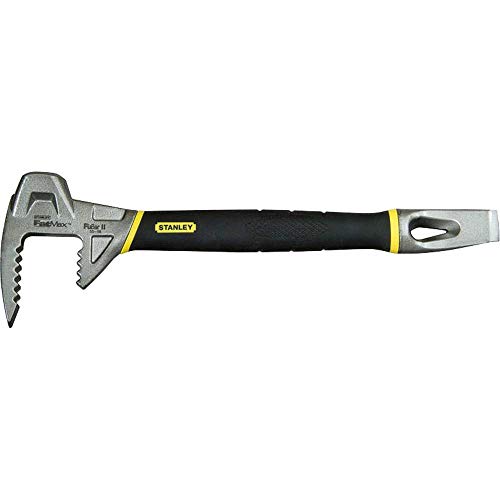
- Suitable as a hammer or lightweight demolition tool
- Nail puller, pry bar and serrated gripping jaw for demolition tasks
- One piece forged carbon steel for increased durability
- Textured grip for comfort and control
- Tempered steel prevents chipping.
Stanley FatMax 1-55-503 24 Inch Spring Steel Wrecking Bar
This is the traditional shape. The Stanley FatMax 24 inch bar is made from spring steel, which gives it strength and a little flex. At the time of writing, the Amazon UK listing shows a rating of around 4.5 stars from around 170 reviews, and stock was low.
It sits between the Roughneck and the Fubar in terms of price. It is a good bar, but the Roughneck has a better review record at a lower price, so the Stanley is the choice mainly if you prefer the brand.
Pros: Spring steel; classic wrecking bar shape; trusted brand.
Cons: Costs more than the Roughneck of the same length; slightly lower rating; limited stock at the time of writing.
Best for: Anyone who prefers Stanley and wants a traditional 24 inch bar.
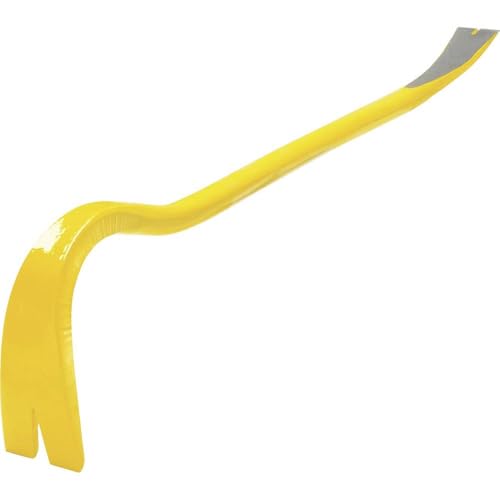
- Spring steel for extreme strength & durability
- Precision ground edge for better penetration
- Wider prying edge for better leverage
- Flat striking face for demolition work & impact with hammer
- Low weight for ease of use
Amtech Heavy-Duty Wrecking Bar 30 Inch
The Amtech is a 30 inch drop-forged steel bar with chisel and swan-neck ends. The listing says it is designed for leverage in fast dismantling and nail removal. It is the cheapest bar here and one of the longest, which makes it good value for pulling pallets, lifting floorboards and general stripping out.
There are only about forty reviews on Amazon UK, although the rating is a good 4.7 stars. It is not a premium brand and the listing gives limited detail on steel grade, so it is better as a second bar for the van than a main tool.
Pros: Very low price; 30 inch reach; chisel and swan-neck ends.
Cons: Few reviews; limited steel detail in the listing; lesser-known brand.
Best for: Occasional users and anyone after a cheap long bar.

- 30 INCH WRECKING BAR: Designed for precision and reliable use in DIY and trade projects
- STEEL BODY: Durable construction provides strength for long-term performance
- SIZE CAPACITY: 30 inch / 76 cm / 76 m range ideal for household and trade applications
- SMOOTH OPERATION: Engineered to deliver consistent performance
- GENERAL DIY TASKS: Versatile addition to any home or professional toolkit
How to Use a Wrecking Bar Without Wrecking the Job
Protect the surface you want to keep. Slide a scrap of timber or a thin offcut under the bar as a fulcrum, so the force spreads over a wider area. Work along the board a little at a time rather than hauling at one end, and watch for hidden pipes and cables before you pull anything. Check for live services behind walls and under floors, and turn the power off if you are not sure.
When you pull nails, use the nail slot at an angle and roll the bar rather than yanking it straight back. That reduces the strain on the bar and avoids bending the nail. If a nail is stuck, tap the bar’s heel with a hammer, but only if it is designed for striking.
Safety and Care
Wear gloves and eye protection. Nails and splintered timber come out fast and sharp. Keep your hands clear of the swing path, because a bar that slips can hit you in the face or knuckles. After use, wipe the bar down, and oil it lightly if it will be stored in a damp van over winter.
FAQs
What is the difference between a wrecking bar and a crowbar?
The names are used loosely. A wrecking bar usually means a flat bar with a curved or swan-neck end for nail pulling and a chisel end for prying. A crowbar is a heavier bar with a hooked end, often used for heavier lifting.
How long should a wrecking bar be?
A 24 inch bar suits most work. Choose 30 inches or more for heavy demolition and pallet breaking, and a short bar of around 380 mm for tight spaces.
Can I hit a wrecking bar with a hammer?
Only if it is made for striking. The Stanley Fubar II is described as suitable for use as a hammer, and forged bars are generally tougher, but check the maker’s guidance.
Is a spring steel bar better?
Spring steel gives a bit of flex, which resists snapping. A drop-forged, heat-treated bar is also strong. Either is fine from a reputable brand.
Do I need more than one bar?
Many tradespeople carry two: a long bar for leverage and a short flat bar for fiddly work. The Roughneck and the Fubar II make a good pair.
Final Thoughts
If you buy just one, buy the Roughneck Gorilla Bar. Add the Stanley FatMax Fubar II if you do a lot of strip-out, and the Amtech if you want a cheap long bar for pallets and floorboards. All four are on Amazon UK with live listings at the time of writing, so check stock and price before you order.