EcoFlow and Jackery are the two names that dominate the portable power station market, and both make genuinely good kit. Rather than compare their entire ranges, this is a direct look at two similarly sized, similarly priced compact models – EcoFlow’s RIVER 3 Plus and Jackery’s Explorer 240 v2 – because that’s the size most trades actually need for van and light site work, and it’s where the real buying decision sits.
Quick Verdict
The EcoFlow RIVER 3 Plus has more capacity for a similar price and charges faster from empty, which makes it the better pick for most vans doing a mix of charging and light tool use through the day. The Jackery Explorer 240 v2 is smaller and lighter, which matters if it’s genuinely being carried around rather than living permanently in the van, and Jackery’s longer track record counts for something if brand reliability history matters to you.
Head-to-Head
| EcoFlow RIVER 3 Plus | Jackery Explorer 240 v2 | |
| Capacity | 286Wh | Compact tier (smaller than RIVER 3 Plus) |
| Battery chemistry | LiFePO4 (LFP) | LiFePO4 (LFP) |
| Recharge speed (mains) | Under 1 hour to full | Standard fast-charge, slightly longer |
| Weight | Compact, van-friendly | 7.7 lbs – genuinely portable |
| Reviews on Amazon UK | 160+ | 330+ |
| Approx. price | £219 | £189 |
Capacity – EcoFlow Has the Edge
The RIVER 3 Plus’s 286Wh gives you noticeably more runway than the Explorer 240 v2’s smaller capacity – the difference between comfortably running a laptop, lights and charging tool batteries all day versus needing to be more careful about what you plug in and for how long. For a van doing genuine daily work rather than occasional light use, that extra headroom is the more practical choice.
The Jackery’s smaller capacity isn’t a flaw, it’s the trade-off for its lighter weight and lower price – it’s built for portability first, capacity second, which suits a different use case than a unit that lives permanently in a van.
Portability – Jackery’s Actual Selling Point
At 7.7 lbs, the Explorer 240 v2 is genuinely light enough to carry across a site, up a ladder, or into a client’s house without a second thought – Jackery markets this specifically as ‘power on the go’ and it’s not marketing fluff. If you’re regularly moving the power station between locations rather than leaving it in one spot, this matters more than the extra watt-hours the EcoFlow offers.
The RIVER 3 Plus is still reasonably compact for its capacity, but it’s built more for living in a fixed spot in the van and being plugged into from there, rather than being carried around a site all day.
Recharge Speed
EcoFlow’s fast-charging tech gets the RIVER 3 Plus from empty to full in under an hour on mains power, which is a genuine practical advantage if you’re charging it at a lunch stop or plugging in briefly between jobs. Jackery’s charging is solid and reliable but doesn’t match that headline speed, meaning a fuller recharge realistically needs a longer, uninterrupted window – an overnight charge rather than a lunch-break top-up.
Price and Value
The Jackery is around £30 cheaper at the time of writing, which is a genuine consideration if budget is tight and you don’t need the EcoFlow’s extra capacity or charge speed. But watt-hour for pound, the EcoFlow works out better value given its larger capacity for a modestly higher price – the Jackery’s price advantage is really paying for the lighter, more portable build rather than being simply ‘cheaper for less’.
Build Quality and Warranty
Both units use a similar rugged plastic housing designed to take knocks in a van or on a site floor, with a built-in carry handle as standard. Warranty terms are broadly comparable between the two brands for this tier of product, and neither has a pattern of reported build quality issues that should weigh into the decision – this is genuinely a case of two mature, well-engineered products rather than one being noticeably better built than the other.
Output Power for Running Equipment
Beyond stored capacity, both units have a continuous output rating sufficient for charging devices, running LED site lighting, and powering small low-draw equipment like a laptop or a site radio without issue. Neither compact model is intended for equipment with a demanding startup surge, like a compressor or a large power tool – that’s true of both brands at this size tier, so it isn’t a point of difference between them, just a shared limitation worth knowing about before you buy either one expecting more.
Real-World Scenarios
Picture a kitchen fitter working across several properties in a week, carrying tools and a power station from the van into the house each time – the Jackery’s lighter build means one less thing to think twice about lifting in and out all day. Now picture an electrician or a general builder who parks up on site and works from the van as a base for hours at a time – the EcoFlow’s larger capacity and fast top-up between tasks suit that fixed-location pattern better.
Neither scenario is wrong, and plenty of trades will genuinely sit somewhere in between – which is exactly why this comes down to how you personally work rather than one unit being definitively better than the other.
Noise and Safety
Both units are silent in operation – there’s no fan running constantly under light load the way there can be on some larger power stations, which matters on a residential job where noise complaints are a real concern. Both also include the standard protections you’d expect at this price point: over-charge, over-discharge, short-circuit and over-temperature protection built into the battery management system, so neither carries a meaningful safety edge over the other for typical trade use.
Which Should You Actually Buy?
Buy the EcoFlow RIVER 3 Plus if the power station is going to live in the van and get used for a genuine working day of charging and light tool use – the extra capacity and fast recharge suit that pattern well. Buy the Jackery Explorer 240 v2 if you need something light enough to carry site to site, or up scaffolding, or into properties without a van parked outside, and you can live with a smaller capacity in exchange for that portability.
EcoFlow RIVER 3 Plus
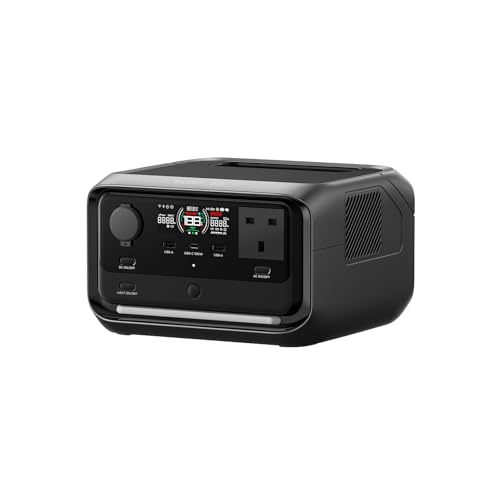
- High Power up to 1200W: RIVER 3 Plus powers appliances up to 1200W with X-Boost and provides 600W steady output. It features 7 outlets—3 UPS AC, 2 USB-A, USB-C, and car output—powering 90% of home devices. A built-in light ensures visibility anytime.
- Extra 16 hr Runtime & Ultra-Quiet: X-GaNPower boosts efficiency, delivering 16 hr runtime for <100W devices like lights and routers. Compact and ultra-quiet at 30 dB, it runs silently even at 0.5 m away.
- Expandable Power, Easy to Use: Expand capacity up to 858Wh with EB300 (286Wh) or EB600 (572Wh). Pogo Pin technology ensures seamless, wireless attachment. An extra battery adds a 140W USB-C port for more input/output options.
- Pro-grade UPS Protection: With a 10 ms auto-switch, RIVER 3 Plus secures sensitive devices from outages. LED, app, and software alerts keep you informed, while automatic data-saving protects PCs/NAS from low battery.
- Fast, Safe Charging Options: X-Stream tech recharges from 0-100% in 1 hr with no damage. Use 220W solar input for green, renewable energy in as fast as 1.5 hr, making it an efficient solar generator.
Jackery Explorer 240 v2
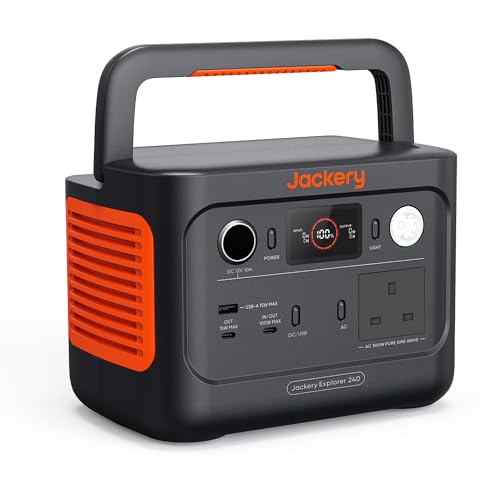
- Superior Convenience & Performance: Jackery’s 256Wh Power Station, weighing just 3.5 KG, delivers reliable energy at your fingers. Its robust 300W AC output keeps everyday devices running smoothly and effortlessly. Further, the LiFePO4 Battery, with impressive 10 year lifespan and up to 3,000 charging cycles, ensures this outdoor generator is built to last for decades.
- 1 Hour Fast Charging: Power up quickly with flexible and versatile charging options. 1 hour fast charging, controlled via App, fully charges the battery in no time, with 2 hour AC wall charging saving battery lifespan. Moreover, for outdoor and off grid scenarios, 3 hour solar charging with a 100W panel keeps you fully connected and prepared.
- 5 Charging Ports at Once: Say goodbye to bulky power bricks with Jackery’s Explorer 240 v2, featuring 100W PD fast USB-C charging, for direct and efficient power delivery. Multiple charging ports enable you to charge devices simultaneously, and the camping light serves as an excellent outdoor companion - providing essential, emergency lighting.
- Unmatched Safety & Reliability: Certified to IEC 62368 and UL94V-0 standards, Jackery’s Power Station is designed for complete shock and fire resistance, making for a reliable power supply, even in challenging environments. With a 20ms UPS, power comes back in the blink of an eye, preserving desktop data and minimising disruptions caused by unexpected outages.
- Smart App Control: Keep track of your Explorer 240 v2 Portable Power Station via Wi-Fi or Bluetooth, to monitor information accurately such as remaining battery level and charging status. Highly customizable features, include auto turn-off and battery-saving mode, enable you to personally tailor the portable power supply to fit your needs and requirements.
FAQs
Are EcoFlow and Jackery equally reliable long-term?
Both use LiFePO4 battery chemistry rated for thousands of charge cycles, and both brands have a solid reputation in this category. Jackery has been in the market slightly longer, but EcoFlow has caught up in both product range and reliability reputation over recent years – there’s no clear long-term reliability gap between them at this point.
Can either of these run a small power tool?
Light-duty, low-draw tools will generally run fine on either unit for short bursts. Neither is built for sustained heavy tool use – that’s still a job for a generator or a larger capacity power station, not either of these compact models.
Which has the better app?
Both EcoFlow and Jackery offer companion apps for monitoring charge level and output remotely, and both are functional and reasonably well reviewed. Neither has a meaningful edge that should factor into the buying decision.
Do both charge from solar panels?
Yes, both accept compatible solar panel charging as an alternative to mains or car charging, useful for slow top-ups across a long day without access to a socket.
Which is better for charging cordless tool batteries?
Either works fine for topping up cordless tool batteries via their own chargers plugged into the power station’s outlets. The EcoFlow’s larger capacity means you can charge more batteries before needing to recharge the unit itself, which matters more the more cordless kit you’re running through a day.
Is it worth buying both a compact and a larger power station?
For a business running multiple vans or covering both light daily charging and occasional heavier off-grid days, it’s a reasonable approach – a compact unit like either of these for everyday use, and a larger capacity model reserved for demanding jobs. For a single van, one well-chosen unit covering your typical use case is usually enough.
The Verdict
There’s no bad choice here – both are well-built, reliable compact power stations from the two leading names in the category. Choose the EcoFlow RIVER 3 Plus for more capacity and faster recharging in a van that stays put. Choose the Jackery Explorer 240 v2 if genuine portability across a site matters more to you than the extra watt-hours.
Prices correct at time of writing and vary between Amazon UK and the manufacturers’ own stores.