Ryobi vs Bosch — Which Is Better for Light Trade Use?

If you’re not a full-time chippy or sparks but you’re picking up enough cash work to justify a proper cordless setup, the Ryobi vs Bosch question comes up a lot. Both brands are stocked everywhere in the UK, both have huge tool ranges on a single battery platform, and both sit in that price bracket where neither feels like a gamble.

The honest answer is that they’re aimed at slightly different users, and getting it wrong will cost you either money or time. We’ve put this head-to-head together so you can pick the right platform for the kind of work you actually do, not the kind a YouTube reviewer does.

Quick note before we start: Bosch sells two completely separate lines in the UK — Bosch Green (the consumer DIY range) and Bosch Blue Professional. The Green range and Ryobi One+ are direct rivals; Bosch Blue is a step up in price and performance. We’ll cover both Bosch lines because the choice depends on how much trade use you’ll really put through it.


The Quick Verdict

Pick Ryobi One+ if: you’re a part-time tradesperson, side-hustler, semi-pro builder, or homeowner doing serious renovation work. You want a huge range of tools on one battery, you want to keep costs down, and you’re not running tools 8 hours a day every day.

Pick Bosch Green (Power for All 18V) if: you want similar light-duty performance to Ryobi but with a slightly more refined feel and the AmpShare cross-brand battery system (works with Gardena, Flymo and others). Tool range is smaller than Ryobi’s, but build quality on the new generation is good.

Pick Bosch Blue Professional 18V if: you’re doing genuine trade work day in, day out — you need warranty cover under proper trade conditions, you want ProCORE batteries that hold up to high-draw tools, and you’d rather pay once than replace tools every couple of years.

That’s the headline. The detail below explains why.


Brand Overviews


Ryobi One+ — The Side-Hustle Standard

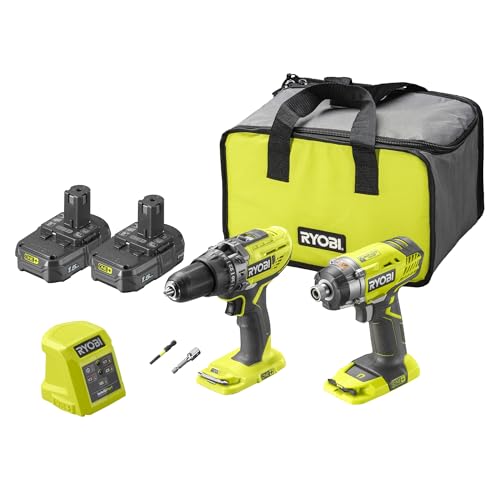
Ryobi’s One+ 18V system has been around for over 25 years and the company guarantees that any battery you buy today will work in any One+ tool — past or future. That single decision is why so many UK part-time tradespeople end up here. You can buy a combi drill kit at B&Q for around £130, then add an impact driver, a jigsaw, a SDS drill, a circular saw, a recip saw and a site light over the next year, all running off the same batteries.

The range is enormous — over 280 tools including the HP brushless line, which is genuinely competitive on torque and runtime with mid-range trade brands. Build quality on the standard One+ is fine for non-daily use; the HP brushless tools are a clear step up and worth the extra spend if you’re doing chargeable work.

Where Ryobi falls short is heavy-duty all-day use. Spin a 110mm hole saw through joists for a couple of hours and a brushed One+ drill will get hot. Push the entry-level batteries hard and runtime drops fast. That’s not a flaw — it’s just not what they’re built for.


Bosch Green (Power for All 18V) — The Refined DIY Choice

Bosch Green is the consumer-facing DIY range, sold in B&Q, Argos and Amazon UK. The 18V Power for All platform launched as a cross-brand battery system — the same battery powers Bosch Green tools, Gardena garden tools, Flymo and a few others. If you’re doing renovation work and want one battery for the drill and the strimmer, that’s a real benefit.

The tool range is smaller than Ryobi’s — maybe 50 to 70 tools — but the new generation feels well-made. The brushless 18V Power for All combi and impact tools are notably more refined than equivalent Ryobi One+ models, with better triggers, less vibration and slightly tidier ergonomics. They’re also typically £20-50 more expensive per tool.

For occasional cash work alongside a primary trade or office job, Bosch Green sits in a sweet spot — tidy, reliable, more than enough power for kitchen fitting, decking, garden buildings or domestic electrical work.


Bosch Blue Professional — The Real Trade Tool

Bosch Blue is a different product entirely. It’s the European trade default in countries like Germany and France, and it’s serious kit — brushless motors, ProCORE 18V batteries (4.0Ah, 8.0Ah and 12.0Ah versions), GBH SDS drills with KickBack Control, GSR drill drivers up to 150 Nm of torque, and the AMPShare cross-brand alliance with Fein, Wagner and others.

Pricing is closer to DeWalt and Makita than to Ryobi or Bosch Green. A GSB 18V-90 C combi drill kit will sit around £280-320, against £130 for a Ryobi One+ HP combi. You’re paying for genuine all-day trade durability, a 3-year extended warranty via PRO360, and a tool that will still feel tight after five years of site work.


Feature Comparison

Let’s get into the detail that actually matters when you’re stood in Screwfix making the call.


Battery platform and runtime

Ryobi’s 25-year cross-compatibility is the big draw. Buy a 4.0Ah High Performance pack today and it’ll run a 2010 One+ drill or a 2026 HP brushless mitre saw. Lithium+ HP batteries (4.0Ah and 9.0Ah) are good for high-draw tools; the basic One+ batteries are fine for drills and lights but struggle with circular saws under load.

Bosch Green Power for All shares its battery with Gardena, Flymo and other partner brands — useful if you do landscaping or have a big garden alongside trade work. Runtime is solid for the tool size; the 4.0Ah and 6.0Ah packs cover most realistic usage.

Bosch Blue ProCORE batteries are in a different league. The 8.0Ah ProCORE will outperform any Ryobi One+ pack in a heavy tool, and the 12.0Ah ProCORE is the closest thing to a corded experience in cordless tools. Bosch’s BiTurbo technology pairs ProCORE with brushless motors for a noticeable bump in tough drilling and cutting jobs.


Build quality and warranty

Ryobi One+ tools come with a 3-year warranty when registered, but the warranty terms exclude commercial use on some models — check the small print if you’re earning from them. Build quality is fine for occasional use; bearings and gear sets aren’t designed for daily heavy work.

Bosch Green has a 3-year warranty when registered. Build is good. Bosch Blue Professional carries a 3-year warranty via PRO360 and explicitly covers professional trade use, which is the key practical difference if you’re a registered sole trader.


Tool range

Ryobi One+ wins on raw range. Over 280 tools means you’ll find an 18V version of almost anything — including niche stuff like cordless inflators, bucket fans, glue guns and even a cordless tyre inflator. Whether you need them is another matter, but it’s there.

Bosch Green has a tighter range — drills, drivers, saws, sanders, oscillating multi-tools, garden tools. Less choice but everything in the lineup is reasonably well-thought-out.

Bosch Blue covers around 200 trade-grade tools. Less breadth than Ryobi, but every tool is built for daily use and the SDS drill, GSR drill driver and GKS circular saw lines are class-leading.


Platform Specs Summary

Factor Ryobi One+ Bosch Green (Power for All) Bosch Blue Professional
Voltage 18V 18V 18V
Battery cross-compat 25 years across all One+ Cross-brand (Gardena, Flymo) AMPShare (Fein, Wagner, etc.)
Range 280+ tools 50-70 tools 200+ trade tools
Entry combi kit price Around £130-150 Around £150-180 Around £280-320
Top-end battery 9.0Ah Lithium+ HP 6.0Ah Power for All 12.0Ah ProCORE
Best for Part-time trade, DIY+ Light trade + garden Daily trade, site work
Warranty (registered) 3 years (some excl. commercial) 3 years 3 years incl. trade use

Which Should You Buy? By Trade Type


Part-time and weekend builders

Ryobi One+ HP. The price-per-tool ratio is unbeatable for a side hustle that’s still building up. Get the One+ HP brushless combi and impact kit, add a 9.0Ah HP battery for heavy work, and you’ve got a setup that’ll handle most domestic jobs without spending more than £300.

Kitchen fitters and finish carpenters (light commercial)

Bosch Green if you want refinement and don’t push tools to their limit; Bosch Blue if you’re billing it. The Bosch Blue GKS 18V-57 G circular saw and GSR 18V-90 C drill driver are noticeably more accurate than budget kit, and that matters when you’re cutting worktops or hanging cabinets.

Domestic electricians (Part P notifiable work)

Bosch Blue Professional. You need an SDS drill that won’t burn out drilling masonry first-fix runs, and the GBH 18V-21 with ProCORE handles it. For testing and fault-finding, pair it with an 18V site lamp on the same battery system. Ryobi will do the work but won’t last as many years.

Plumbers and gas engineers

Bosch Blue if you can stretch to it — the GSB 18V-90 C combi has the torque needed for joist drilling, and ProCORE batteries hold up to recip saw bursts. Ryobi One+ HP is acceptable for boiler swaps and small bathroom jobs but not for daily site work.

Gardeners and groundworkers (mixed garden + light building)

Bosch Green Power for All is the obvious shout because the same battery runs Gardena hedge trimmers, Bosch lawn mowers and the tools. One ecosystem, one charger, no duplicated kit in the van.

Domestic decorators and renovators

Ryobi One+. The range of small tools — multi-sander, oscillating multi-tool, hot air gun, paint stirrer, vacuum — is unmatched, and these aren’t tools you push hard. Standard One+ batteries are fine.


The Final Verdict

There’s no wrong answer here, just a wrong fit. Ryobi One+ is the best value for breadth — if you want a tool for everything and you’re not running them 40 hours a week, you’ll get more done per pound than with any other 18V system in the UK.

Bosch Green is the most refined DIY-grade option and the only one with a true cross-brand battery system covering garden tools. If your work is half trade, half home, and you want kit that feels good to use, it’s a strong pick.

Bosch Blue Professional is the real trade answer. It costs more, but if cordless tools are how you earn a living, the build quality, ProCORE battery performance and warranty terms make it a different proposition. We wouldn’t buy Bosch Blue for occasional DIY — it’s overspec — but we’d take it over almost anything else if we were back on site full-time.

Buy the platform that matches the work you actually do, not the work you imagine doing. And whichever you go with, commit — the value of these systems is in the battery sharing, not the individual tools.

More Reviews Here..